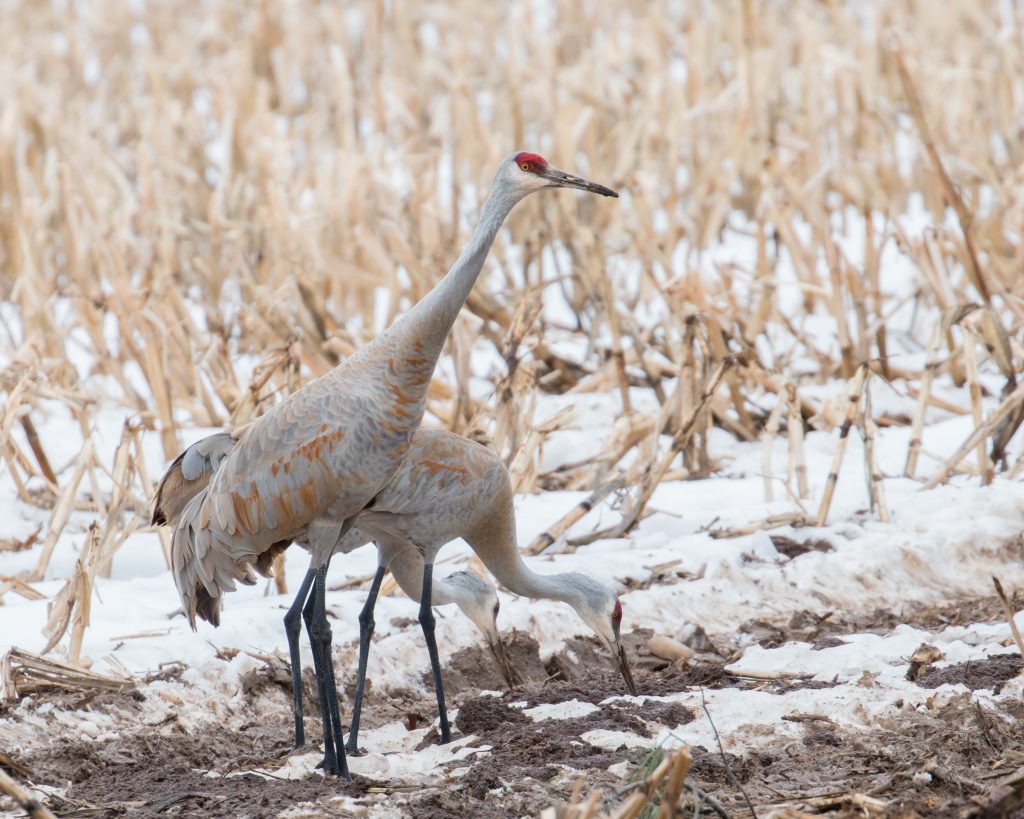
~One of four beautiful Sandhill Cranes, Shawangunk NY, 03/26/17.~
I was not planning doing any birding this morning. But, when I woke up, there was already a text from Curt McDermott – he had four SANDHILL CRANES in the town of Shawangunk. I quickly made some coffee and ran for the birds, which ended up sticking around and being very cooperative. When I arrived, Bruce Nott, John Haas, and Bill Fiero were on the birds already; they had all been there for a bit and headed out shortly after I arrived. Karen Miller joined me and we enjoyed super looks at the birds along with Scotty Baldinger. The birds flew at one point and relocated in an area where they could still be view well. Several Ulster County birders arrived for the birds and when I left they were still enjoying excellent scope views of the birds. What a great way to start the day! Huge thanks to Curt for the heads up on these great birds.
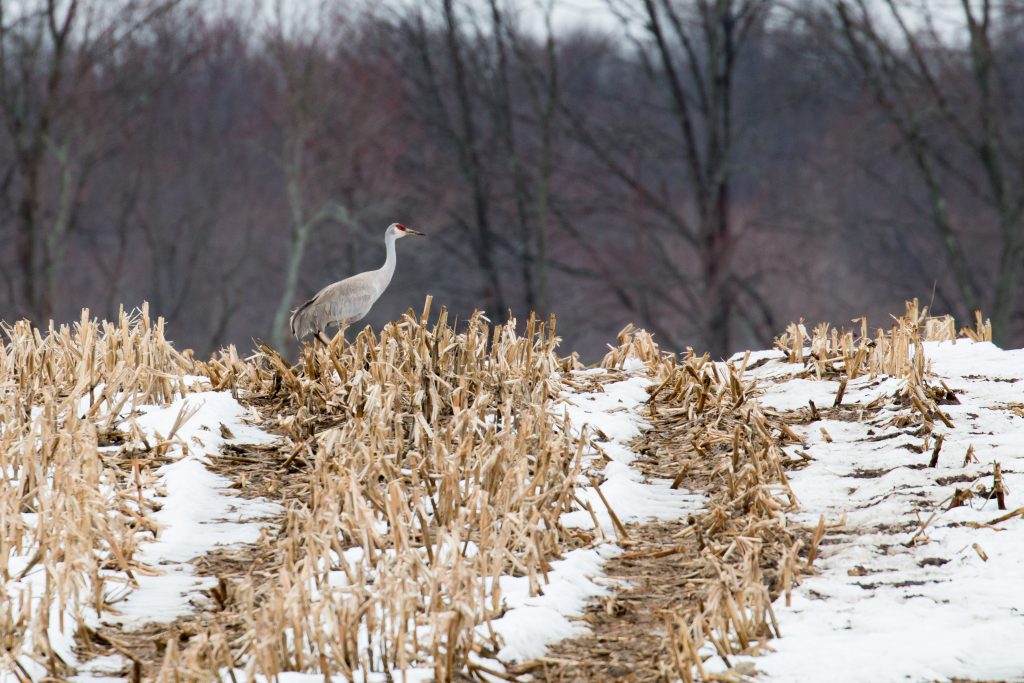
~Three of the four Sandhill Cranes, Shawangunk NY, 03/26/17.~~The birds walked out over this crest in the field and out of sight temporarily. Then they picked up and relocated in another field, offering more great looks. SACR in Shawangunk NY, 03/26/17.~One last shot. SACR in Ulster County, 03/26/17.~
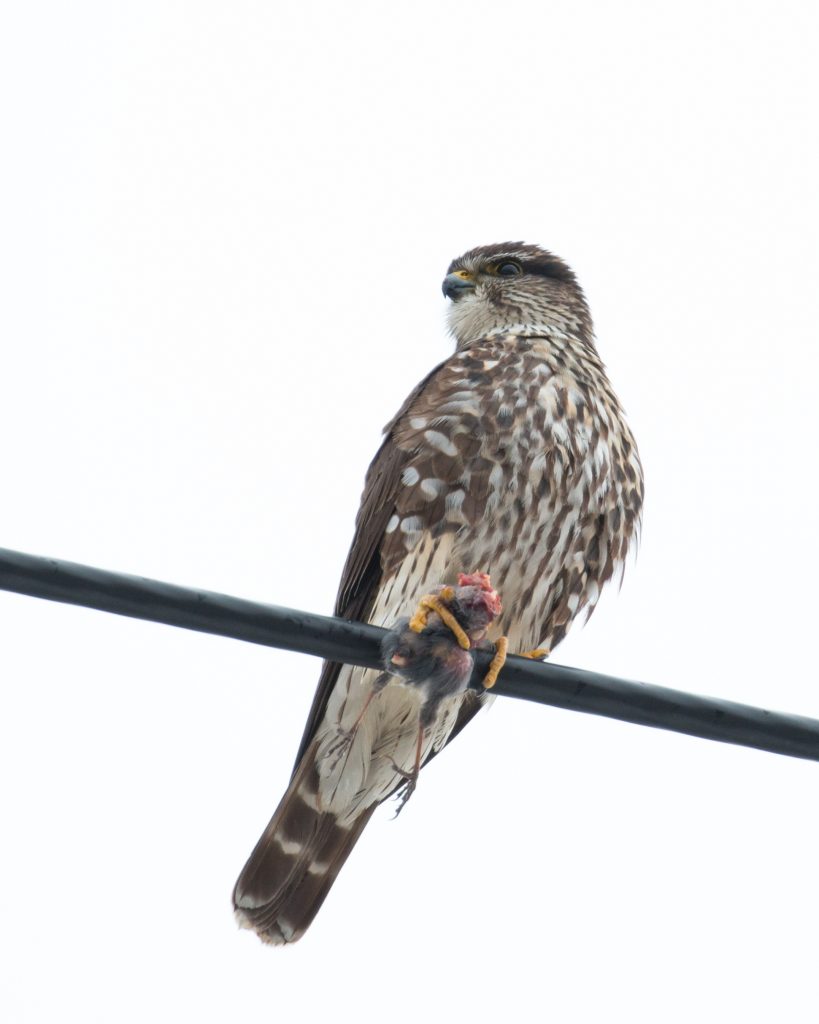
~One of my few photo ops today – Merlin with prey at Wickham Lake, 03/25/17.~
Three weeks ago I did a waterfowl survey of 9 locations not too far from my home in Goshen. Today I repeated this survey, hitting the same 9 locations in the same order. The overall number of birds was down from over 950 to under 700 birds, but I had a little more variety today with 16 species of waterfowl (up from 14). I’ve included species lists by location below.
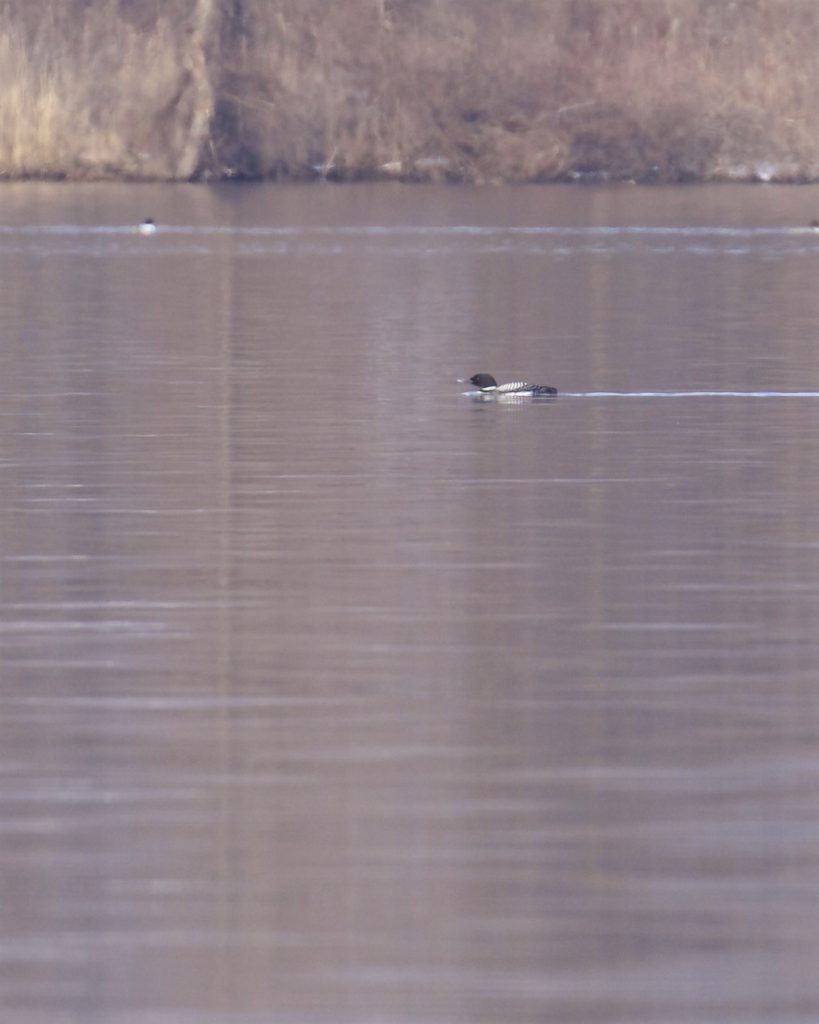
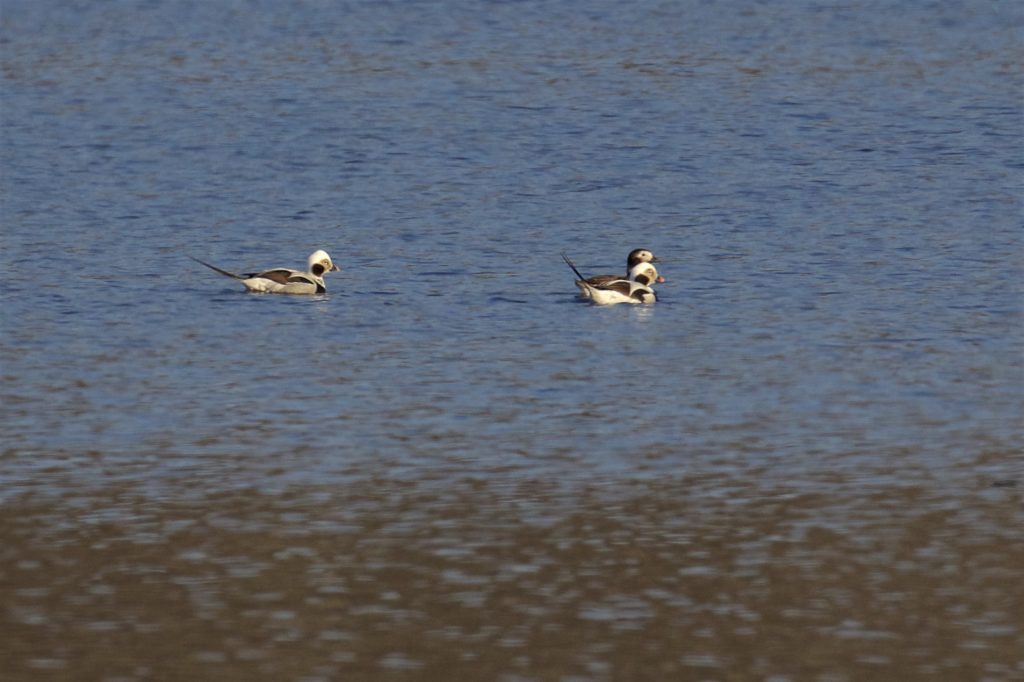
I was hoping for some more interesting birds, but all 16 species were what I consider the usuals. Things were better in that regard earlier in the week, when I had a trio of Long-tailed Ducks at Glenmere Lake, and yesterday when I had a single Common Loon at Wickham Lake:
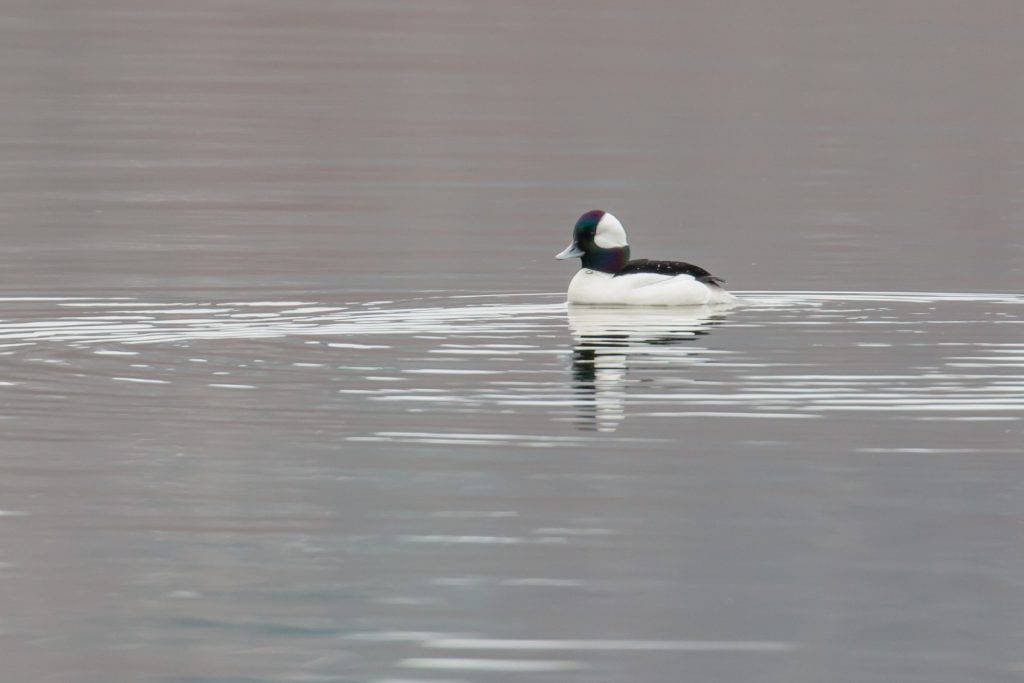
I did not have many close up looks at ducks today, so not too many photo ops. This Bufflehead was near the shore of Round Lake as I pulled up, but it move out pretty quickly.
~Excellent birds! Three LONG-TAILED DUCKS at Glenmere Lake this afternoon, 03/21/17.~
QUICK POST: I was doing some lazy birding after work this afternoon. I stopped by Glenmere Lake and I was scanning the lake from my car and getting ready to leave, having seen just the usuals. But, then 3 ducks caught my attention; I half-thought they might be LONG-TAILED DUCKS, but it wasn’t until I got out of the car and put the scope on them that I really believed it. The birds were very distant, too distant for even documentary photos, so I walked the snowy trail that heads southwest along the shore of the lake to get a little bit closer. This did allow me to get some documentary photographs and some great looks at the bird, which were in beautiful light. I put the word out and although I had to leave, Karen Miller reported back that she too had gotten the ducks. Good (if lazy) birding!
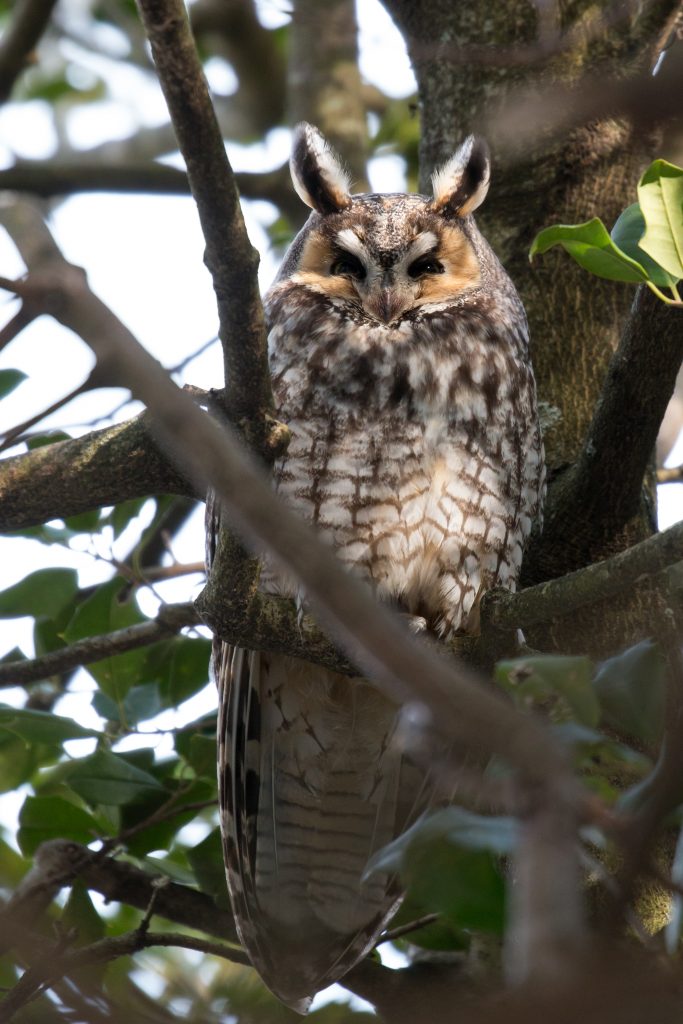
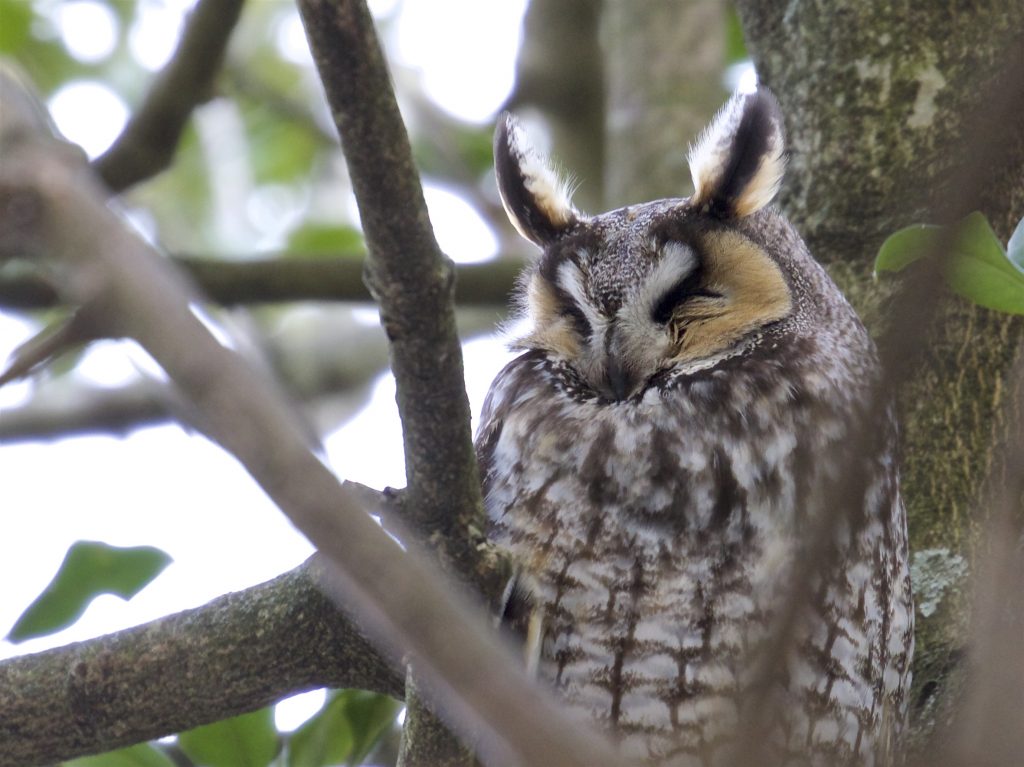
It’s not very often these days that I can get two life birds in one day, but that’s exactly what happened today. The first was a bird that I have been really hoping to get for some time now, the LONG-EARED OWL. The bird did not disappoint, such a beautiful little owl, absolutely gorgeous. The second was a bird that I’ve had some experience with in the past, the NORTHERN SAW-WHET OWL. Back in the fall of 2013, Tricia and I joined a John Haas, Karen Miller, Scott Baldinger, and Arlene Borko in Sullivan County to call in migrating NSWOs. We heard several that night and caught a glimpse of one in flight in the dark, but I guess at the time I didn’t think that was enough to count it as a lifer. Today was quite different and there is no doubt about getting my lifer NSWO. These two owls are life birds #373 and #374 for me. Forgive the vague post, but with the best interests of these birds in mind, I will not be sharing their locations.
~I was impressed by how small this bird is in person, out in the field. Beautiful NORTHERN SAW-WHET OWL, 03/19/17. ~~One more shot of the LEOW, 03/19/16.~
~ Orange County Snow Bunting in the snow, 03/16/17.~
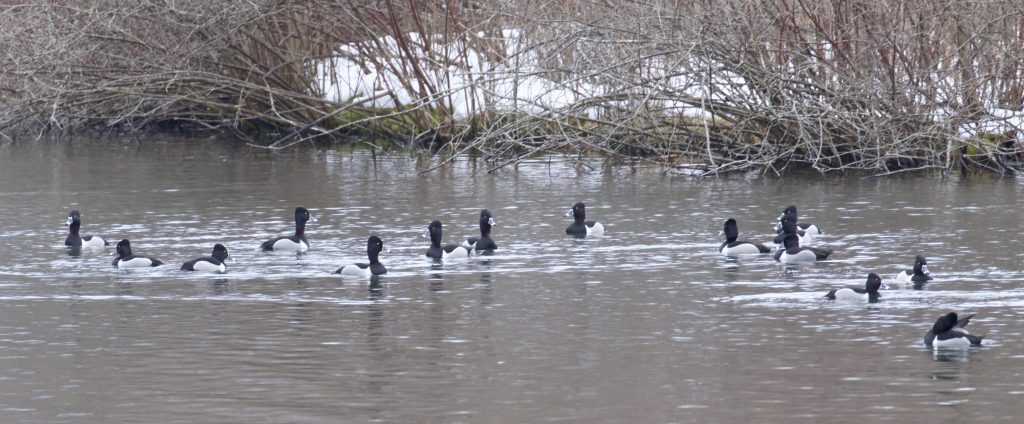
QUICK POST: For the second consecutive time, on my way to participate in a DEC Raptor Survey, I had a really nice photo op. Two weeks ago I had a large group of confiding Ring-necked Ducks. Last night, it was Six Snow Buntings on the side of the road. They seemed uncooperative at first and flushed, but then came back to land very close to my car, posing nicely on the tops of the piles of plowed snow. Good birds for sure!
~I love these birds, definitely towards the top of my long list of favorites. Snow Bunting in the Black Dirt Region, 03/16/17.~
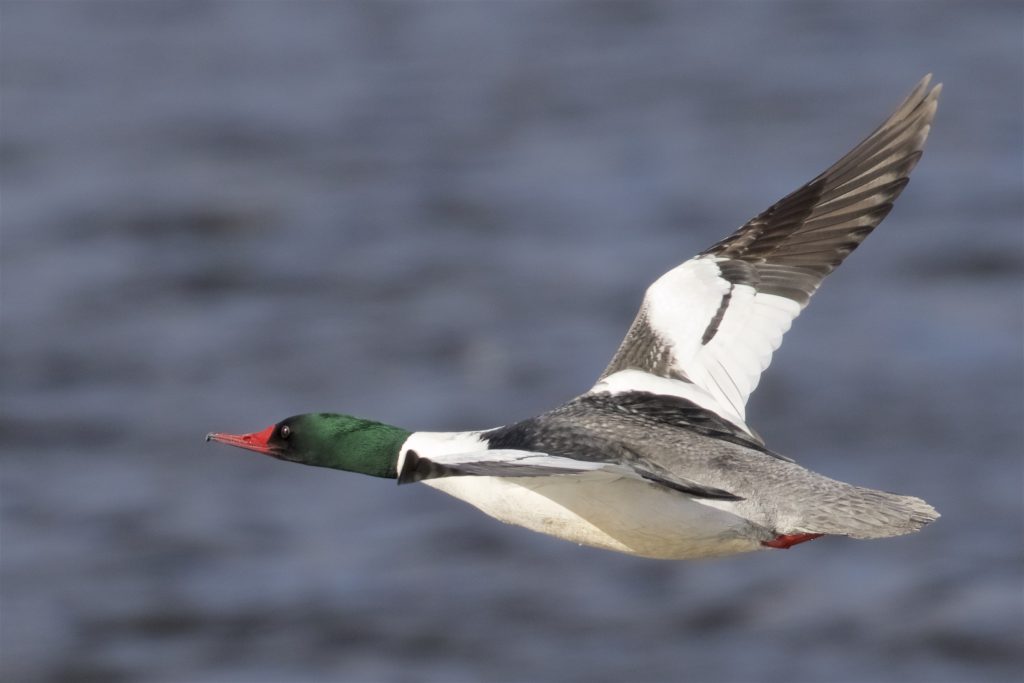
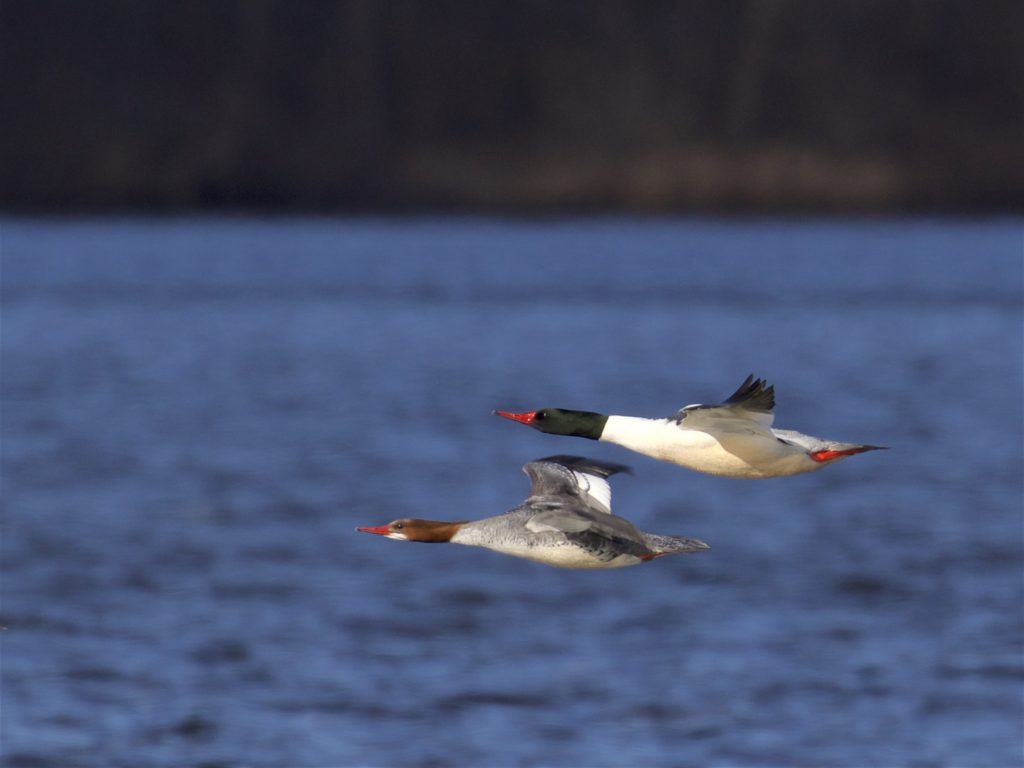
~A male Common Merganser in flight at Wickham Lake, 03/04/17.~
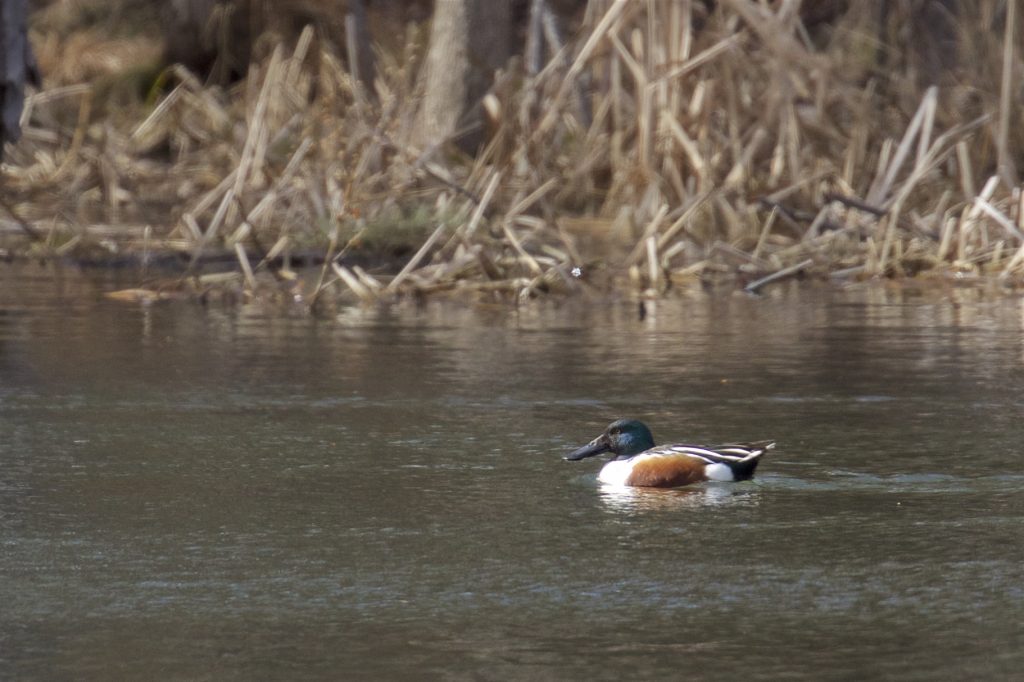
I decided to do my own Orange County waterfowl survey of sorts this afternoon. I visited nine different locations not too far from my home here in Goshen. First thing I will say is that it was COLD out there today. The temperatures weren’t so bad, in the mid-twenties, but wind made it very cold, bringing tears to my eyes all day. I think if it was a little bit more comfortable out I would have been a little bit more thorough; I felt like I certainly could have spent some more time at some of the locations. That being said, it was a fun way to spend the afternoon and I ended up with 14 species of waterfowl and over 950 individuals. I had a Northern Shoveler and a Pied-billed Grebe at Brown’s Pond and both birds were my first of the year in Orange County. Scroll down to see my results by location.
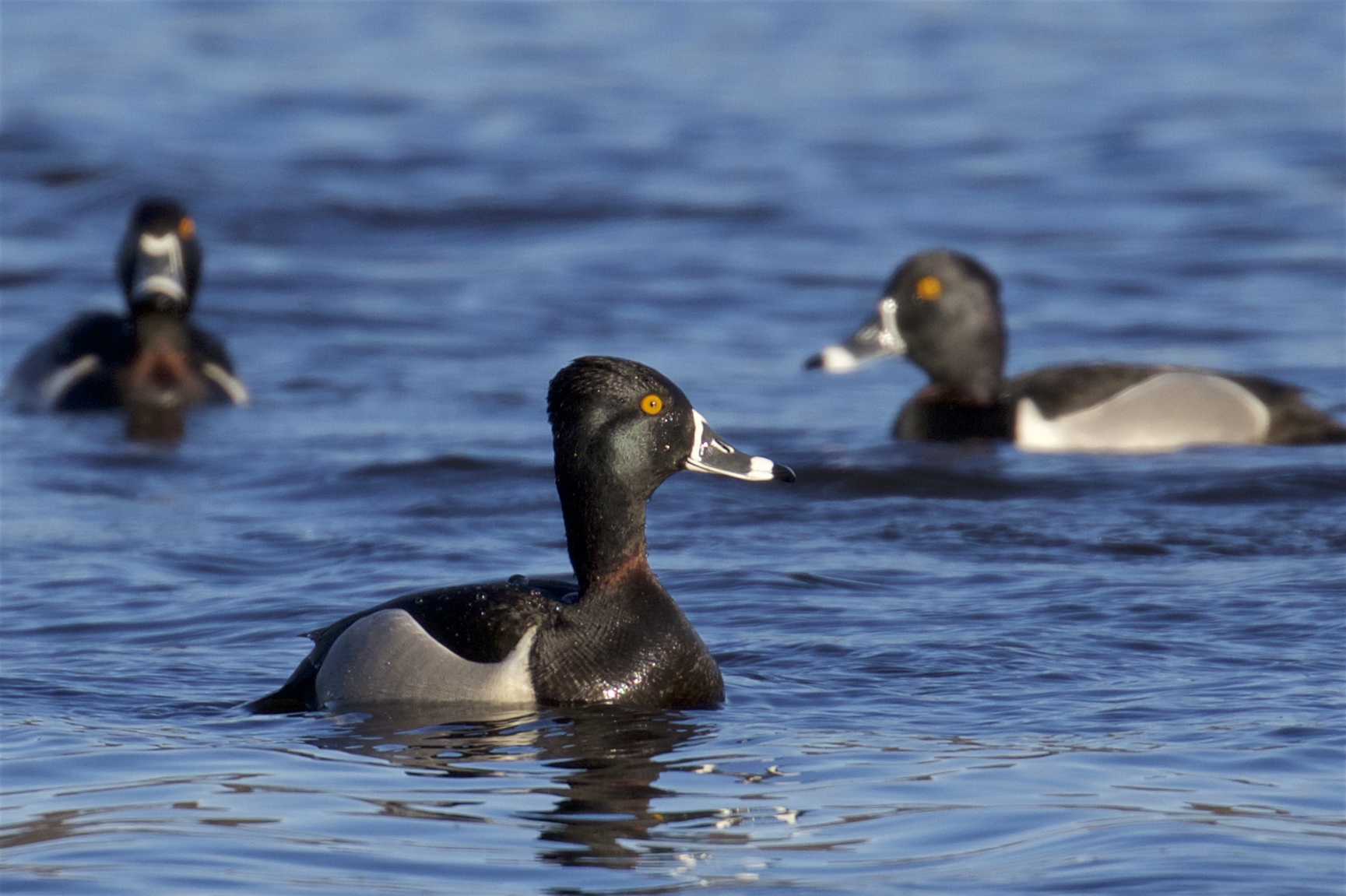
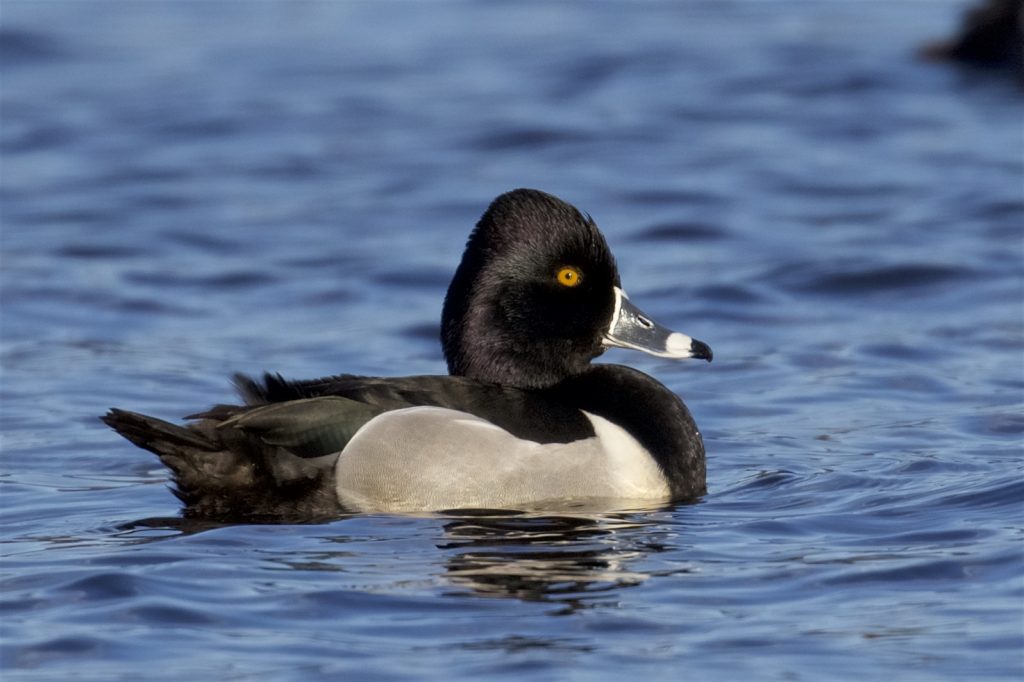
~A male Ring-necked Duck shows off his namesake, the maroon ring around his neck. Upper Greenwood Lake, 03/02/17.~
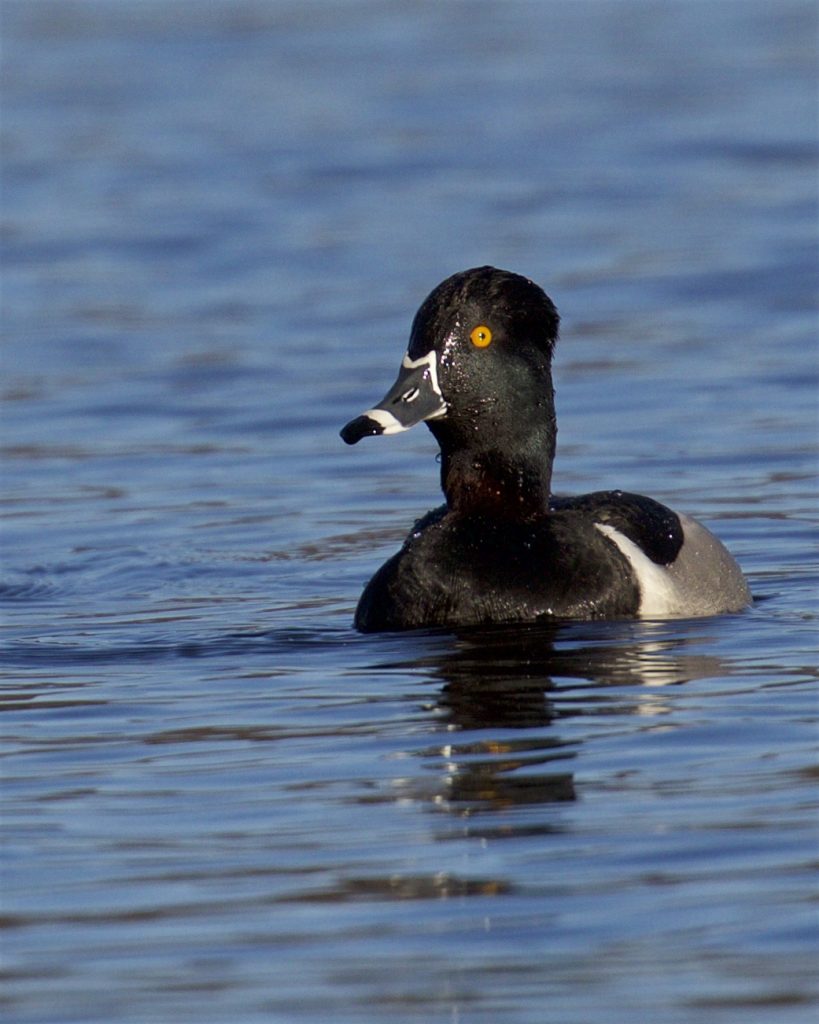
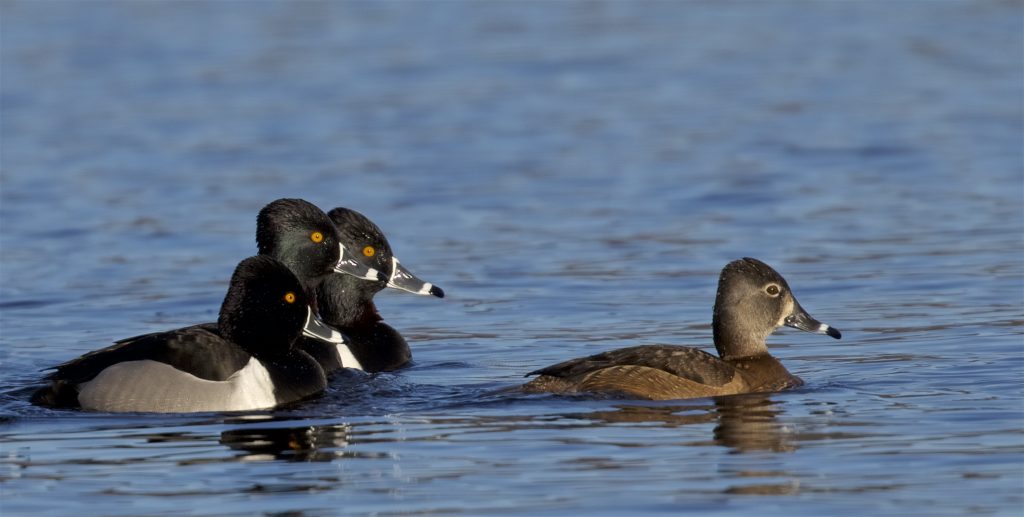
It’s not very often that I get good photo ops with ducks because, as we all know, ducks tend to keep their distance. I think it would take some work, planning, and likely a photo blind to actually get really good shots of most ducks (at least from the shore – I’ve had much better luck from the kayak). Yesterday afternoon I found a group of Ring-necked Ducks at Upper Greenwood Lake that just didn’t seem to care. I saw the birds from my car, I pulled over and parked, but unfortunately the only way to approach was on foot. I did so slowly, fully expecting the birds to swim in the opposite direction, leaving me wanting. I must be on a roll because they did no such thing and instead just carried on as before. I photographed them for about 20 minutes; when I left they were still in the same area going about their business. I then continued towards the black dirt, where I was going to spend the evening participating in the DEC’s Raptor Survey. It was an excellent pit stop which yielded a nice series of pics of these RNDUs, in really nice light.
~RNDU at Upper Greenwood Lake, 03/02/17.~~I think this female Ring-necked Duck has some admirers… Upper Greenwood Lake 03/02/17.~~This is one handsome devil. RNDU at Upper Greenwood Lake, 03/02/17.~~The females are a little less dramatic but just as attractive to me. RNDU female at Upper Greenwood Lake, 03/02/17.~~RNDUs at Upper Greenwood Lake, 03/20/17.~~RNDU drake at Upper Greenwood Lake, 03/20/17.~
~A pair of American Kestrels mating on a wire, Orange County NY, 02/2517.~
So, I bumped my head on Tuesday evening. I didn’t even hit it very hard (I’ve certainly hit it way harder), but I must have gotten it just right and I ended up giving myself a concussion. Which put me to some degree out of commission for a few days. When Saturday afternoon rolled around, I was feeling a little bit better so I did some birding, mostly just driving around southern Orange County. As I drove around, I was getting the usuals but I was enjoying it very much just because I hadn’t been out much during the week. Then I happened to see two falcons flying together in the distance. Luckily there was a nice area to pull over, so I parked and watched as the two birds spent some time coming and going from the overhead wires and then, excitingly, the birds mated on a wire. How lucky can you get? American Kestrels mating right in front of me in perfect light. It was very cool to observe and I believe it is only my second time seeing AMKEs mating, the first time being a few years back at the Shawangunk Grasslands from one of the photo blinds.
~The male (left) is a bit puffed up and in the foreground so he looks almost the same size as the female, but to me, in the field the female was noticeably larger. Orange County American Kestrels, 02/25/17.~
~Always a favorite and often cooperative. Merlin in the black dirt, 02/19/17.~
I’ve birded locally most days in the past week and while it’s been enjoyable, things have been on the slow side. Today things picked up a bit for me when I located a large flock of mixed blackbirds in the black dirt, and then shortly after that had a cooperative Merlin, followed by a large flock of Snow Geese, which I still have not grown tired of. Earlier in the week at the Wallkill River National Wildlife Refuge, I had my first Great Blue Heron of the year (and it was in good light!). I’m feeling like I might be ready for winter birding to be over – maybe the flocks of blackbirds are an indication that birds are starting to move?
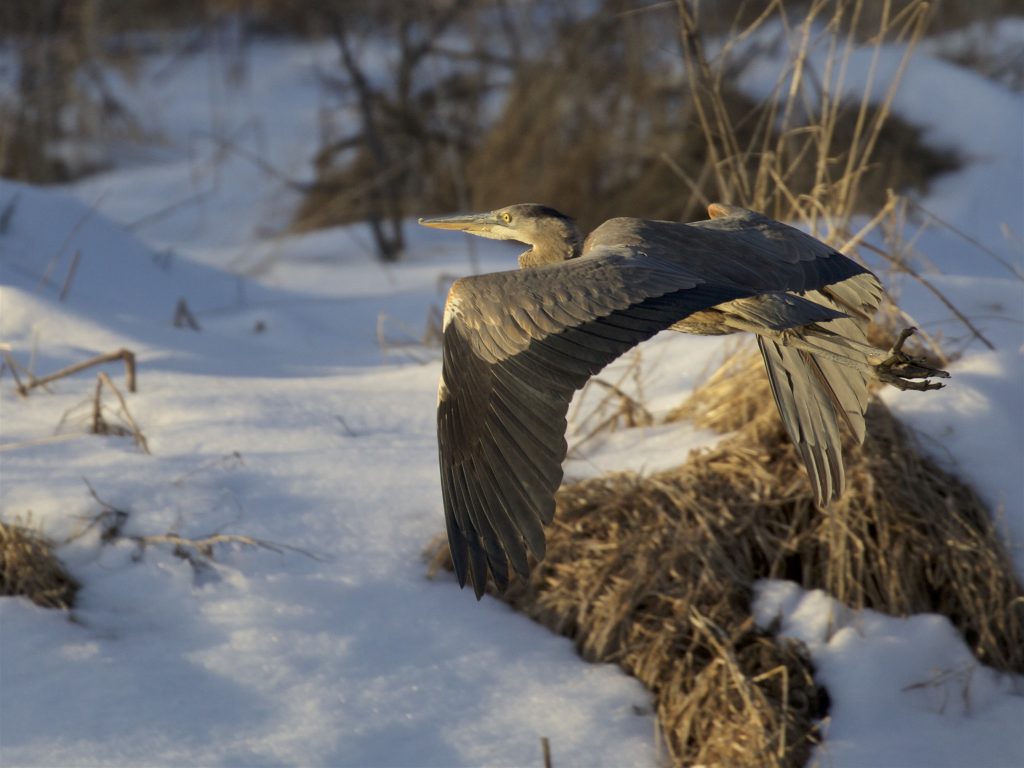
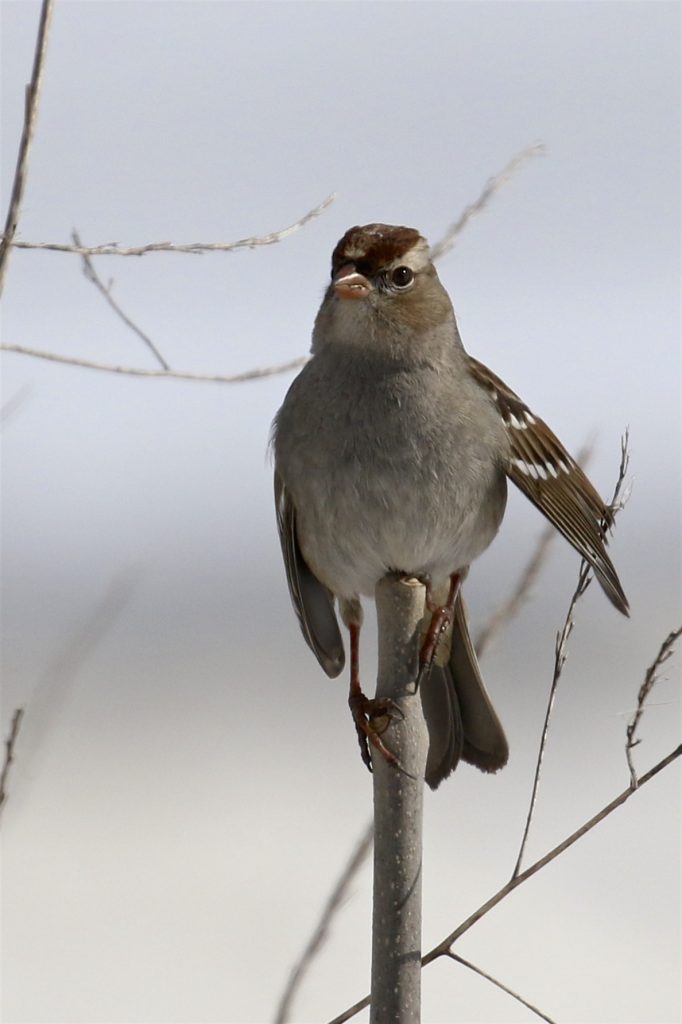
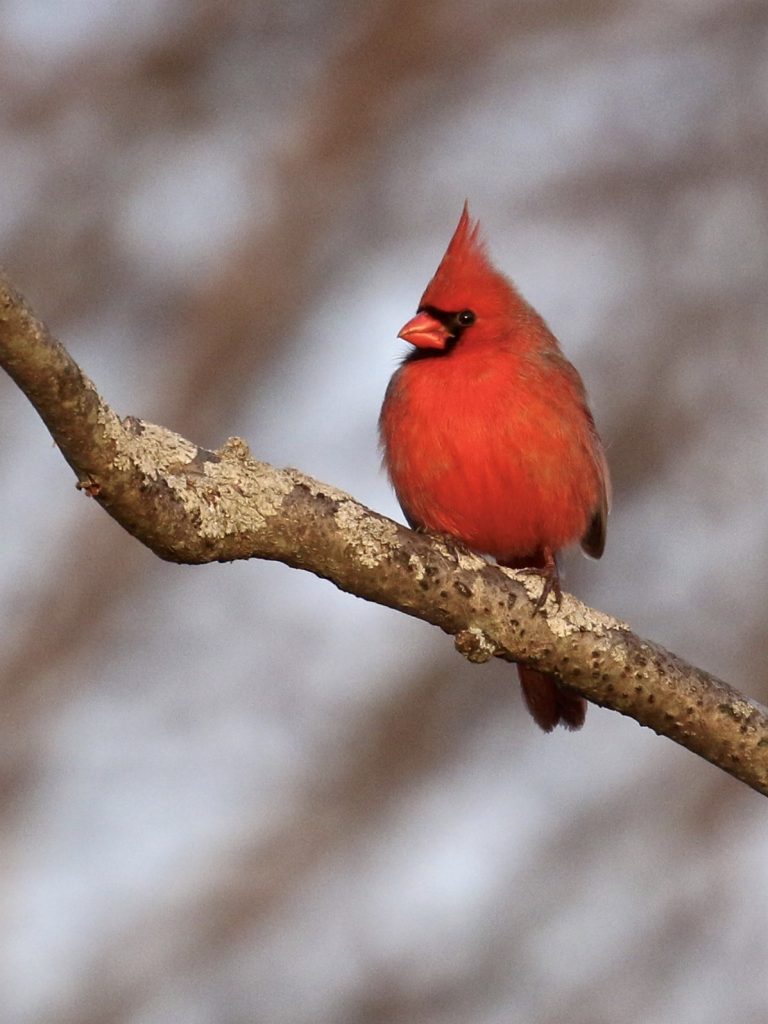
~This might be my favorite Snow Goose photo of the year – I love the dreamy quality of it. A sea of Snow Geese in the black dirt, 02/19/17.~~I had a very large flock of mixed blackbirds in the black dirt today, 02/19/17. This shot has mostly Red-winged Blackbirds with some Brown-headed Cowbirds and Common Grackles mixed in. ~A Great Blue Heron does a fly by at Wallkill River NWR, 02/19/17.~ ~A White-crowned Sparrow strikes a strange pose, barely hanging on. In the black dirt, 02/11/17.~~More SNGOs in the black dirt, 02/19/17.~~A Northern Cardinal just before sunset at Wallkill River NWR, 02/15/17.~
~A Fish Crow lets me know it is NOT an American Crow “uh-uh, uh-uh”. Edith G. Read Wildlife Sanctuary, 02/18/17.~
I spent this beautiful Saturday morning out at the Edith G. Read Wildlife Sanctuary in Rye, New York. Although I saw only the expected birds, I had an excellent morning with 43 species observed. I guess if you are going to get the usuals, it’s good to be in a place where there are a lot of “usuals”. As expected, I did best with waterfowl, seeing 18 different species. It had been over a year since I’d been to the sanctuary and although I was feeling like I was having a good day, I was wondering how it compared to the previous years. Since 2013, I’ve visited the sanctuary 5 times, always in January or February. My average number of species for those visits is 34, and I’ve never had more than 36. And what makes it even more interesting is that this was the first time I’ve been there and the feeder station was not filled up. In past visits that feeder station would really be hopping and I’d get several species right there. Today, all the feeders were empty and I didn’t get a single bird. One bird that I was really hoping for was Purple Sandpiper since it’s a good spot for them, but today I came up empty. I did add seven birds to my New York State year list, which was nice. I’ve included my list of species at the bottom of this post. Good birding!
~One of my favorites, too bad it is backlit. One of many Long-tailed Ducks at Edith G. Read Wildlife Sanctuary, 02/18/17.~
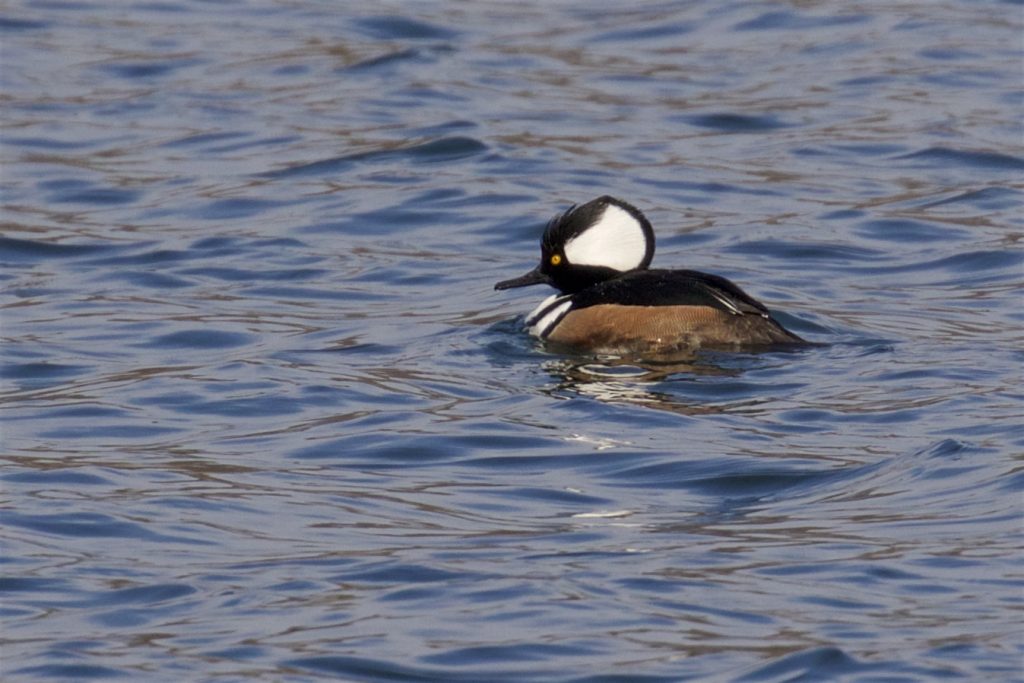
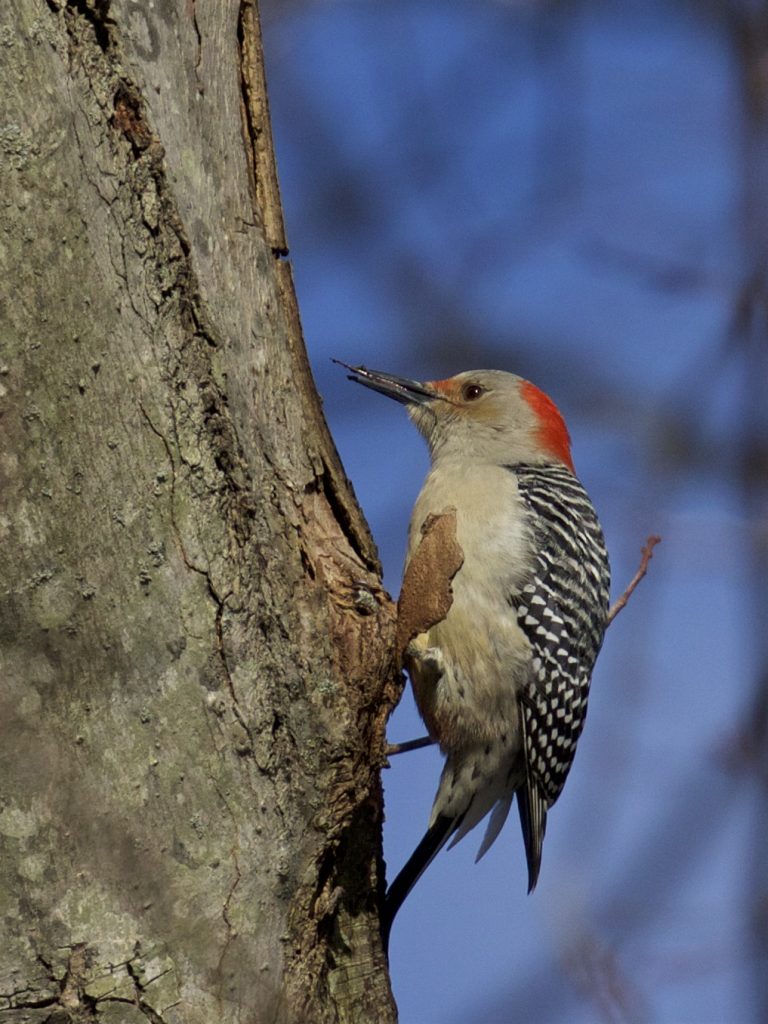
~A male Hooded Merganser in the pond at the Edith G. Read Wildlife Sanctuary, 02/18/17.~~Bufflehead butt with pink feet, Edith G. Read Wildlife Sanctuary, 02/18/17.~~Red-bellied Woodpecker, a bird that I see and hear constantly but don’t get many photos of. Edith G. Read Wildlife Sanctuary, 02/18/17.~~American Black Ducks do a fly by at the Rye Town Park, 02/18/17.~
Brant
Canada Goose
Mute Swan
Gadwall
American Black Duck
Mallard
Ring-necked Duck
Lesser Scaup
Long-tailed Duck
Bufflehead
Common Goldeneye
Hooded Merganser
Red-breasted Merganser
Ruddy Duck
Common Loon
Pied-billed Grebe
Horned Grebe
Great Cormorant
Great Blue Heron
Red-tailed Hawk
Ring-billed Gull
Herring Gull
Great Black-backed Gull
Rock Pigeon (Feral Pigeon)
Mourning Dove
Red-bellied Woodpecker
Blue Jay
Fish Crow
Common Raven
Black-capped Chickadee
Tufted Titmouse
White-breasted Nuthatch
Carolina Wren
Northern Mockingbird
European Starling
American Tree Sparrow
Dark-eyed Junco
White-throated Sparrow
Song Sparrow
Northern Cardinal
Red-winged Blackbird
Common Grackle
House Sparrow