OC Greater White-fronted Goose, 12/01/18

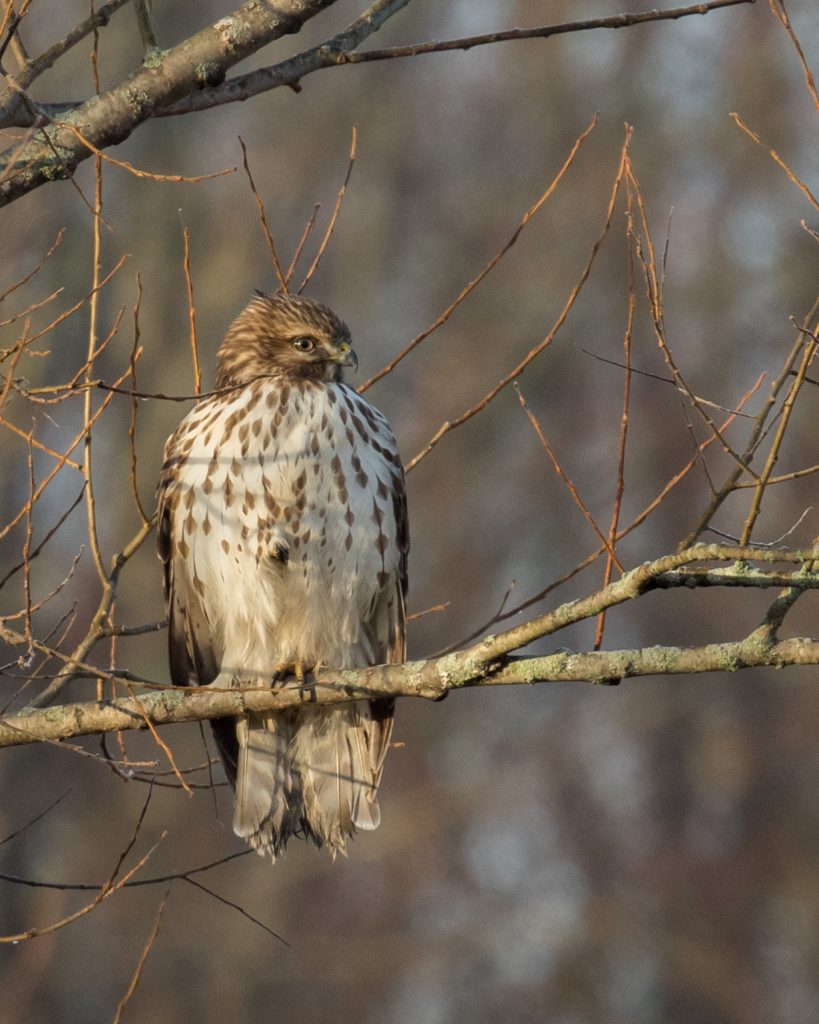
~A perched Red-shouldered Hawk at Wisner Avenue early this morning, 12/01/18.~

I ran around southern Orange County this morning and into the early afternoon. It felt really good to be out in the field after a long week of all work and no birding; this time of year is rough for me. The highlight of my travels was locating one of my favorites: a single GREATER WHITE-FRONTED GOOSE at the Camel Farm. Linda Scrima and her husband Artie met me out there and got on the bird as well. The bird was not exactly cooperative; it was quite distant and seemed to prefer spending time down in a ditch. Still, it was a great bird to see and I’ve included a documentary shot below. Other good birds for the day included 4 Blue Morph Snow Geese ( also in the black dirt – one adult with 3 juveniles), a young Red-shouldered Hawk at Wisner Avenue, and a nice sized flock of mixed blackbirds on Lynch Avenue (probably 200 birds – Red-winged Blackbirds, Common Grackles, Brown-headed Cowbirds, and European Starlings).

~The bird of the day, Greater White-fronted Goose at the Camel Farm, 12/01/18.~ 
~Canada Goose, Adult Blue Morph Snow Goose and Juvenile Blue Morph Snow Goose in the black dirt, 12/01/18.~ 
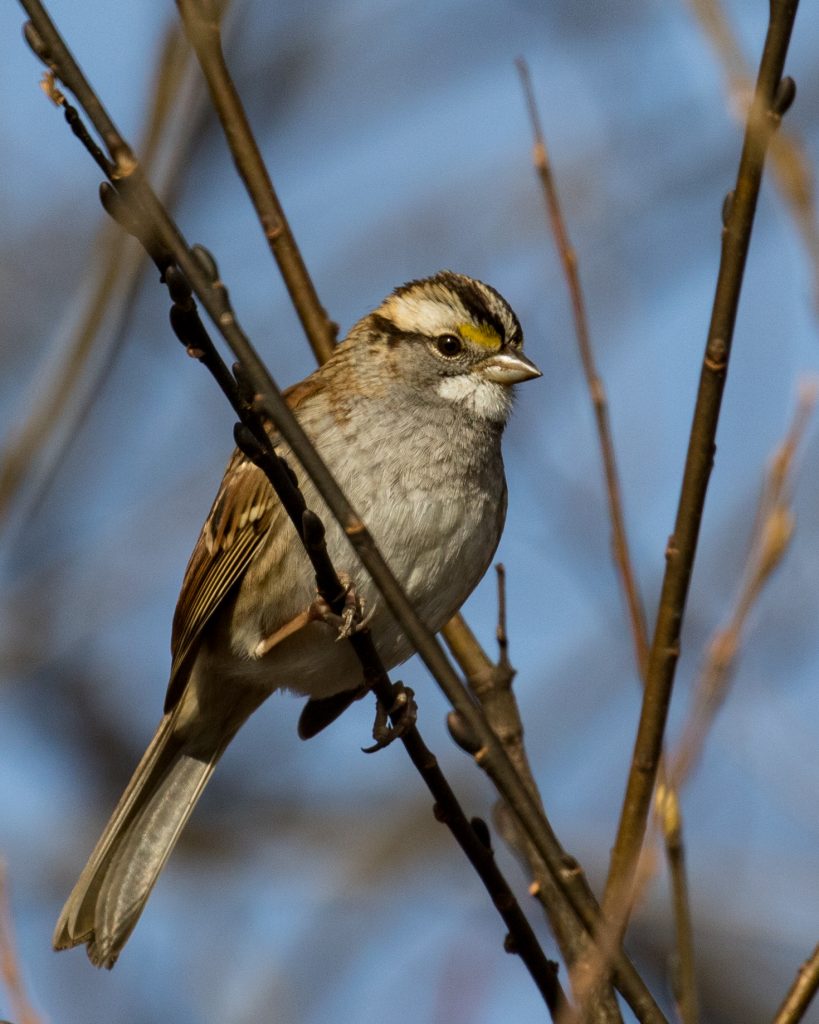
~I had a nice photo op with a couple of White-throated Sparrows on Lynch Avenue, 12/01/18.~
~I made the trip to Port Jervis and walked around Reservoir 3 for a while without coming up with many birds. On my way out I stopped at Laurel Grove Cemetery and found this Red-tailed Hawk.~ 

Sunday Shots, 10/28/18

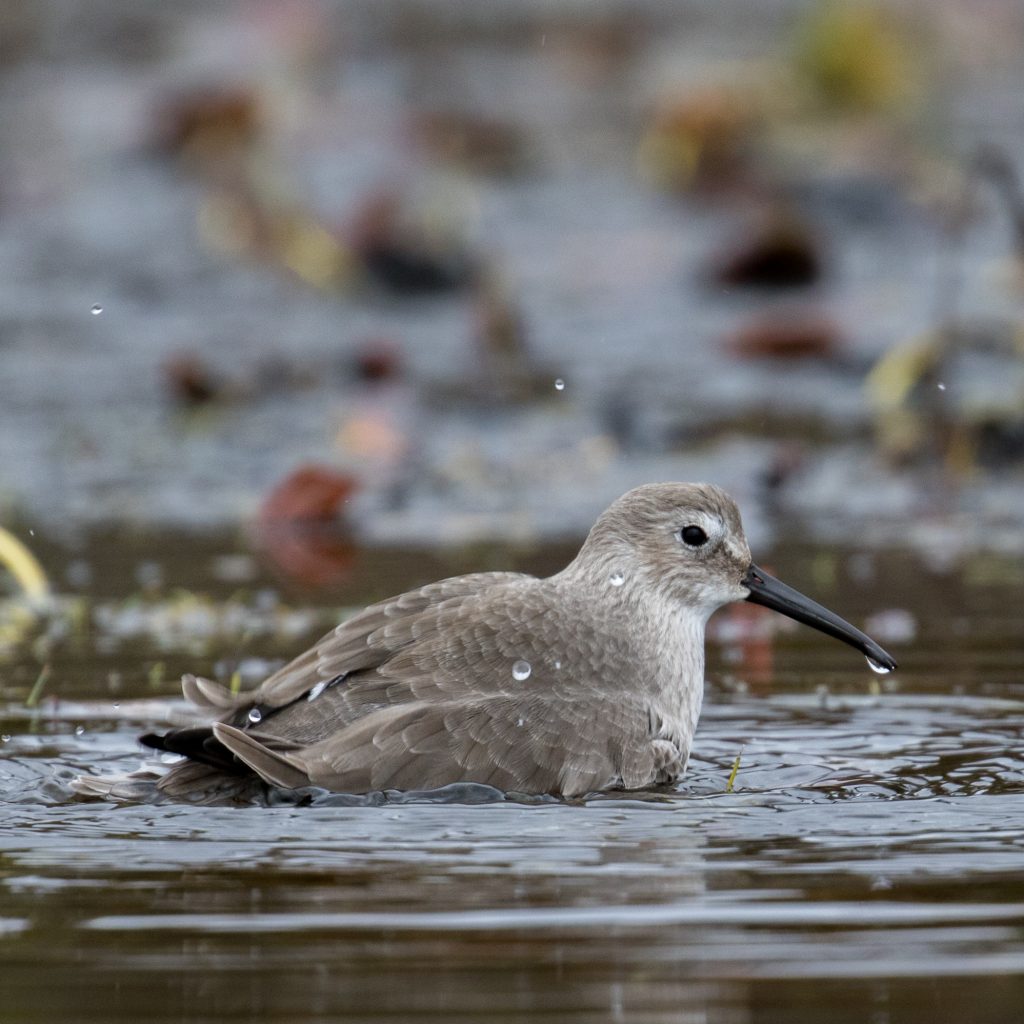
~Dunlin with who-knows-what in its bill. Glenmere Lake, 10/28/18.~

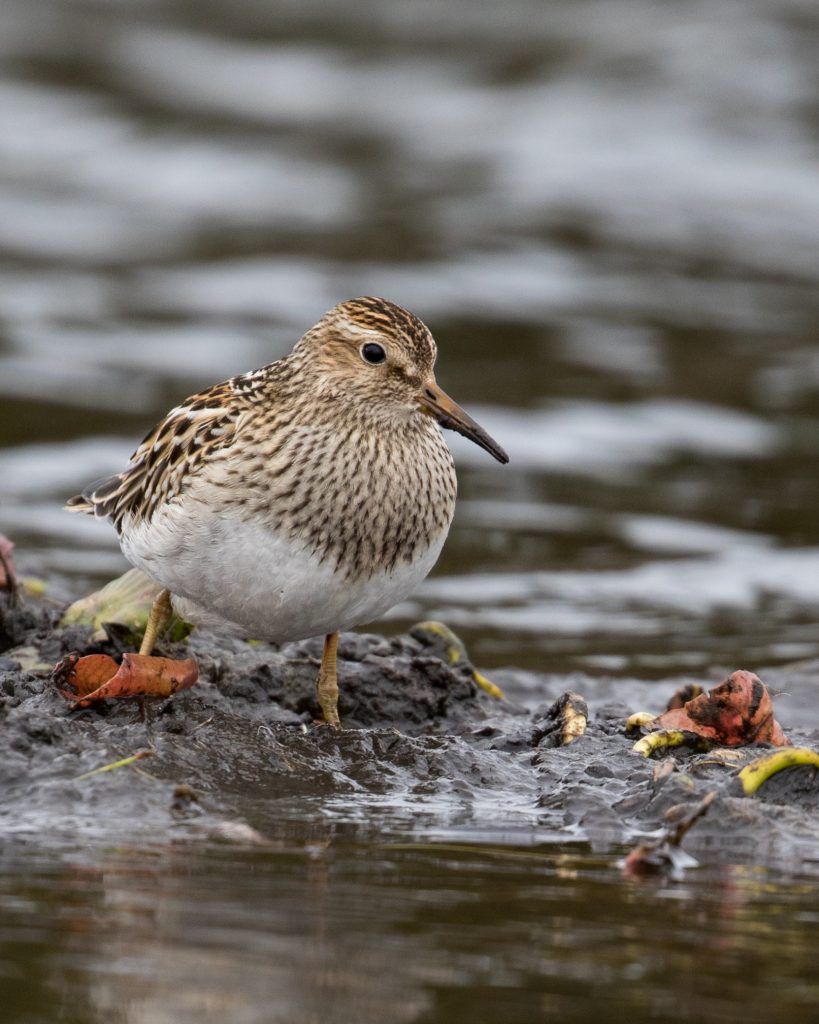
I went to Glenmere Lake again today, and it was awesome! I had 7 species of shorebirds: Dunlin (15+), WHITE-RUMPED SANDPIPER (at least 3), Semipalmated Sandpiper (9), Lesser Yellowlegs (1), Greater Yellowlegs (1), Killdeer (2), and Pectoral Sandpiper (3). The water was much calmer, and the sun actually was peeking out from time to time. I had rare occurrence of getting home and liking my photos more than I had anticipated, so that’s always a good thing.

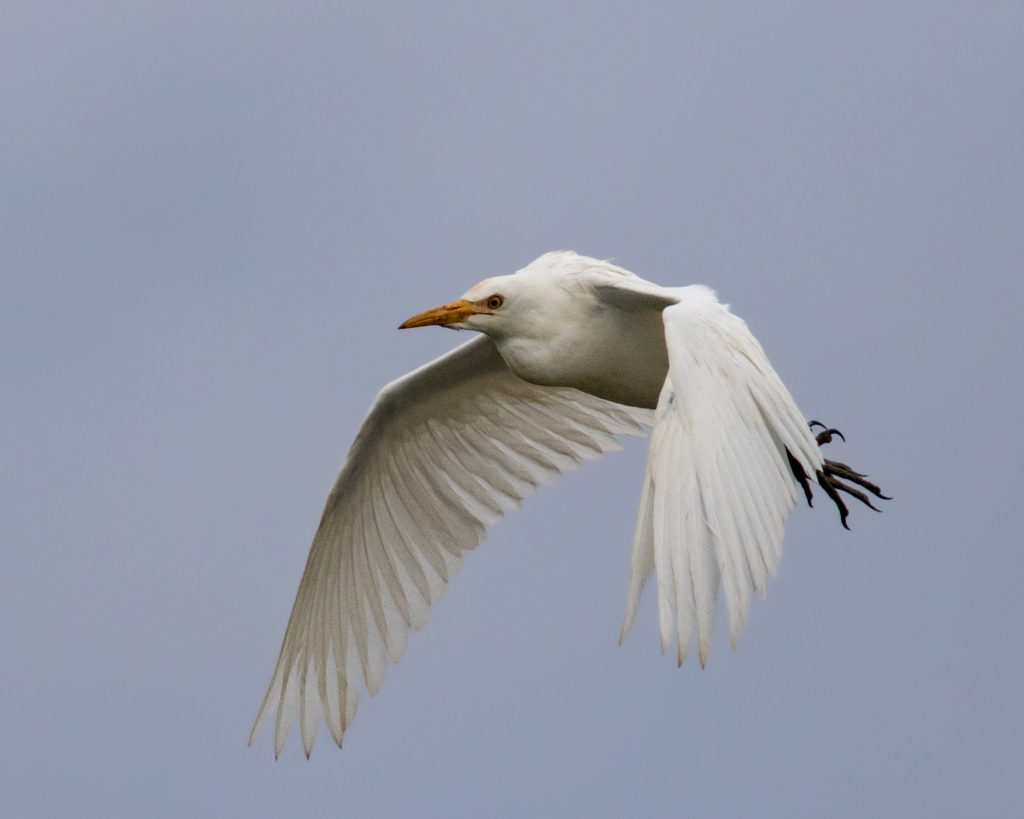
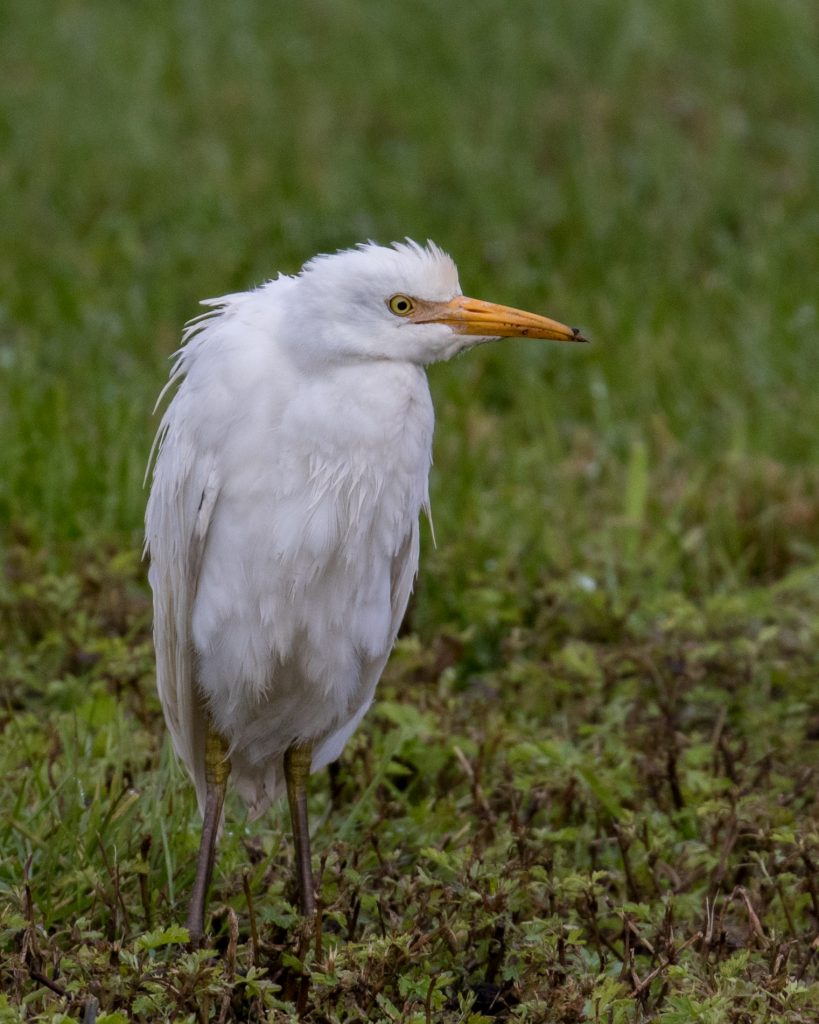
The other excitement of the day was when I found a CATTLE EGRET in the parking area of the Liberty Loop. I pulled in and was eating my breakfast. It wasn’t until I got out of my car that I noticed the CAEA just 30 feet or so from my car! John Haas ran for the bird, and apparently the bird stuck around because I got word from several birders that they got it later in the day. Scroll down to the bottom of this post for CAEA photos.

~Dunlin, Glenmere Lake 10/28/18.~
~WHITE-RUMPED SANDPIPER coming at you. Glenmere Lake, 10/28/18.~
~Dunlin at Glenmere Lake, 10/28/18.~ 
~Lesser Yellowlegs making its move. Glenmere 10/28/18.~
~I never seemed to get a good look at any of the Pecs – this was the best shot I got of one. Glenmere Lake, 10/28/18.~ 
~WHITE-RUMPED SANDPIPER, Glenmere Lake, 10/28/18.~
~Bathing Dunlin, Glenmere Lake 10/28/18.~ 
~CATTLE EGRET at the Liberty Loop, 10/28/18.~ 
~A photographer pulled up, took some pics from by his car, and then walked out and flushed the bird. Sheesh. CAEG in flight, Liberty Loop 10/28/18.~ 
~Cattle Egret minding its own business. Liberty Loop, 10/28/18.~ 

Golden Day at Mt. Peter, 10/20/18

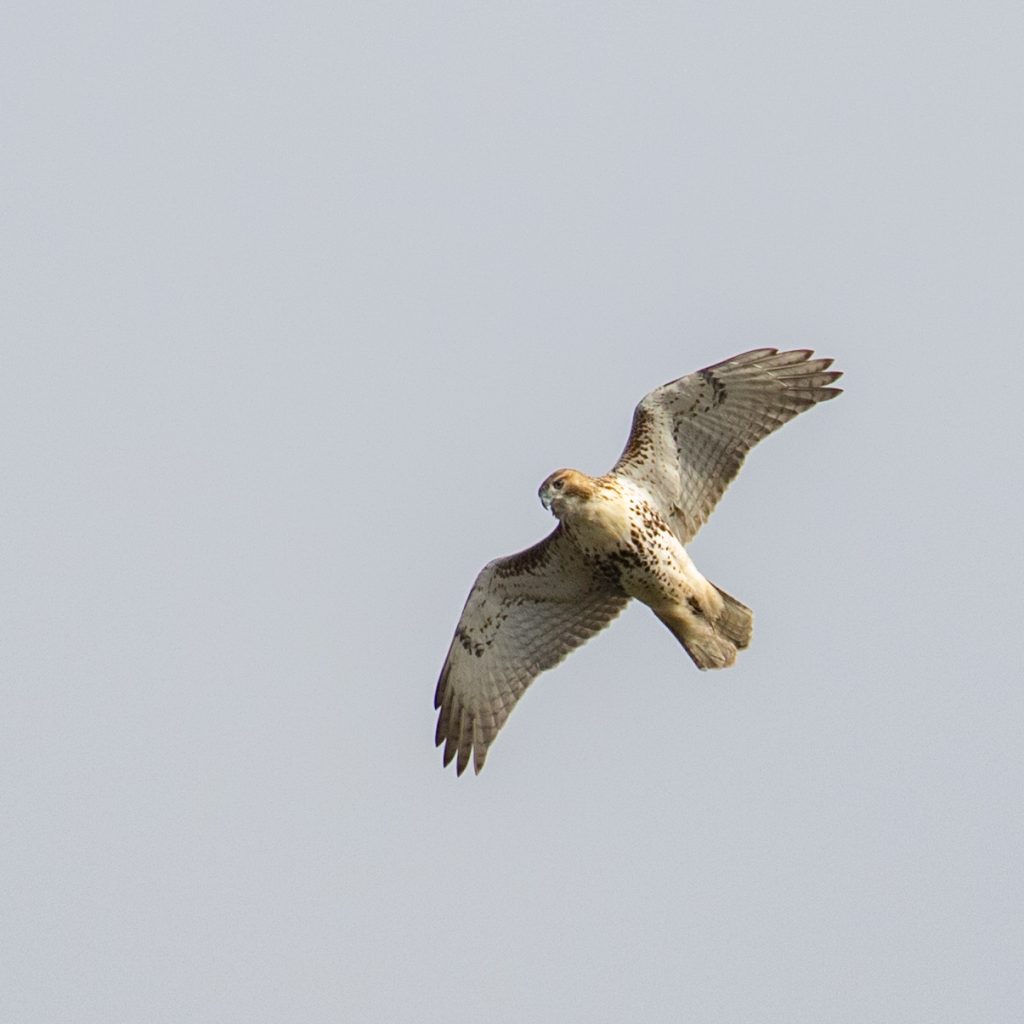
~A Beautiful Red-Shouldered Hawk passes through, Mount Peter Hawkwatch, 10/20/18.~

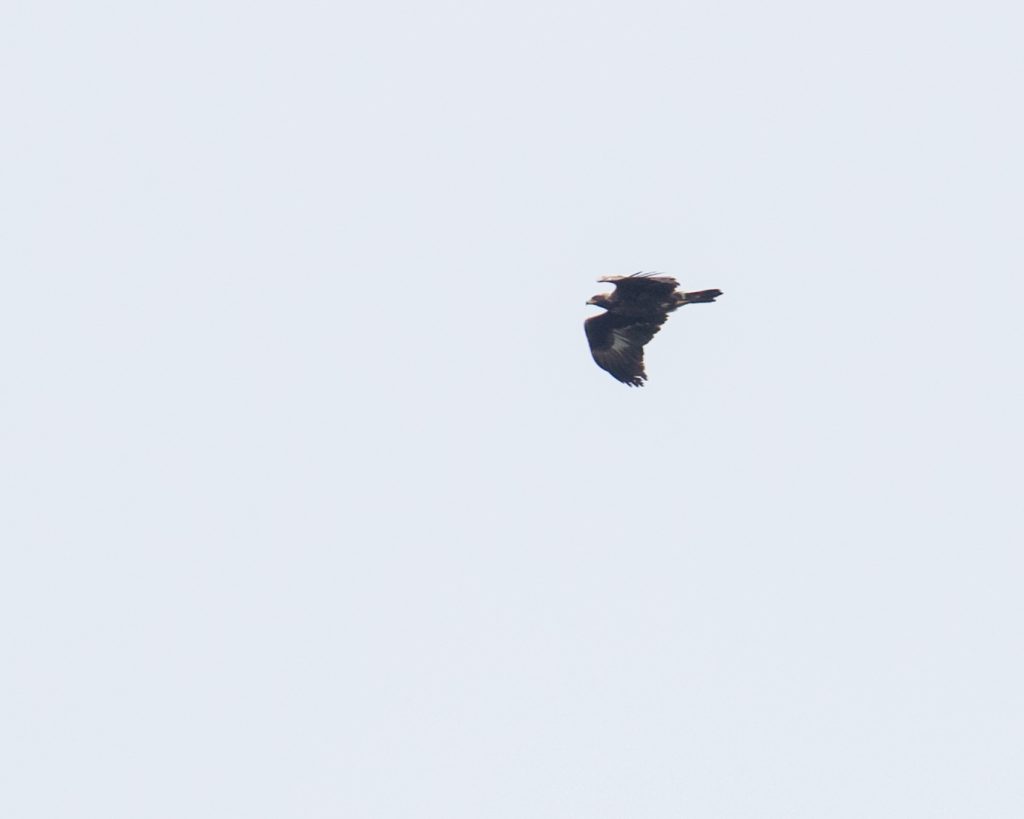
Yesterday was an excellent day at Mount Pete. The flight was steady and and on the low side, with most birds being able to be seen naked-eye. The highlight of the day, however, came pretty early, during the first hour of the watch. I spotted an eagle just over the treetops to the north of the platform. I got the bird in the scope, in perfect light, and sure enough it was a GOLDEN EAGLE! I was flipping out, and of course that early I was up there all alone. I made an adjustment to my scope, and when I tried to relocate the bird, it was gone! It presumably had dropped below the tree line; I looked for was seemed like ages right and left to see if I could catch the bird passing through, but I had no luck. I was disappointed – I was really thinking I’d get better looks at this bird! Nearly ten minutes passed, and I picked up another eagle rising up north of the watch – sure enough it was the Golden, and it eventually passed relatively high up and west of the platform, allowing for documentary pics and the extended look that I was hoping for:
~Wow! GOLDEN EAGLE at Mount Peter Hawkwatch, 10/20/18.~

The rest of the day was less exciting, but still good. The flight was  relatively low and consisted mostly Sharp-shinned Hawks but also had good variety – of the expected species we missed only Broad-winged Hawk and Northern Goshawk. As usual, I’m  including my Hawkcount.org report at the bottom of this post. Today (Sunday) could be a good day for hawk watching, so if you are so inclined, head out to your local hawkwatch.

~A local Red-tailed Hawk hunts for a meal, Mount Peter Hawkwatch, 10/20/18.~
~One more docu-shot of the Golden Eagle, 10/20/18.~ 
~Local Tail. Mt. Pete, 10/20/18.~

Sandhill Crane Shenanigans


~SANDHILL CRANES interacting in the black dirt.~

Over the weekend, I was lucky enough to catch up with the two SANDHILL CRANES  that have been spending some time in our area. Not only that, I watched from my car as the two birds interacted for approximately 5 minutes. They were very vocal while this was going on; you can see in nearly every photo, one or both of their bills are open. I did some research on the internet and found out that SACRs mate for life, choosing their partners based on dancing displays. But, the timing doesn’t seem right for this, so I kept looking and found a passage on the National Geographic website that indicated that they “also dance, run, leap high in the air and otherwise cavort around—not only during mating but all year long”.  It was awesome to see it; here are a number of photos from that five minutes.

Orange County Little Blue Heron, 08/30/18

~LITTLE BLUE HERON at Stewart Forest State Park, 08/30/18.~ 

QUICK POST: After work today, I ran for the LITTLE BLUE HERON at Stewart Forest SP, that was located and reported by Bill Fiero earlier in the day.  I had an event to attend in the evening, so I made a quick pit stop for the LBHE (which was super cooperative – out in the open and close enough to get some decent shots). The bird was in the Maple Lane wetland, which is about 1/4 mile down from the Ridge Road North parking lot. Go left down the paved road and the wetland is on the right. Huge thanks to Bill for finding and reporting.

~Little Blue Heron at Stewart Forest, 08/30/18.~ 


BLACK TERNS in the Black Dirt!

~Three of the 7 BLACK TERNS in the pouring rain at Skinner Lane this evening, 08/13/18. Usually I’m not a fan of farm machinery in my shots, but in this case it seems perfect.~ 

Wow, what a crazy evening of birding I had tonight! I was feeling optimistic as I headed out to the Black Dirt Region after work. Severe storms had moved through the area and appeared to have dropped a lot of water; I was hoping this would make for some interesting birding. I was planning on covering a fair amount of territory, but my first stop – Skinner’s Lane –  ended up being so good, I never left until it was dark. It was raining pretty hard. In fact, it rained pretty good for almost the entire evening, only letting up when I was getting ready to leave. When I arrived, there was a pretty good collection of shorebirds present: BLACK-BELLIED PLOVERS (3), Semipalmated Plovers (4), Least Sandpipers (3), Killdeer (many), and one bird that I initially thought was a Semipalmated Sandpiper but for the moment I’m leaving unidentified (see below).

~Photos were tough, but this one turned out halfway decent. Black Terns at Skinner Lane, 08/13/18.~

I was just about to leave when I noticed a group of peeps had flown in without my seeing them. It was a group of what I’m pretty sure were Semipalmated Sandpipers. Then things got crazy. A small flock of larger birds flew in – they circled the field once and then flew to the south and out of sight. By this time, all my gear was wet and really, I had now idea what the birds were because I just couldn’t get a good look. But, then they came back – I jumped into my car and grabbed my camera to get some shots. They circled the field 3 more times and then headed northeast and did not return. I must have been a little frazzled because I looked at the pics and still couldn’t ID them… I shot a quick photo to Rob Stone who identified them as BLACK TERNS! I was freaking out! I looked at my photos to get a count – I had a single shot with 7 in it!

~BLACK TERNS in the black dirt, 08/13/18.~ 

More shorebirds arrived after the terns had departed – I added 2 Wilson’s Snipe, 7 Pectoral Sandpipers, and another group of Semipalmated Sandpipers to my list for the evening. What a great night of birding; once again, bad weather=good birds.

~I like this shot because you can really see the rain coming down. It’s a grainy, rainy shot of BLACK TERNS at Skinner Lane, 08/13/18.~ 
~BLACK TERNS at Skinner Lane, 08/13/18.~ 
~I’m not sure what this bird is. I’m wondering if it’s a Sanderling – I’m not sure if you can see it in the photo, but the bird had hints of rufous on its head and back, and the size seems possibly good for Sanderling (see photo below with Killdeer as reference). Any thoughts on this bird, please leave a comment – thanks! ~ 

08/04/18 – Orange County WHIMBREL!

~Wow! Whimbrel in the rain at Skinner Lane, 08/04/18.~

Last night and this morning I was having a feeling we might get a good bird in the county today. For some reason I was thinking it would happen at Turtle Bay, but instead it was at Skinner Lane, where I located a WHIMBREL in the rain around 7:30 this morning. I was super pumped; I put the word out and several birders were able to run for the bird. Rob Stone, John Haas, Karen Miller, Kathy Ashman, and Bruce Nott all saw the bird while I was still there; it was a lifer for both Kathy and Bruce. Clay Spencer reported the bird in the late morning as well. Whimbrel is a bird I have daydreamed of finding in our area for a while, and it is the 252nd bird on my Orange County life list.

~WHIMBREL at Skinner Lane, 08/01/18. Other shorebirds present include: approximately 40 Killdeer, 1 Least Sandpiper, 3 Semipalmated Sandpipers, and 1 Lesser Yellowlegs.~ 
~I, of course, ran around the area looking for more shorebirds but did not come up with much. Pine Island Turf Nursery had several Killdeer and a Spotted Sandpiper. Camel Farm had several Killdeer. Turtle Bay had 8 Least Sandpipers and 2 Semipalmated Sandpipers (as well as several Killdeer). This Killdeer was at PITN, 08/04/18.~ 

ROSEATE SPOONBILL Visits Orange County… Briefly, 07/29/18

~ROSEATE SPOONBILL continues, Wallkill River National Wildlife Reguge’s Liberty Loop, 07/29/18.~

I was thinking that the best chance to see the Liberty Loop’s ROSEATE SPOONBILL enter Orange County was to wait until just before night fall and hope it flew into New York on its way to roost. Rob Stone had a different idea. His idea was to get up early and watch as the birds (the ROSP and the Great Egrets) returned to the marsh after a night at of roosting. He tried it on Saturday morning, but arrived too late. We agreed to try on Sunday; Rob thought if we arrived just after 5:00 am, the timing would be good. Well, I struggled to get out of bed and ended up rolling in at 5:40 am. Rob was on the viewing platform, his bins were up and he was on something. I hustled to the platform and he got me on the spoonbill. It was heading north along the west side of the marsh. I kept thinking it would put down in New Jersey, but it held on and flew over the berm an into Orange County! We hustled down the path to try for a better look, running, jogging, and then fast walking, the whole time keeping our eyes pinned on the area where the bird went down. When we were nearly at the northwest corner, we watched as the spoonbill took flight, went back over the berm, and into Sussex County once again. I couldn’t believe it stayed in OC for such a short visit – it could only have been 4 or 5 minutes tops! Still, we were pumped to have seen it, and who knows, this could be the start of some new behavior for the bird where it starts to spend some time in OC?

~LEAST BITTERN doing the splits. Liberty Loop, 07/29/18.~

Rob and I decided to continue and walk the entire Liberty Loop. We eventually relocated the Roseate Spoonbill, it was in the general vicinity of where it was first seen last week. We also had a Glossy Ibis among a large crew of Great Egrets. Green Herons are numerous at the refuge right now, and we also located two BLACK-CROWNED NIGHT HERONS perched in a tree on the west side of the loop. My best photo op occurred at the south end of the loop, where we had several LEAST BITTERNS flying around and perching out in the open. It was awesome, Rob enjoyed seeing them and I enjoyed getting more photos of one of my favorite birds.

~Well, two Least Bitterns in flight together. Put that on the list of photos I didn’t think I’d ever take. Liberty Loop, 07/29/18.~

Afterwards, I went to the black dirt to try for shorebirds. I did alright, with a Solitary Sandpiper and a Lesser Yellowlegs at the Camel Farm, as well as a Least Sandpiper and 3 SEMIPALMATED SANDPIPERS at Turtle Bay. I was heading to Pine Island Turf Nursery when I got a notification that John Haas had relocated the ANHINGA at Morningside Park in Sullivan County. I rushed over, but unfortunately arrived after the bird had already flown. The Anhinga was first seen and considered a one-hit-wonder six days ago! Where has it been all this time? When will it show up again? I really hope I get another shot at that bird, that would be exciting. Great day of birding!

~This pic doesn’t do this scene justice. Least Bittern perched on a cattail, Liberty Loop, 07/29/18.~
~This bird reeked havoc on the marsh for a quick but energetic burst. Peregrine Falcon at the Liberty Loop, 07/29/18.~

Liberty Loop Roseate Spoonbill!

~Wow! Roseate Spoonbill at the Liberty Loop, 07/22/18. Photo by Linda Scrima.~ 

I wonder how many people can say they saw breeding Common Loons with a chick in the morning and a Roseate Spoonbill in the afternoon? Without taking a flight? I’m guessing not too many, if any at all, but that’s exactly what Kyle Dudgeon and I did today. Just as we were wrapping  up our yearly trip to the Adirondacks after a morning of kayaking in the rain (and swimming in Kyle’s case) with Common Loons, I got a phone call from Linda Scrima. She had located a ROSEATE SPOONBILL at the Wallkill River National Wildlife Refuge’s Liberty Loop. Apparently  a photo of a ROSP had been posted to the refuge’s Facebook page and Linda followed up on it early this morning and found the bird on the west side of the loop, just over the border into Sussex County, New Jersey. As Kyle and I got on the road, we did some quick figuring and we knew that we would certainly try for the spoonbill. Five or so hours later, we headed down the trail and joined a number of birders and photographers gathered to see the bird. It was very strange to me to see this bird up in our area, after having previously only seen them in their normal range of Florida and Texas.  It was a life bird for Kyle, so that was exciting. The bird spent the duration of our time there partially hidden by vegetation, so Linda sent me one of her pics from earlier in the day to use for this post – thanks Linda!

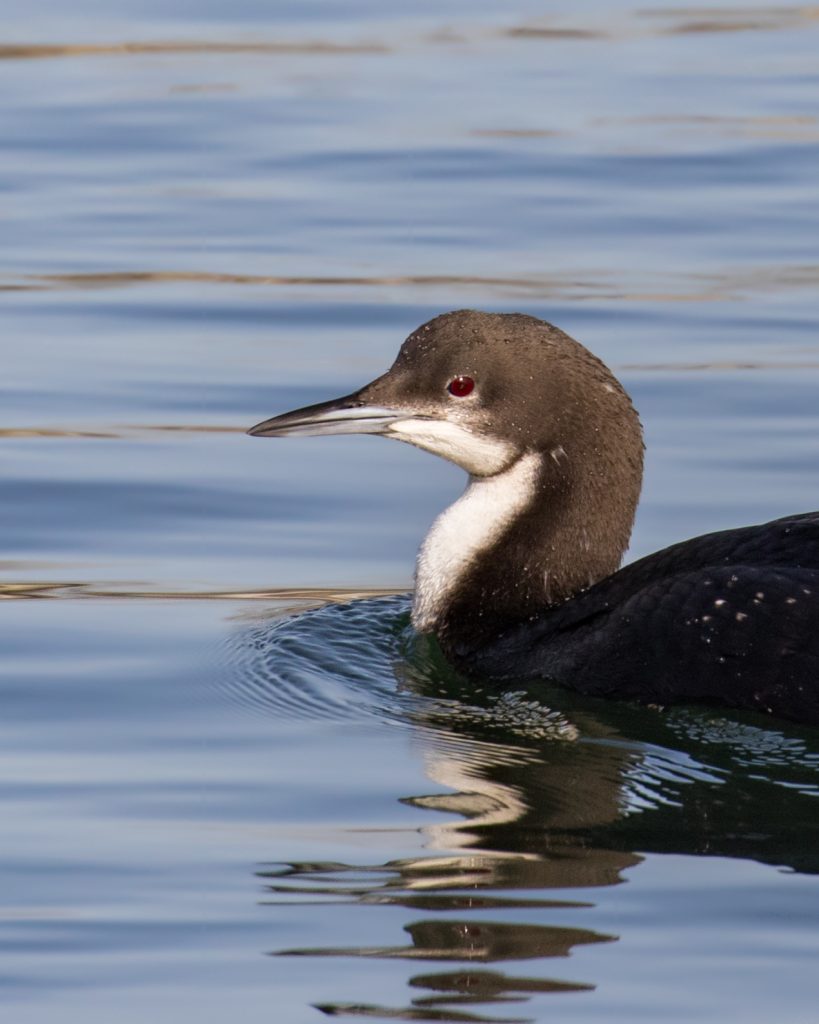
I have a good number of Common Loon photos to get through, but I will post in the next day or so; it’s one of my favorite posts of the year, so I’m looking forward to it. Here is a teaser from earlier this morning, during a break in the rain:

~Family love. I can’t get enough of these loons, they are just such great birds, beautiful, personable, and smart. Adirondacks, 07/22/18.~ 

Finally! Orange County RUFFED GROUSE!

~I have this as an Acadian Flycatcher. It was only doing half of its call (the “peetz” in  the “pizza!” call), but it sounded good to me. Black Rock Forest, 06/10/18.~

RUFFED GROUSE is a bird that I have been trying to get in Orange County for several years now; it’s a bird that, for some reason, really captured my imagination and one that I’ve put in a concerted effort to try and find in the county. So, imagine how pleased I was when I saw Ajit Antony’s eBird report of a RUGR at Black Rock Forest in my “Year Needs Alert” email from eBird on Friday. I had a work obligation yesterday, but I got up early to try for the bird this morning.

It was frustrating start to the morning for me. I don’t know Black Rock Forest at all, so I originally went to completely the wrong place. Then I went to the Black Rock Forest main parking area, where I had a Hooded Warbler calling as soon as I got out of the car.  I looked at the map trying to locate “Jupiter’s Boulder”.  An obliging local hiker helped me out and told me it would be best to drive to another trailhead, on Old Mineral Springs Road. So, I got back in the car and drove there; I walked nearly half a mile and realized I’d forgotten rain gear for my camera – it sure felt like rain, so I walked back to the car to get it (thus guaranteeing no rain). Then, I was finally ready to take a hike. I’d never birded that area before and it was a nice hike with a beautiful waterfall (no pic, my cell phone died!), and good amount of birds – mostly the usuals but with a couple favorites of mine – Yellow-billed Cuckoo, and a couple of Acadian Flycatchers. You can see my eBird report here.

Ajit’s report stated he heard the drumming of a RUGR “to the SW, a little way from Jupiter’s Boulder”.  As I was nearing Jupiter’s Boulder (I didn’t know it at the time, having never been), I came around a bend in the trail and about twenty-five feet or so off the trail, to the left of me,  2 RUFFED GROUSE popped straight up – and like bats out of hell, one flew to the left and the other to the right. They made such a ruckus, it really startled me. I followed the one that headed to the right, hoping to see it put down, but it just kept going until it disappeared into the brush. I continued on the trail, hoping to get lucky and relocate that bird, but it was always going to be tough. Jupiter’s Boulder was only another 100 yards or so up the trail, so I sat there for a while and had some breakfast, hoping to hear or see something. Of course, I never saw either bird again, but wow was that exciting. Huge thanks to Ajit for reporting – Ruffed Grouse is my 250th Orange County life bird. Now, let’s see how many years before I get a GOOD look at one…

~My ONLY other photo op of the morning – a Brown-headed Cowbird. This has the look of a young bird to me. Black Rock Forest, 06/10/18.~
~I took this shot a couple weeks ago at the Bashakill and I’ve wanted to post it – two Bank Swallows displaying courtship behavior; they just looks so sweet to me and Bank Swallow is not a bird I get to photograph very often.~