~Wow! Roseate Spoonbill at the Liberty Loop, 07/22/18. Photo by Linda Scrima.~
I wonder how many people can say they saw breeding Common Loons with a chick in the morning and a Roseate Spoonbill in the afternoon? Without taking a flight? I’m guessing not too many, if any at all, but that’s exactly what Kyle Dudgeon and I did today. Just as we were wrapping up our yearly trip to the Adirondacks after a morning of kayaking in the rain (and swimming in Kyle’s case) with Common Loons, I got a phone call from Linda Scrima. She had located a ROSEATE SPOONBILL at the Wallkill River National Wildlife Refuge’s Liberty Loop. Apparently a photo of a ROSP had been posted to the refuge’s Facebook page and Linda followed up on it early this morning and found the bird on the west side of the loop, just over the border into Sussex County, New Jersey. As Kyle and I got on the road, we did some quick figuring and we knew that we would certainly try for the spoonbill. Five or so hours later, we headed down the trail and joined a number of birders and photographers gathered to see the bird. It was very strange to me to see this bird up in our area, after having previously only seen them in their normal range of Florida and Texas. It was a life bird for Kyle, so that was exciting. The bird spent the duration of our time there partially hidden by vegetation, so Linda sent me one of her pics from earlier in the day to use for this post – thanks Linda!
I have a good number of Common Loon photos to get through, but I will post in the next day or so; it’s one of my favorite posts of the year, so I’m looking forward to it. Here is a teaser from earlier this morning, during a break in the rain:
~Family love. I can’t get enough of these loons, they are just such great birds, beautiful, personable, and smart. Adirondacks, 07/22/18.~
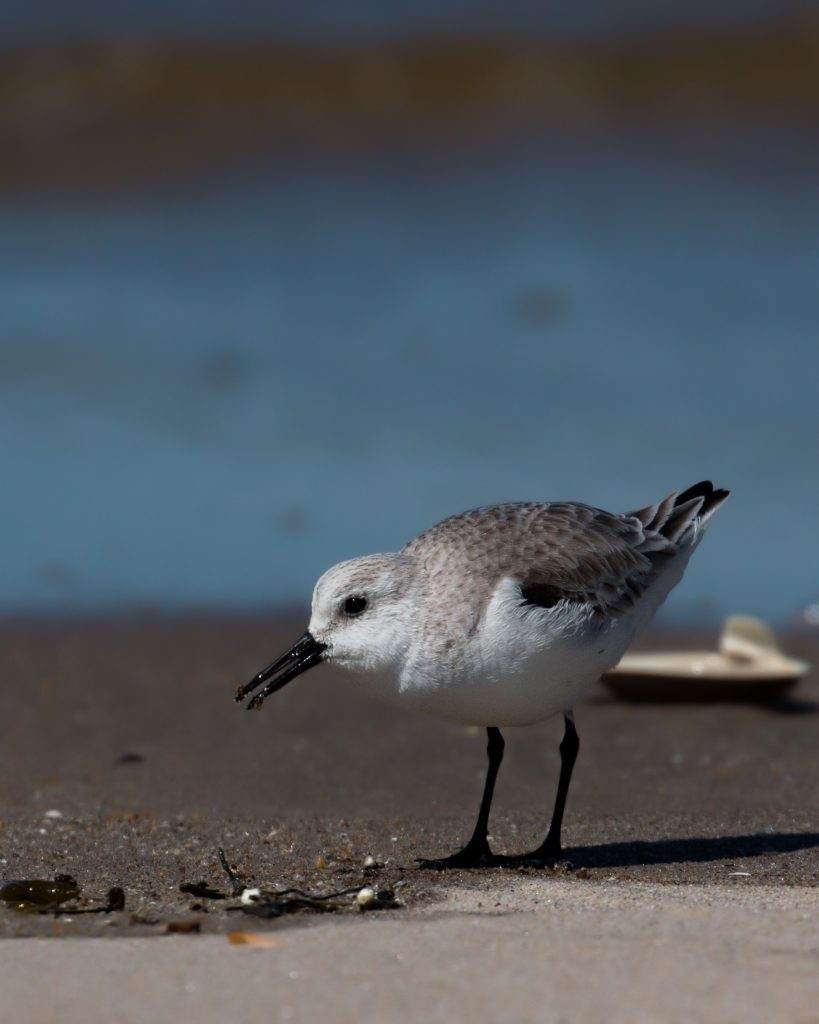
~One of many Sanderlings we had at Sandy Hook, 03/14/18.~
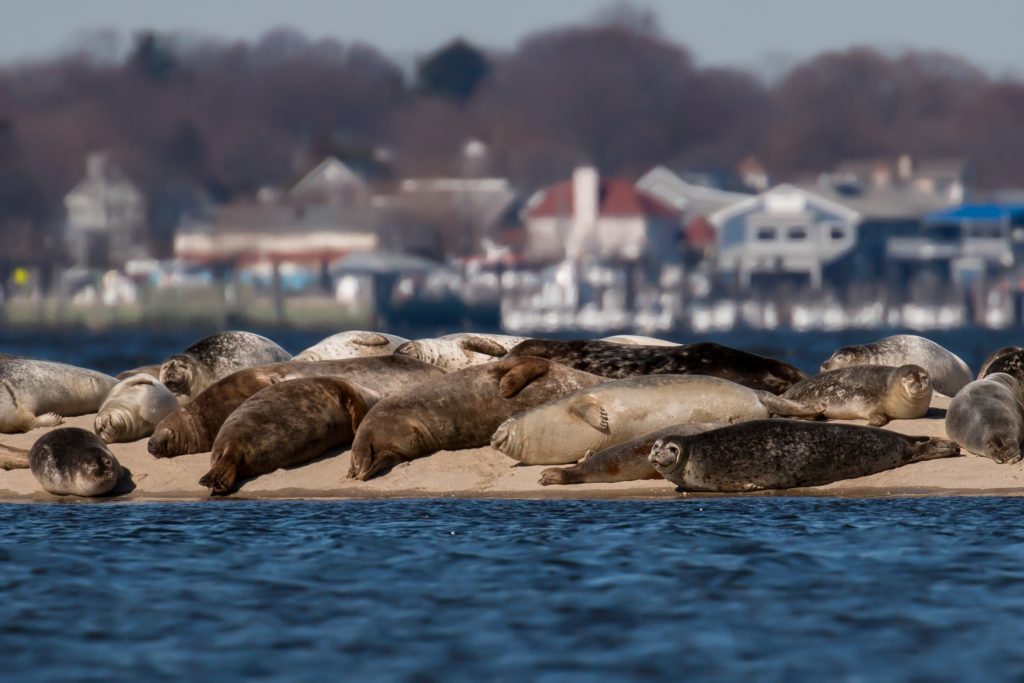
It had been a while (over five years!) since I’ve birded Sandy Hook, NJ (part of the Gateway National Recreation Area), so I jumped at the opportunity to take a day trip with birding buds Maria Loukeris and Linda Scrima. Our first stop was to check on the large group of seals that have been seen on the sand bar near lot C. I’ve never seen anything like it; over 100 seals of all shapes and sizes, piled up on a single sand bar. We spent some time with the seals, enjoying incredible scope views and taking loads of pics. This was not something I expected to see on this day. We also picked up our first shorebirds of the day, three American Oystercatchers, as well as several species of waterfowl: Brant, Horned Grebe, American Black Duck, Bufflehead, and Red-breasted Mergansers. Northern Gannets streamed overhead and out in the distance, a theme for the day, as we easily saw over 100 gannets for the day.
~A pile of seals on a sand bar at Sandy Hook, 03/24/18.~
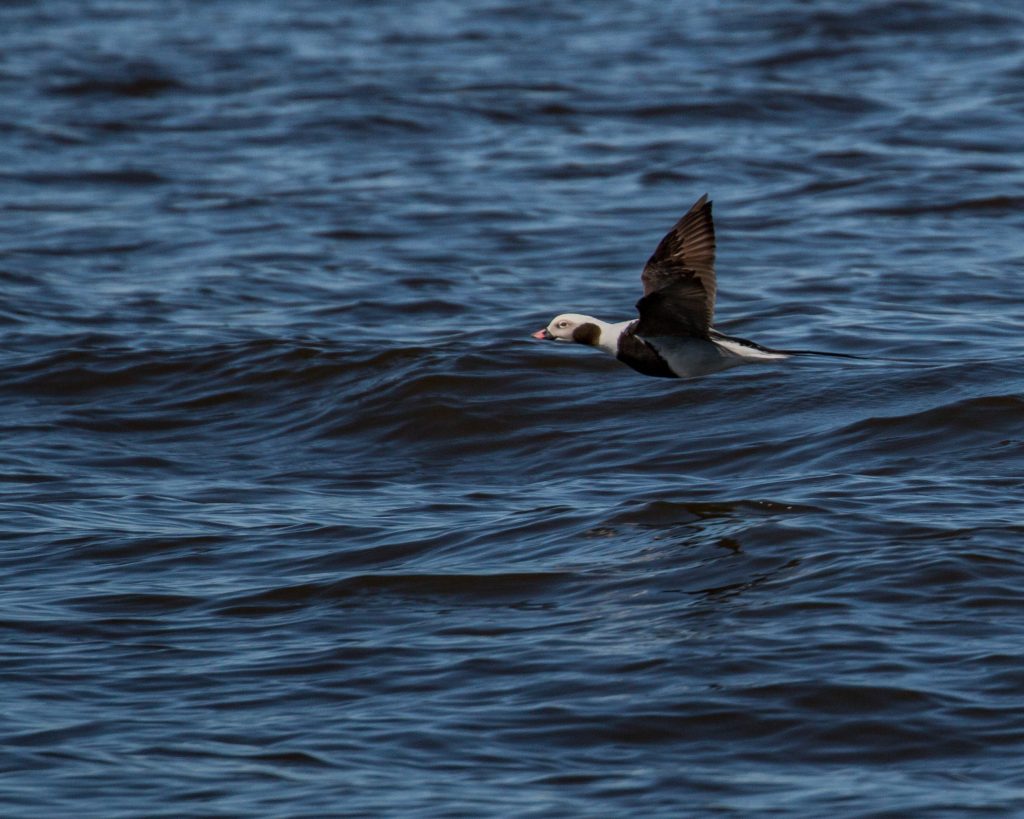
From there, we headed out to the point. Our target bird was Piping Plovers, which unfortunately were not to be found. We picked up some other shorebirds, however. Many Sanderlings were working the shoreline and flying over the water, four Black-bellied Plovers were hanging out closer to the dunes, and we had a handful of additional oystercatchers. For waterfowl we added several species to our list: We had a small group of Black Scoters, several Long-tailed Ducks, a Red-necked Grebe, a Double-crested Cormorant, and a trio of Common Loons. We also had our FOY Eastern Phoebe and Osprey.
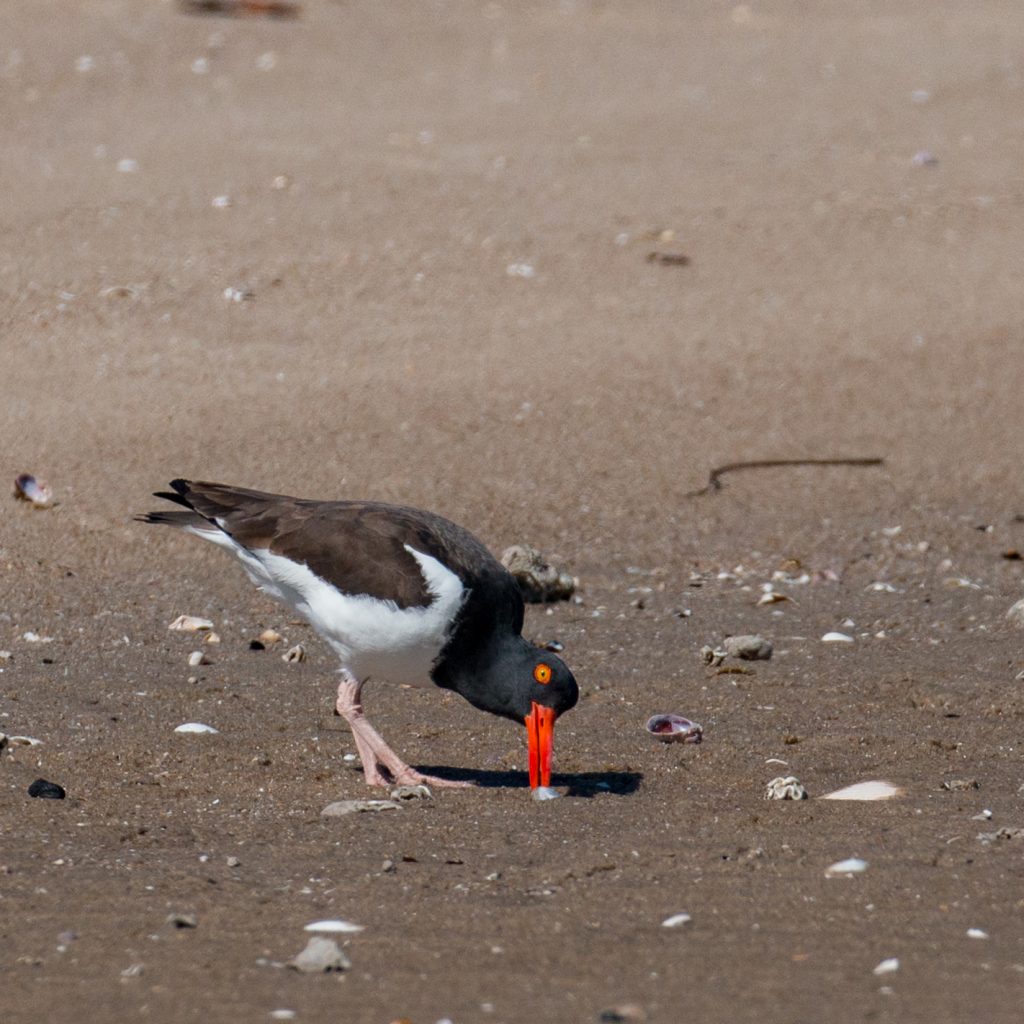
~American Oystercatcher searching for a snack – Sandy Hook 03/24/18.~
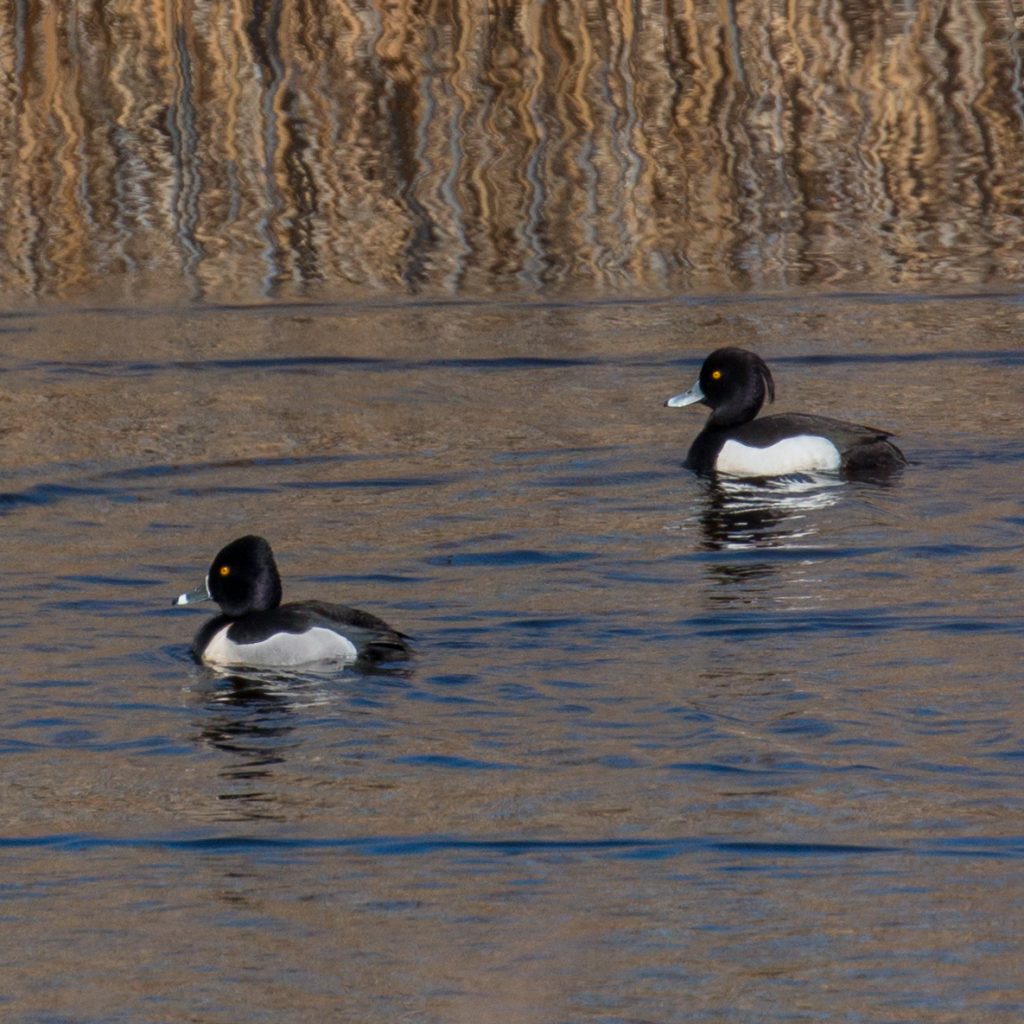
When we got back to the car, Maria received a text alert – TUFTED DUCK at the “North Pond”! But where is the North Pond? Fortunately we ran into a large group of birders who had just come from viewing the Tufted Duck and they gave us perfect directions. We went for the bird and although it was not in sight at first, we waited it out and eventually it swam back into view amongst a group of Ring-necked Ducks – a beautiful rarity! I saw a TUDU one other time several years back, but the look was distant so I really appreciated the great looks we got of this one.
~Nice comparison between a Ring-necked Duck (left) and the TUFTED DUCK (right), Sandy Hook NJ 03/24/18. Heat shimmer was a bear all day and really took its toll on nearly all the photos I took.~
On the way home we stopped at Raritan Bay Waterfront Park. We were hoping for some of the excellent gulls that had been recently reported, but the tide was too high and there were not many gulls present. We scanned for waterfowl and I was impressed with the large number of Horned Grebes present – easily over a dozen. We added a single species to our list for the day – Red-throated Loon – putting our total to over 40 species for the day. What a super day – excellent birds (and sea mammals) and great company.
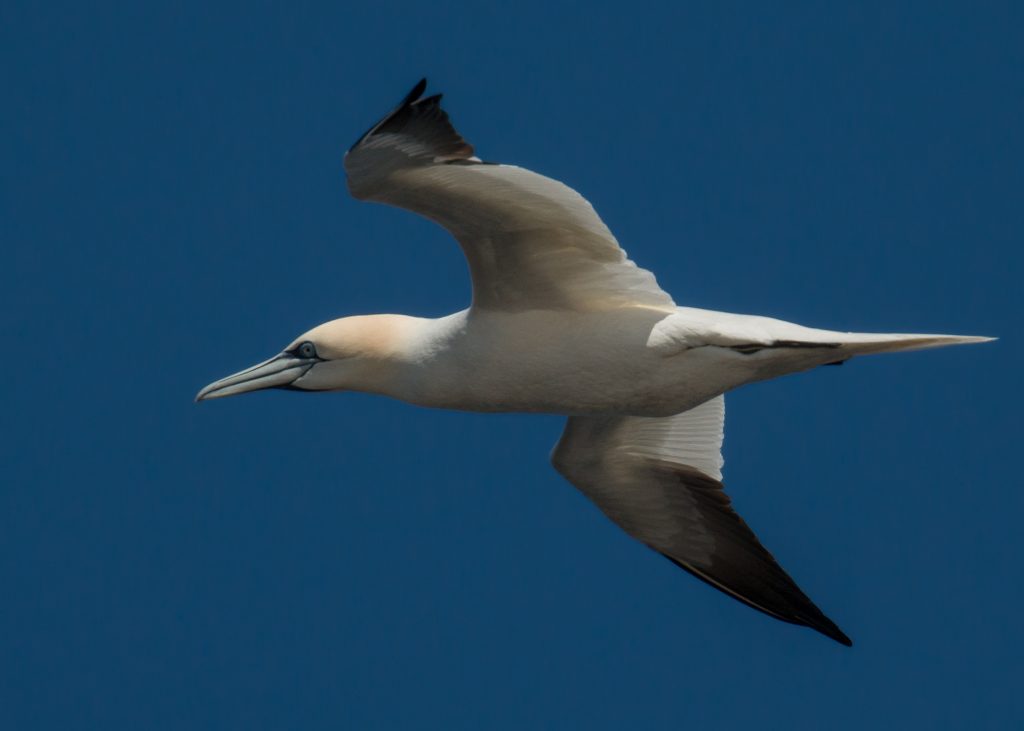
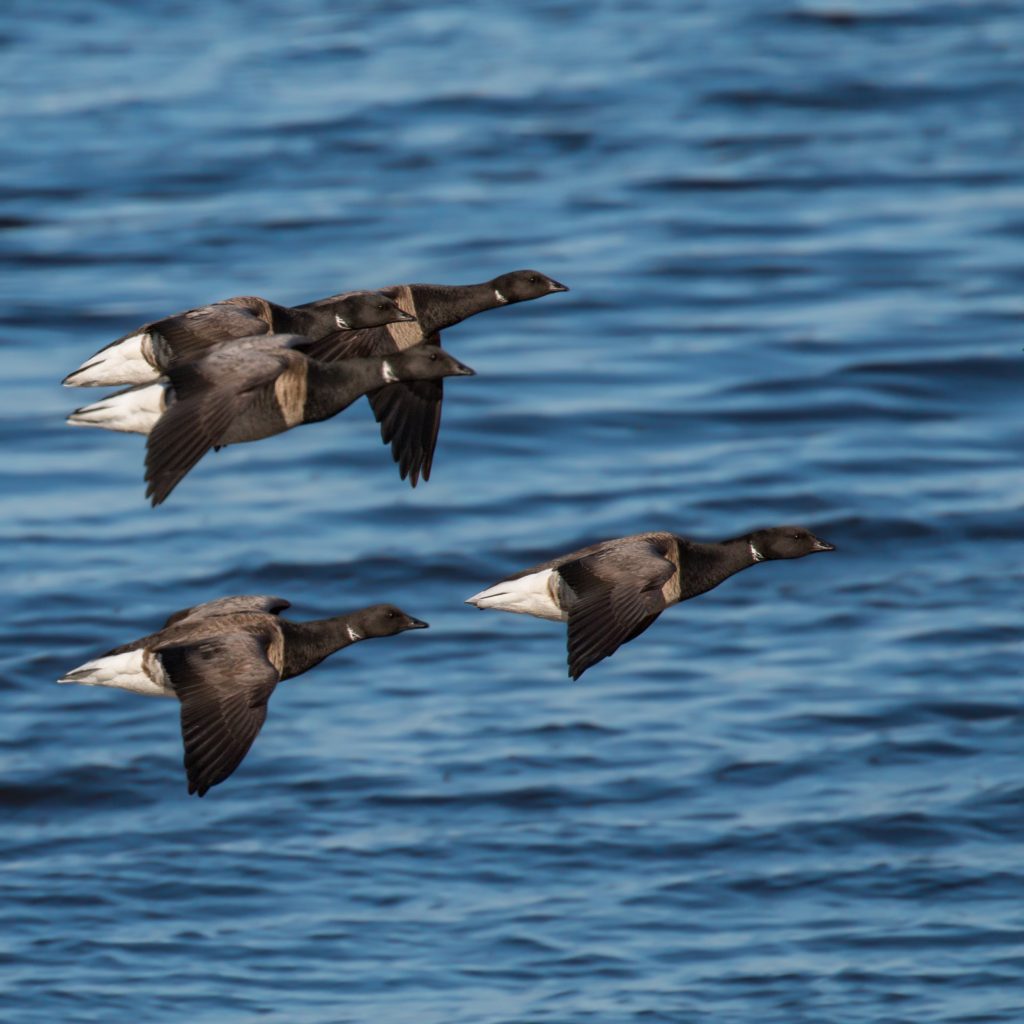
~One of many, many Northern Gannets seen throughout the day. Sandy Hook, 03/24/18.~~Always a favorite of mine – Brant in flight at Sandy Hook, 03/24/18.~~I have struggled to get any Long-tailed Duck photos this year, so I’m including this one; Sandy Hook 03/24/18.~
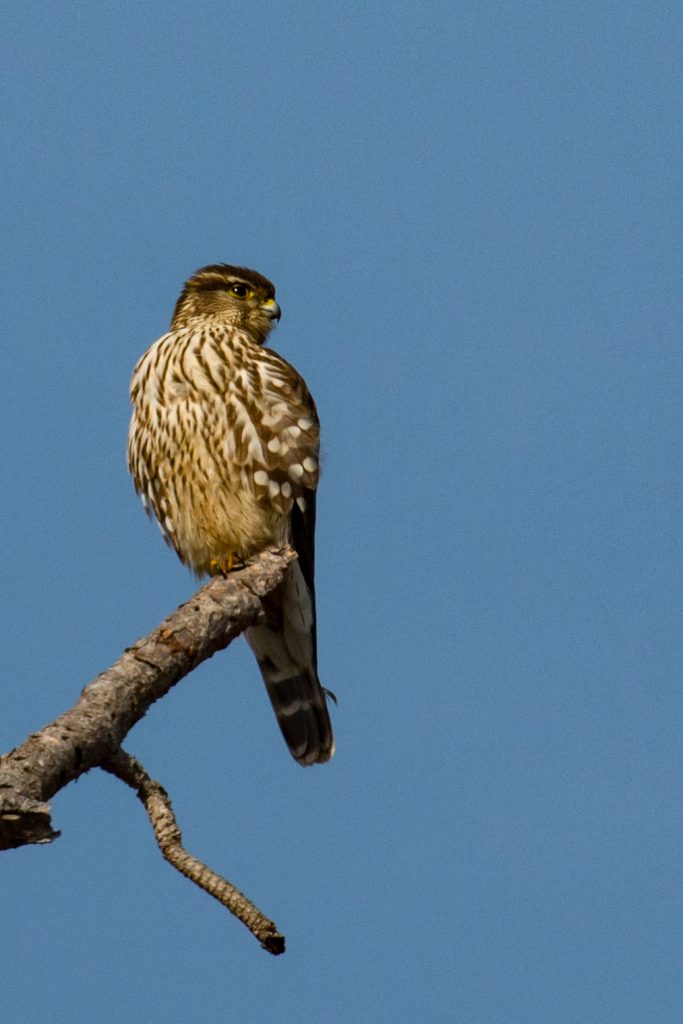
~A Merlin posed nicely for us in good light at Round Valley Reservoir, 01/27/18.~
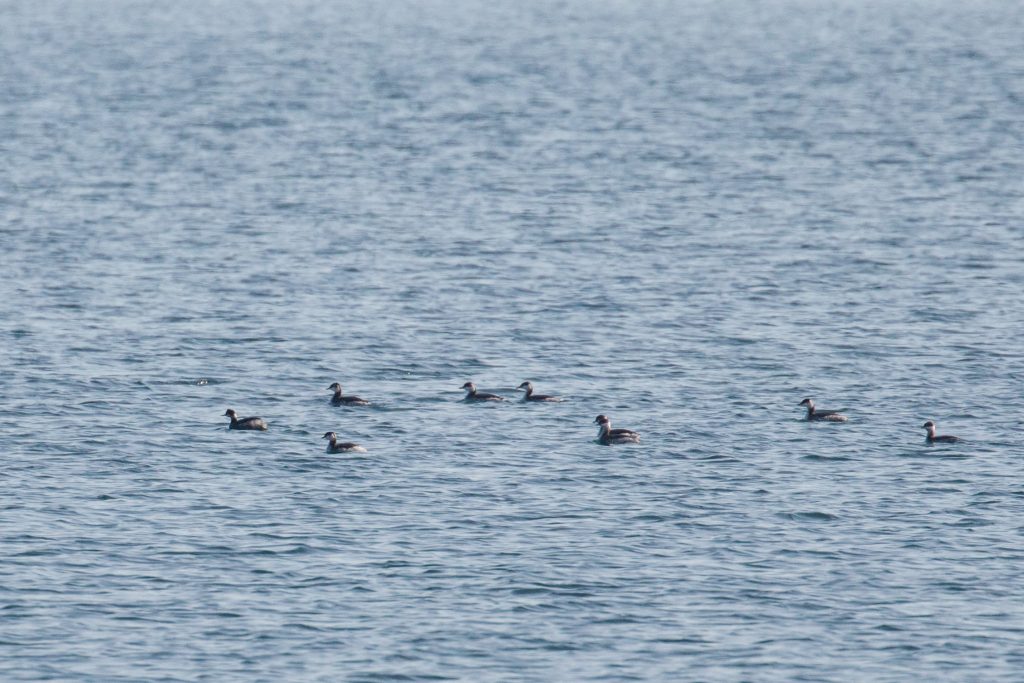
This morning Maria Loukeris, Linda Scrima, and I headed to Round Valley Reservoir in Hunterdon County, NJ. Our target bird was an EARED GREBE that has been reported there recently. Initially it did not look good – the bird was reportedly keeping company with several Horned Grebes; we located the group of birds, but they were miles out and terribly backlit. One certainly looked different and was presumable the Eared Grebe, but the birds were just too distant to be sure. We decided to bird the reservoir in hopes that we would get better looks, and eventually we did. The Eared Grebe was with 8 Horned Grebes; we enjoyed good scope looks and took distant, backlit, documentary photos. It was a life bird for all 3 of us, so that was exciting. Other highlights included 3 Red-necked Grebes, nearly a dozen Lesser Black-backed Gulls, and a good photo op with a Merlin as we were leaving.
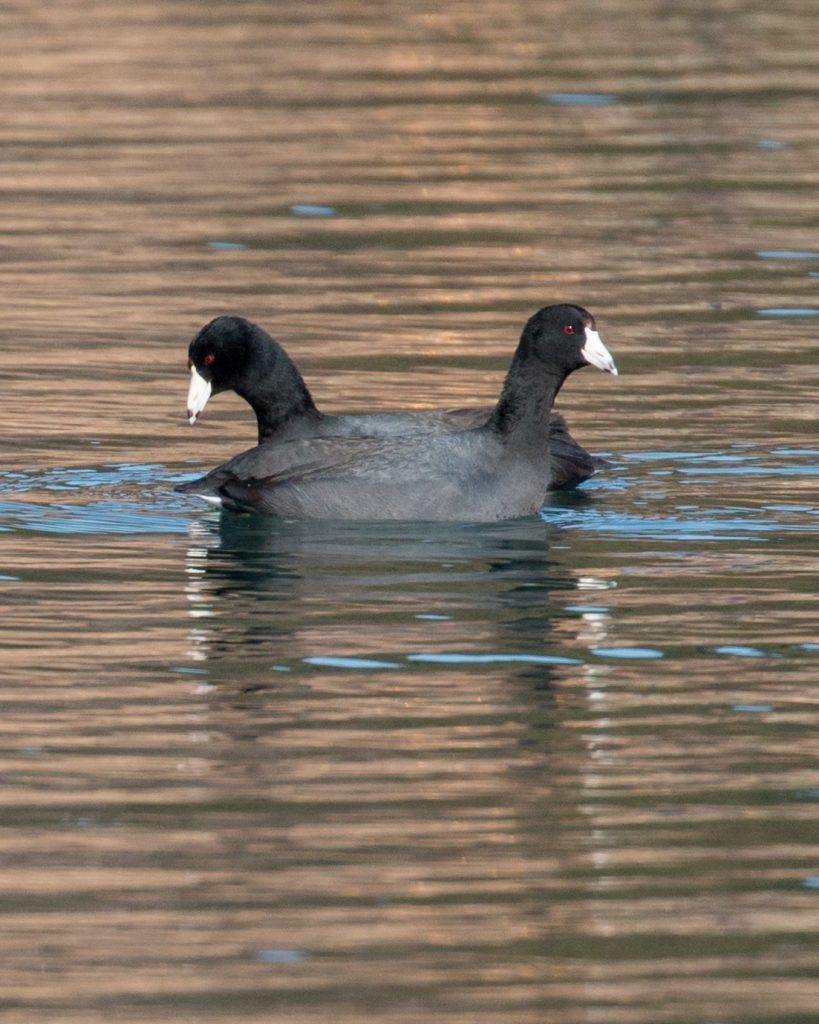
~A pair of American Coots at Round Valley Reservoir, 01/27/18.~~The EARED GREBE is the bird farthest to the left; with 8 Horned Grebes, Round Valley Reservoir, 01/27/18.~
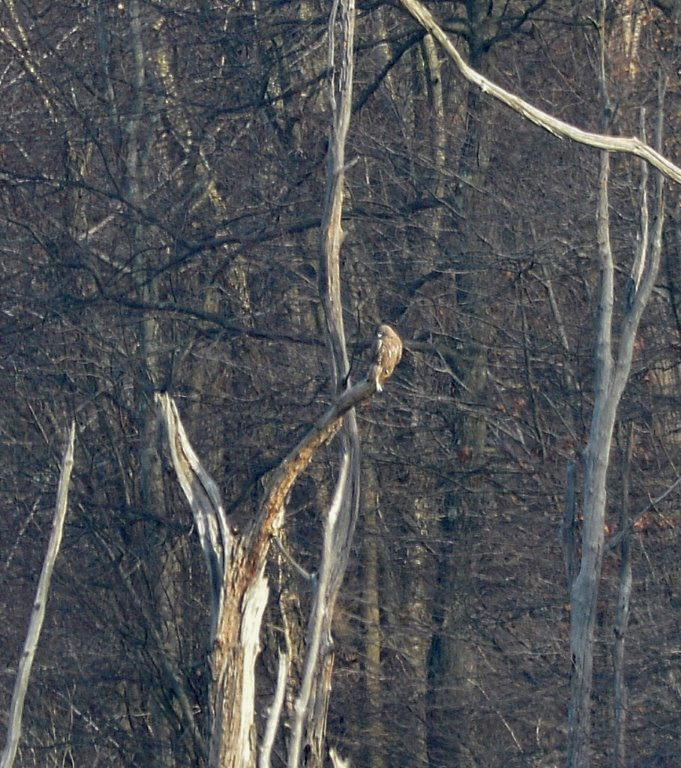
As we were leaving, Maria checked her phone and saw that a GYRFALCON (!!!) had been reported at (location removed, see post update below)! We rushed over, stopping at 2 wrong spots before finally finding the right location. The place was loaded with birders and photographers, and thankfully, the Gyrfalcon was still present, sitting in the sun on a distant dead snag perch in the reservoir. The bird was a dark morph Gyrfalcon, and scope views of this big, beautiful bird were excellent but photos were again on the documentary side. Not long after our arrival, the bird took off and we did not see it again.
~Maria got the best shot of the GYRFALCON, Warren County NJ, 01/27/18. Photo by Maria Loukeris.~
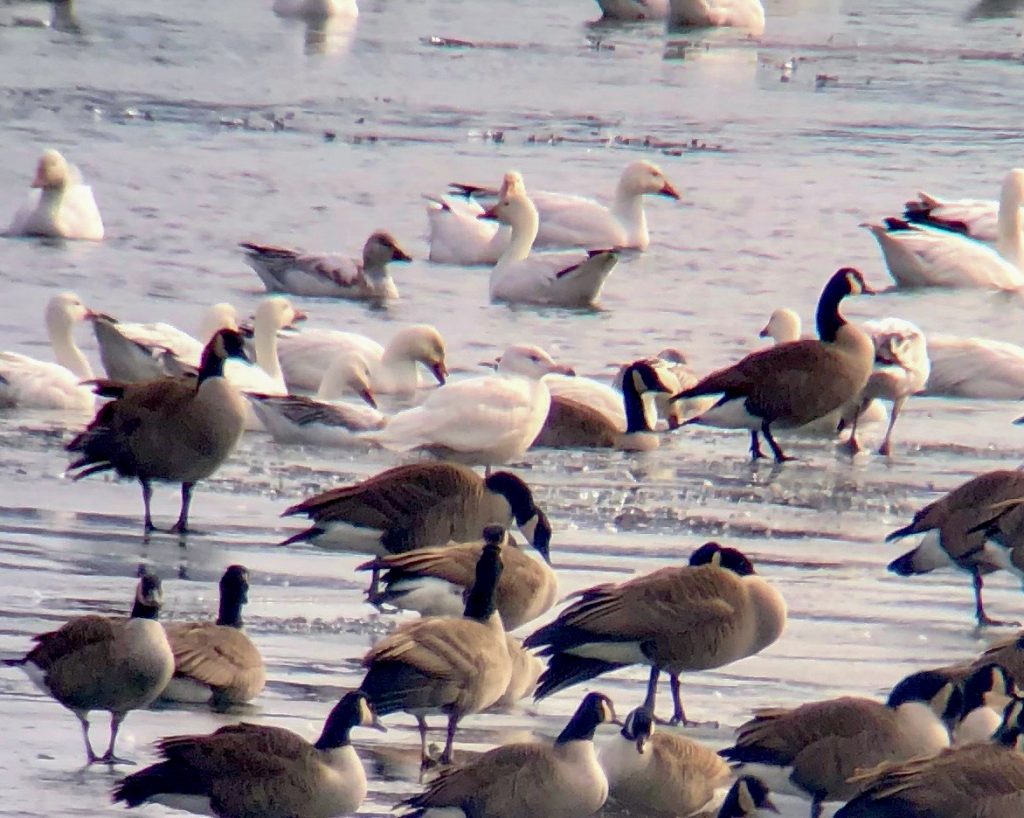
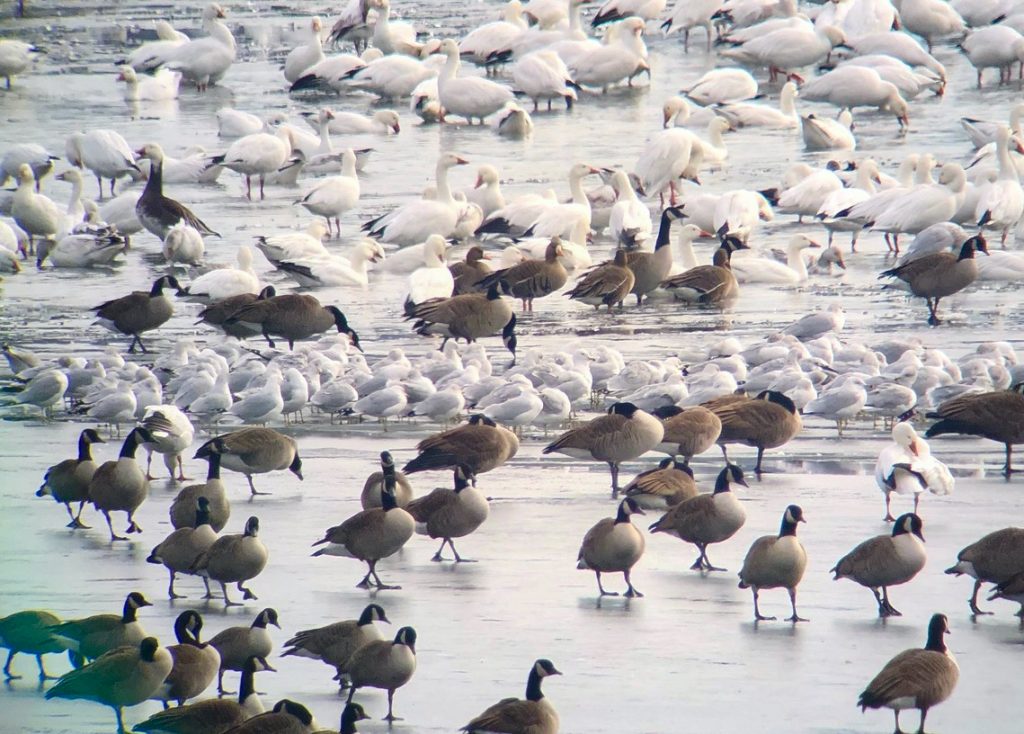
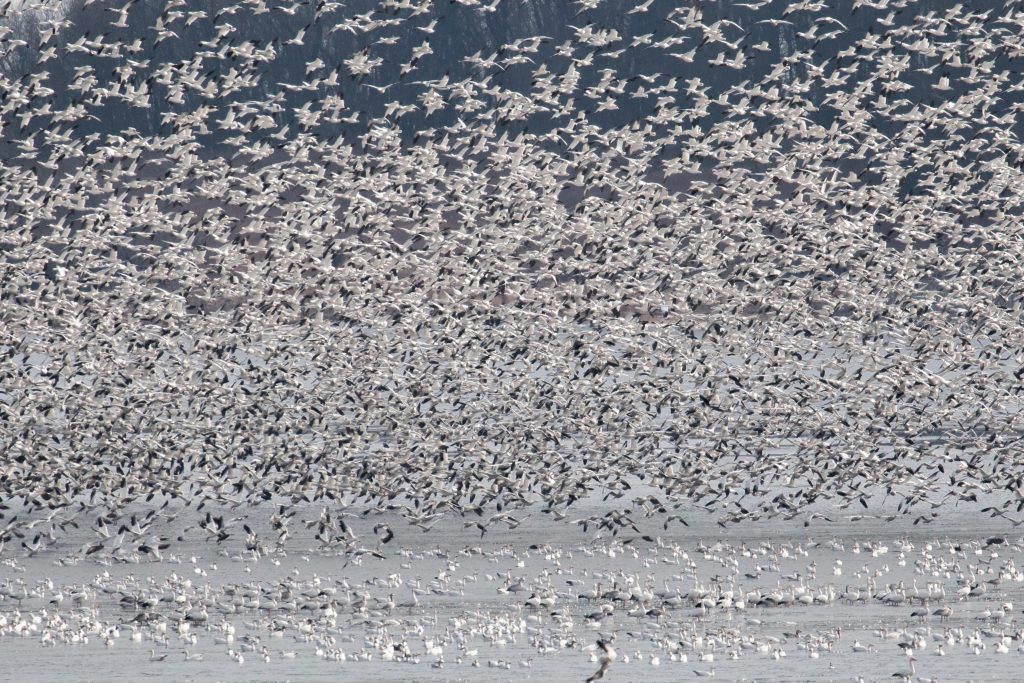
Meanwhile, in the water there was a vast array of waterfowl, including an estimated 5,000 Snow Geese. We started looking through the birds and I was able to locate 4 GREATER WHITE-FRONTED GEESE! I was stoked to find them and we got the other birders present on them. Shortly after that, another birder located a GLAUCOUS GULL! That would be a lifer for me, so I rushed over to his scope to view. I then got the bird in my scope and was able to take some digiscoped shots with Linda and Maria’s phones (my phone had a meltdown for some reason and was completely dead). I couldn’t believe and big, white, and beautiful that gull was, it really was some bird. It’s not very often these days that I can get a single life bird, not to mention two in one day. The GLGU was life bird #390 for me.
~Wow! Big, beautiful bird! GLAUCOUS GULL, Warren County NJ , 01/27/18. Digiscoped pic, using Maria’s iPhone.~
A ROSS’S GOOSE was located by other birders a couple different times in the mass of Snow Geese; unfortunately none of us were able to get on that bird and it seemed that the bird was being lost almost as soon as it was found. There were plenty of other waterfowl present, including: Canada Geese, Mallards, American Black Ducks, Northern Pintails, Canvasbacks, Redheads, Ring-necked Ducks, Buffleheads, Hooded Mergansers, and a single Common Goldeneye. The flock of Snow Geese put on a nice show, picking up and putting back down several time while were there. Huge thanks to Maria for suggesting we take the trip down, it was truly an incredible day of birding with good friends, beautiful weather, and amazing birds.
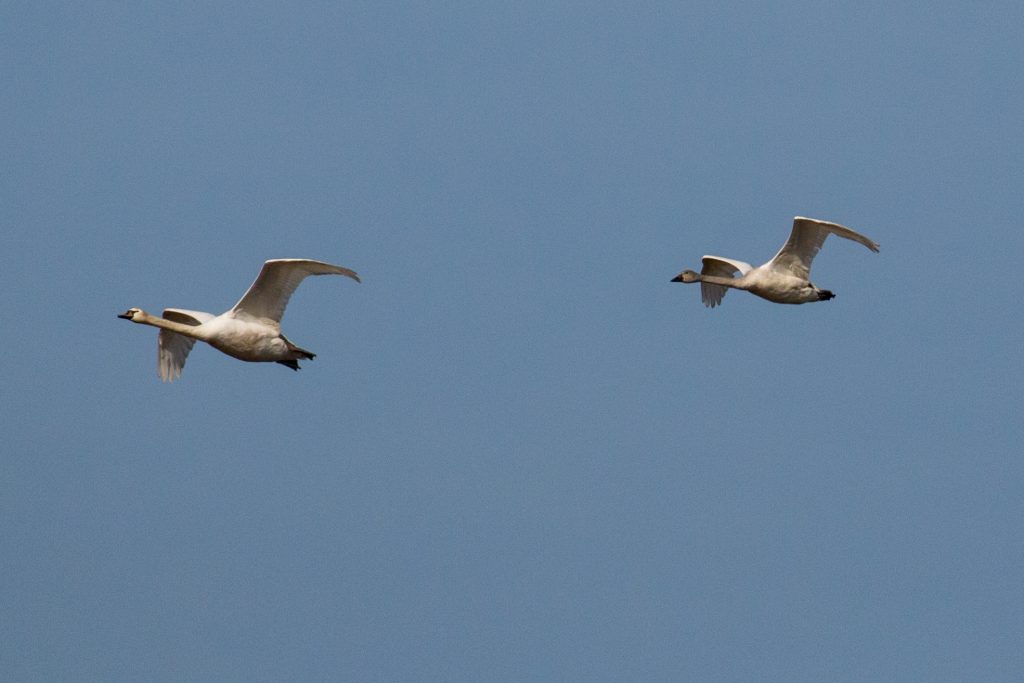
POST UPDATE: When I entered my lists to eBird, the Gyrfalcon came up as a sensitive species, so reports won’t be made public. With that in mind, I have removed the location from this post, I figure it’s best to err on the side of caution with these things. Also, after looking at our photos, it looks like we had a TUNDRA SWAN at Round Valley Reservoir; thanks to Maria for digging in and figuring it out. I’ve included a photo at the bottom of this post.
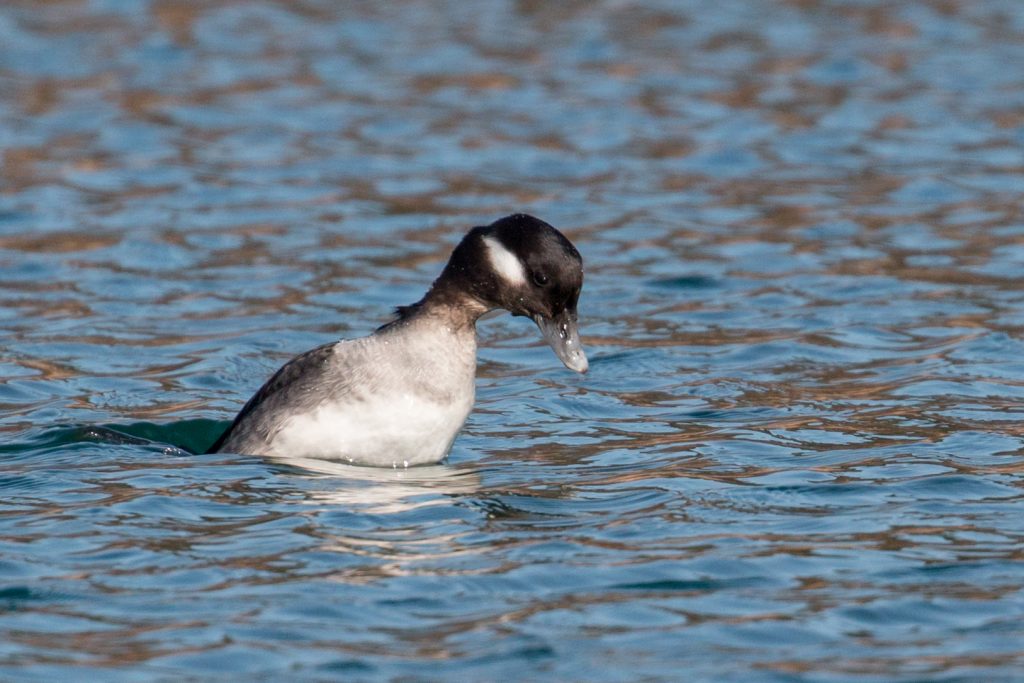
~Four GREATER WHITE-FRONTED GEESE in Warren County, NJ 01/27/18. Digiscoped image using Linda’s iPhone.~~Snow Geese putting on a show, Warren County, NJ 01/27/18.~~A female Bufflehead takes a dive at Round Valley Reservoir, 01/27/18.~~Tundra Swan following a Mute Swan, Round Valley Reservoir, 01/27/18.~
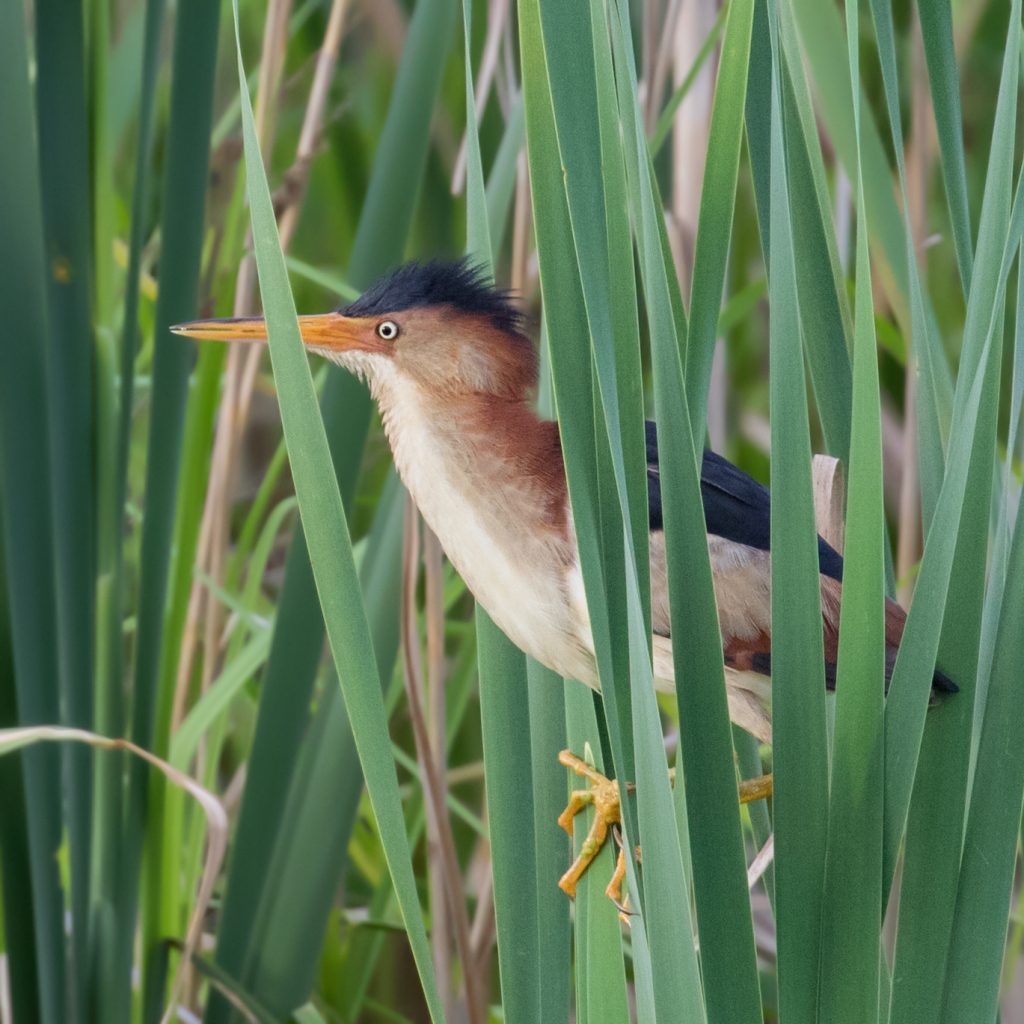
~Wow! LEAST BITTERN! Richard W. DeKorte Park, 07/30/17.~
Maria Loukeris, Linda Scrima, and I birded Richard W. DeKorte Park in Lyndhurst, New Jersey this morning. It was good birding and we had 32 birds, all the expected species for this time of year. I was happy, since I got a decent shorebird fix, with Least Sandpipers, Semipalmated Sandpipers, Spotted Sandpiper, Greater and Lesser Yellowlegs, and Short-billed Dowitchers all present.
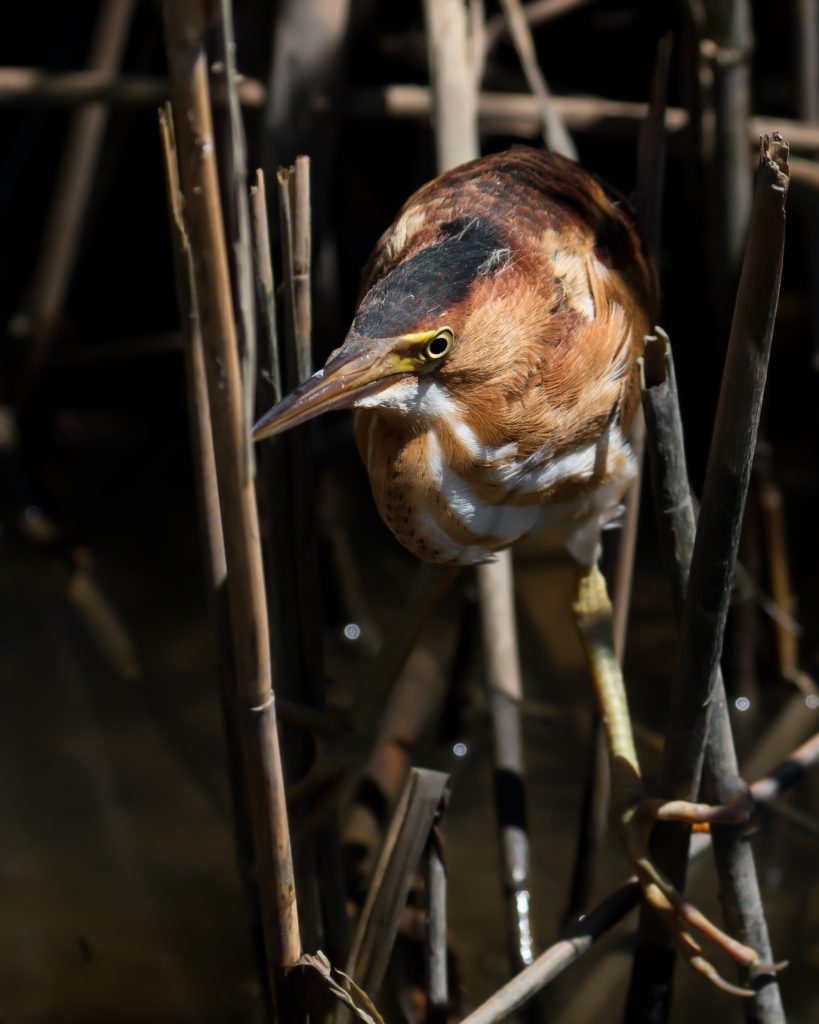
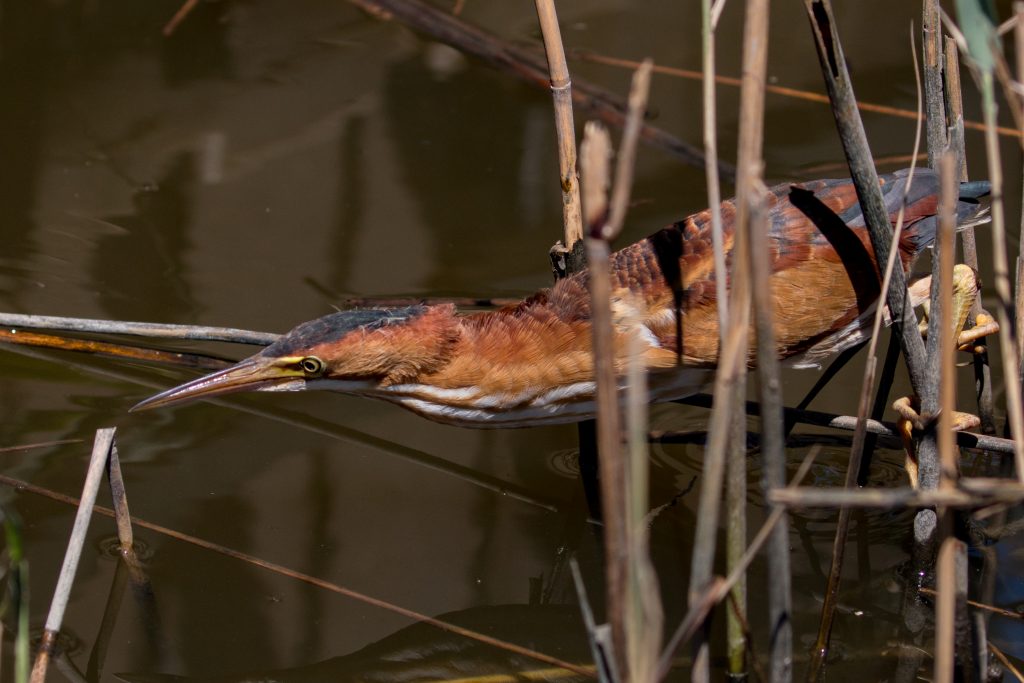
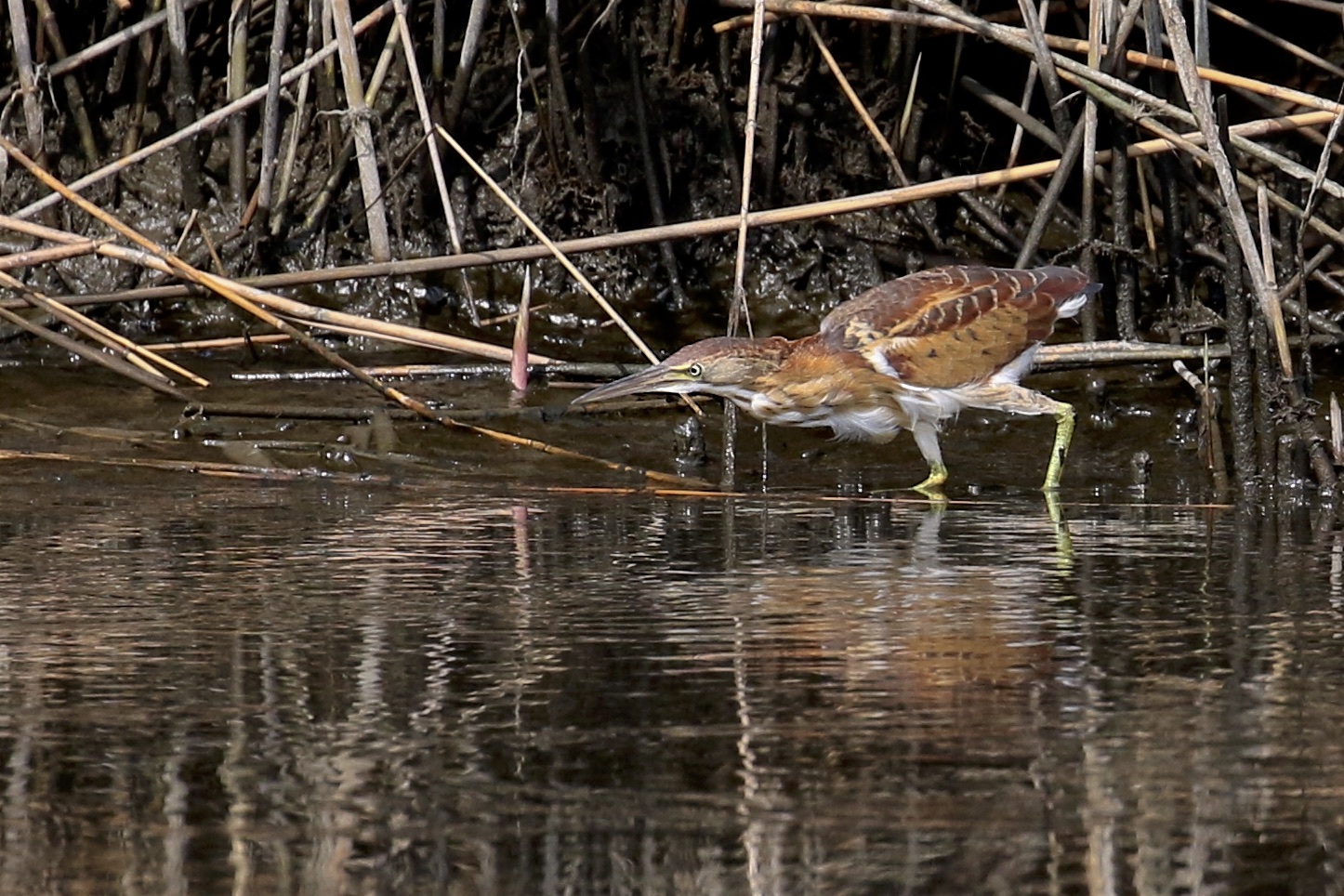
In some regards, we were a little unlucky. We missed the American White Pelican when we first arrived by a mere 1o minutes. And, we missed the Least Terns that were reported after we had left. But, really, we were the lucky ones. We followed up on a tip that another birder (sorry we never got her name) gave to Linda, that there was a LEAST BITTERN near one of the blinds on the boardwalk. I was not optimistic – this is a Least Bittern after all, how long is it going to be out in the open? And would we even find it in the first place? And surely if we did it would be super distant. Well, I couldn’t have been more wrong. The bird was present, and it was just a few feet off of the boardwalk and happily feeding on what appeared to be a healthy supply of small fish. We took many photos and other birders and walkers came and went and the LEBI continued to hunt. After a good while, the bird must have been content and it slowly turned and made its way into the reeds. What an incredible experience! I really just couldn’t believe it; I can still hardly believe it. Excellent birding!
~Least Bittern at DeKorte Park, 07/30/17.~~Head on look at the Least Bittern, DeKorte Park 07/30/17.~~Least Bittern with prey, Richard W. DeKorte Park 07/30/17.~ ~Least Bittern making its move. DeKorte Park, 07/30/17.~
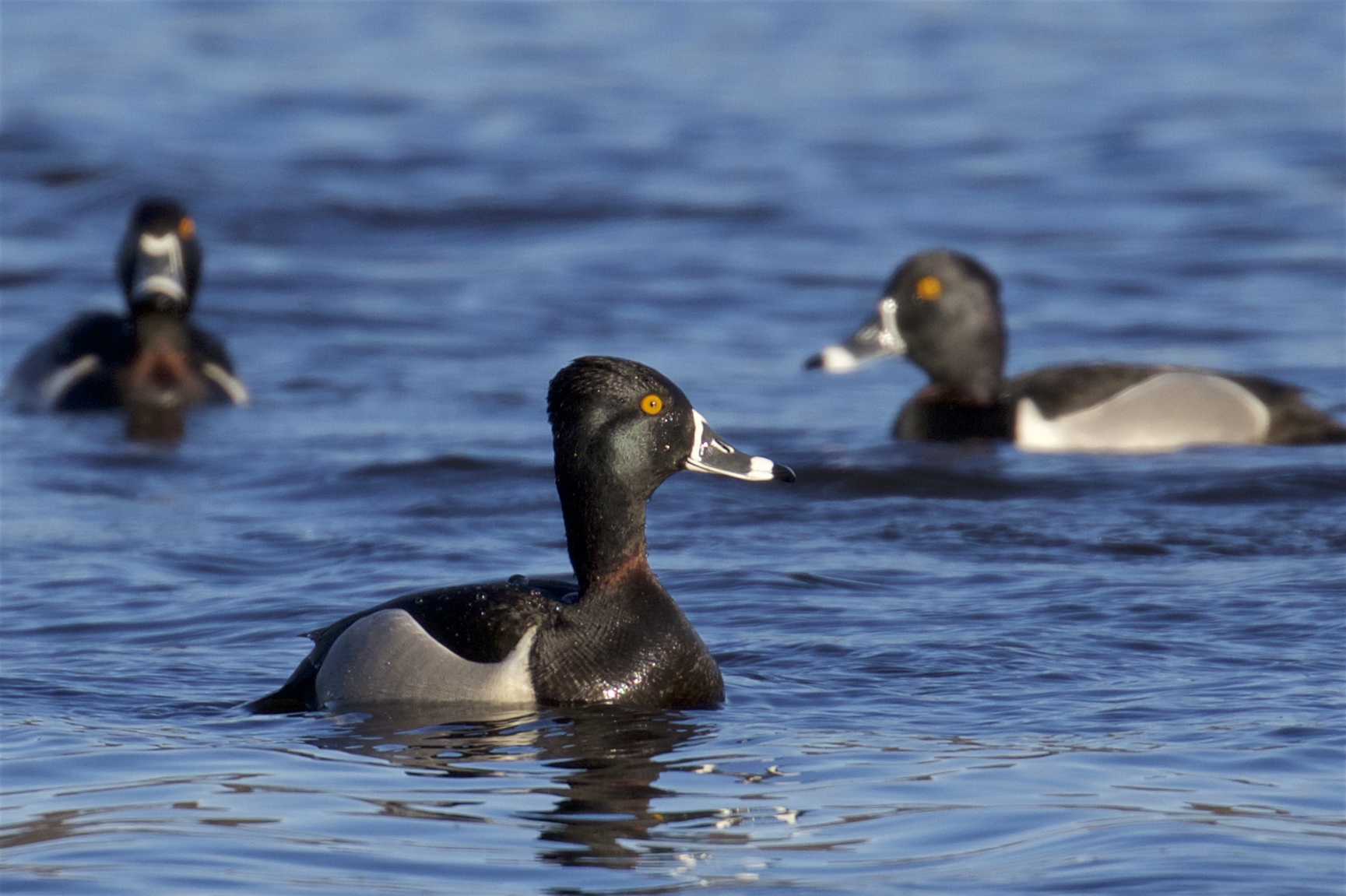
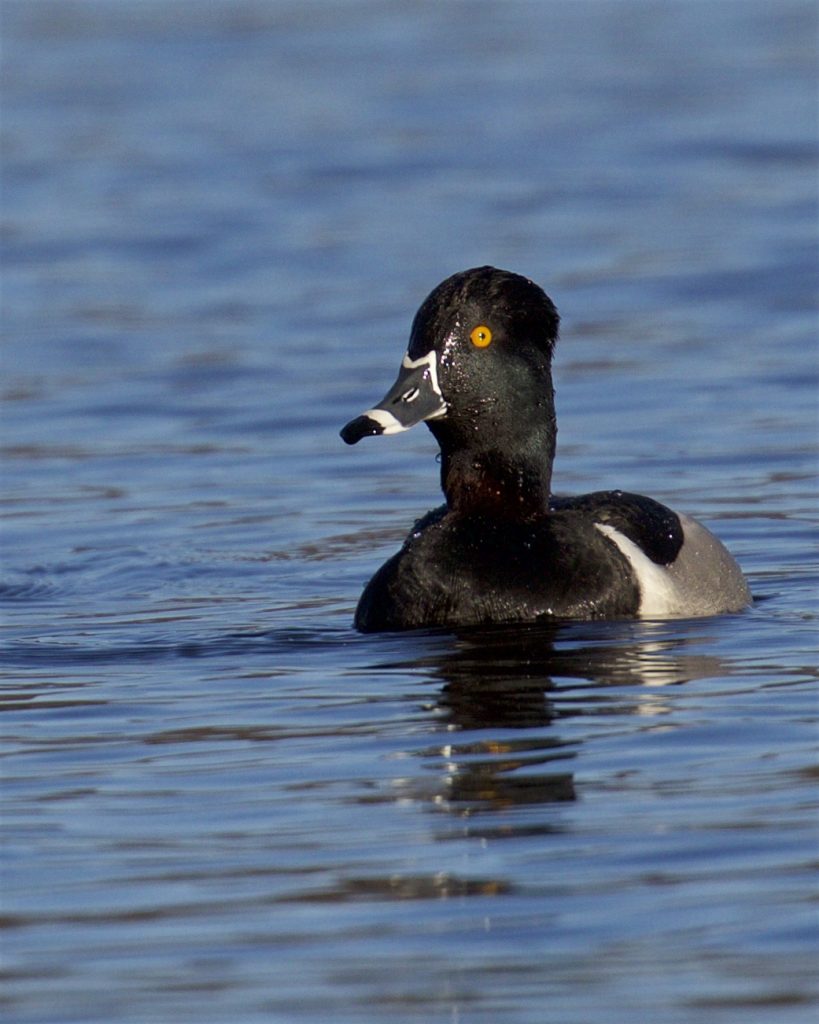
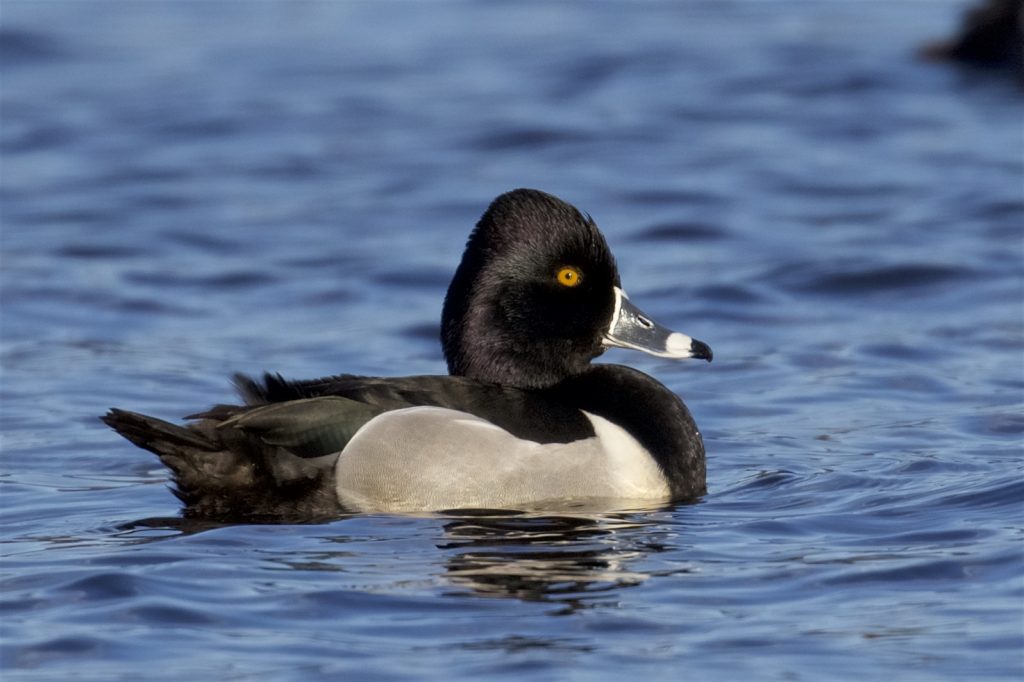
~A male Ring-necked Duck shows off his namesake, the maroon ring around his neck. Upper Greenwood Lake, 03/02/17.~
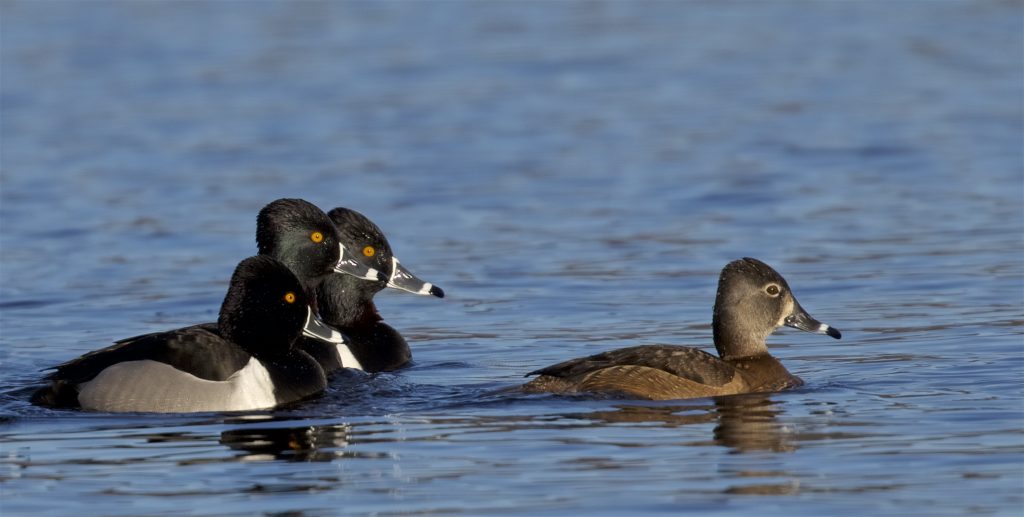
It’s not very often that I get good photo ops with ducks because, as we all know, ducks tend to keep their distance. I think it would take some work, planning, and likely a photo blind to actually get really good shots of most ducks (at least from the shore – I’ve had much better luck from the kayak). Yesterday afternoon I found a group of Ring-necked Ducks at Upper Greenwood Lake that just didn’t seem to care. I saw the birds from my car, I pulled over and parked, but unfortunately the only way to approach was on foot. I did so slowly, fully expecting the birds to swim in the opposite direction, leaving me wanting. I must be on a roll because they did no such thing and instead just carried on as before. I photographed them for about 20 minutes; when I left they were still in the same area going about their business. I then continued towards the black dirt, where I was going to spend the evening participating in the DEC’s Raptor Survey. It was an excellent pit stop which yielded a nice series of pics of these RNDUs, in really nice light.
~RNDU at Upper Greenwood Lake, 03/02/17.~~I think this female Ring-necked Duck has some admirers… Upper Greenwood Lake 03/02/17.~~This is one handsome devil. RNDU at Upper Greenwood Lake, 03/02/17.~~The females are a little less dramatic but just as attractive to me. RNDU female at Upper Greenwood Lake, 03/02/17.~~RNDUs at Upper Greenwood Lake, 03/20/17.~~RNDU drake at Upper Greenwood Lake, 03/20/17.~
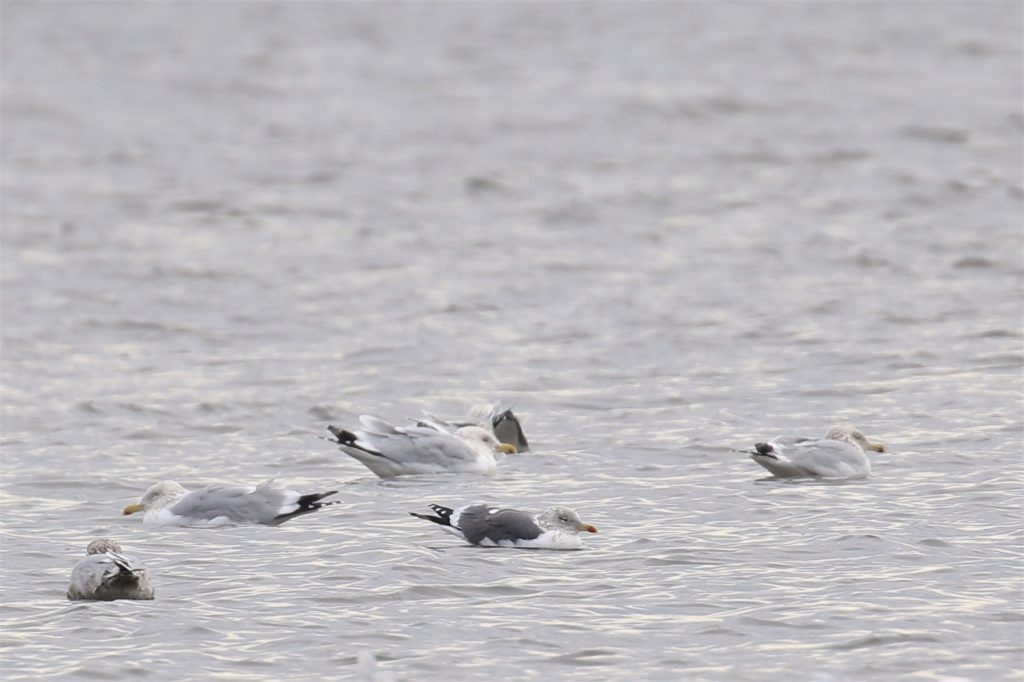
Maria Loukeris and I spent a fantastic day of birding down at the Jersey Shore today. Our first stop was at Morgan Avenue Mudflats in Middlesex County. We dipped on our target bird – the Black-headed Gull which had been reported as recently as Friday, but we did get lucky with a LESSER BLACK-BACKED GULL. We got great looks at the bird and some documentary photos.
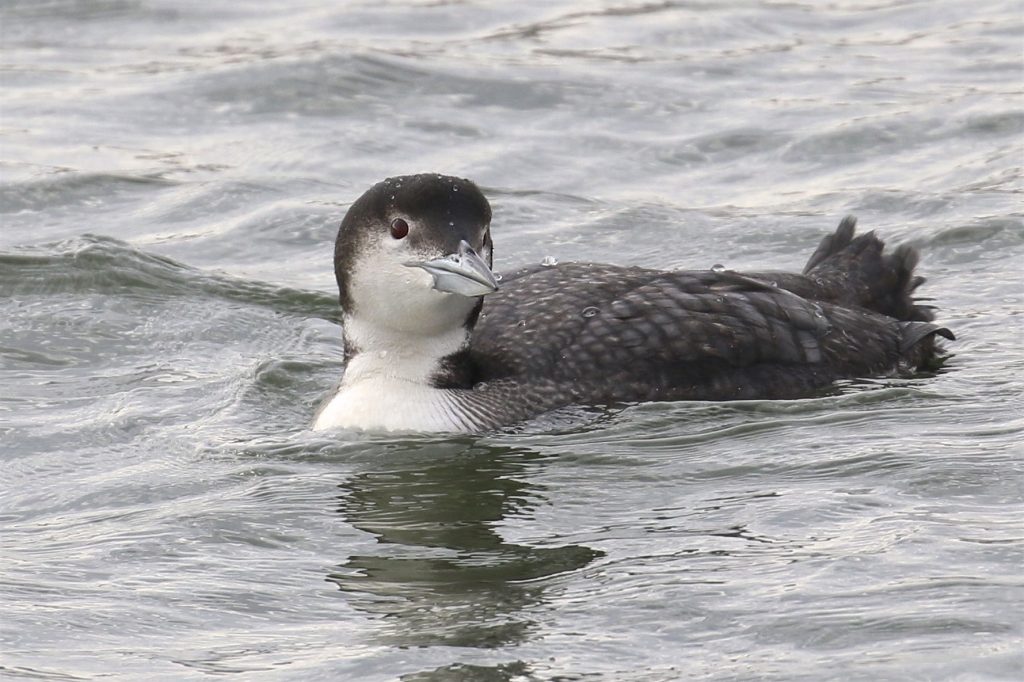
Our second stop was at Manasquan Inlet in Ocean County. I knew it would be a good stop when I stepped out of the car and photographed a Common Loon at close distance. We worked our way out onto the jetty and I saw a very white bird on the water, not far from the jetty. “Is that a gannet?” It was a NORTHERN GANNET; we had several while we were there, and one in particular spent a large amount of time not far from the jetty. We reached the end of the jetty and Maria found the bird of the day, a RAZORBILL! The bird was very close to the jetty; I could barely believe it. We got super looks at the bird, and even some decent shots. It was definitely the highlight of the day.
~The bird of the day, RAZORBILL at Manasquan Inlet 02/05/17.~ ~It was nice to see this Lesser Black-backed Gull at Morgan Avenue Mudflats, 02/05/17.~
Our final stop was at Shark River in Monmouth County. As it was last year when we were there, the place was absolutely loaded with birds. We never located the Eurasian Wigeon that had been reported, but we did pretty well with waterfowl (and a couple of shorebirds too):
We ended the day with a total of 30 species from the three locations. Good birding!
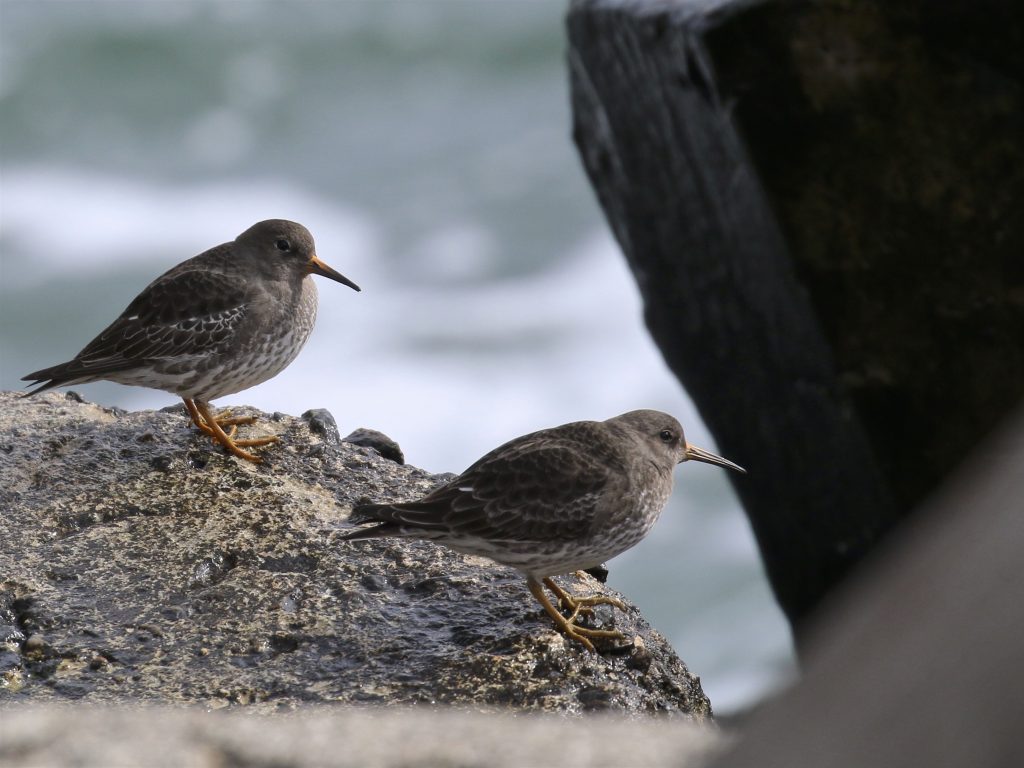
~Here’s a favorite. Brant at Morgan Avenue Mudflats, 02/05/17.~ ~Yup, another favorite. Common Loon at Manasquan Inlet, complete with water droplets, 02/05/17.~ ~It’s always good to see some Purple Sandpipers. Manasquan Inlet 02/05/17.~ ~Red-throated Loon at Manasquan Inlet, 02/05/17.~~Red-breasted Merganser at Manasquan Inlet, 02/05/17.~~I was having flashbacks to my pelagic trip! Northern Gannet fishing near the jetty at Manasquan Inlet, 02/05/17.~ ~NOGA at Manasquan Inlet 02/05/17.~~NOGA in full tuck just entering the water. What a blast to watch this bird! Manasquan Inlet 02/15/17.~
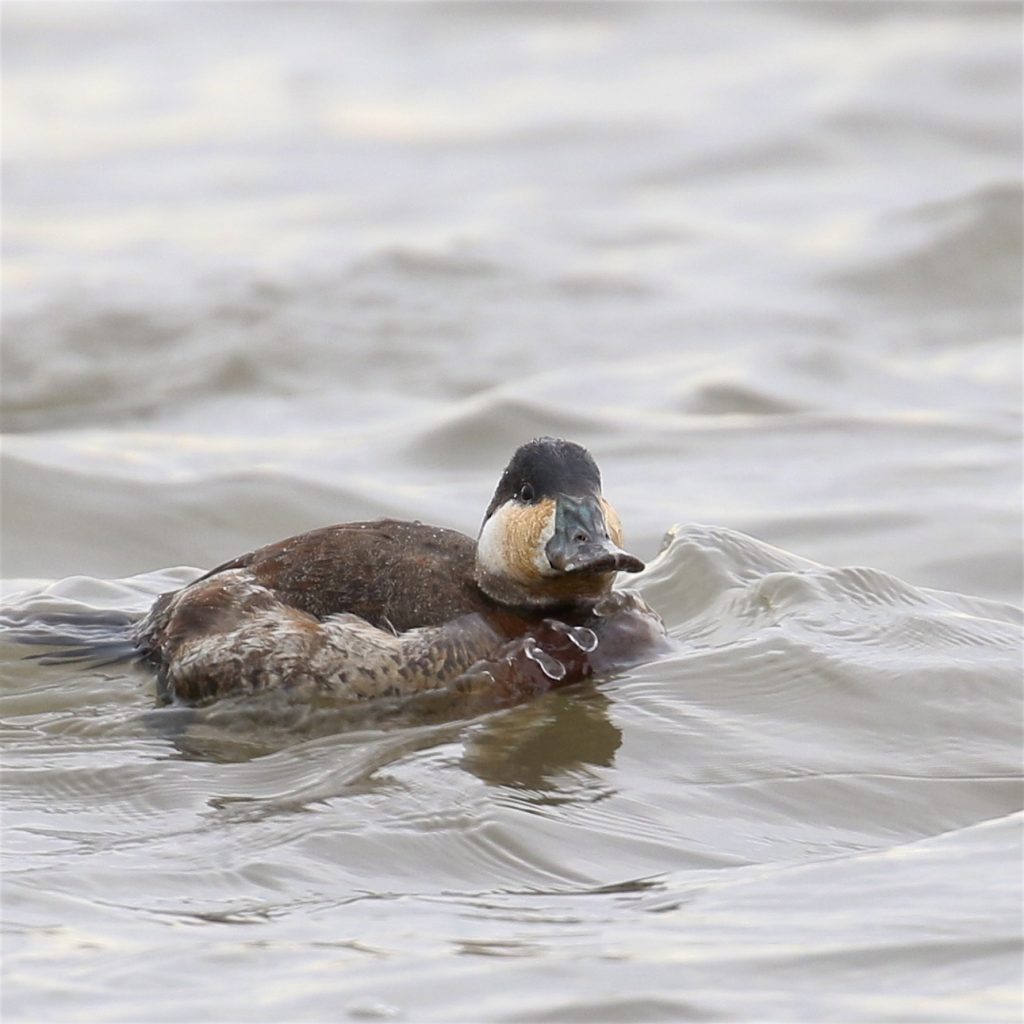
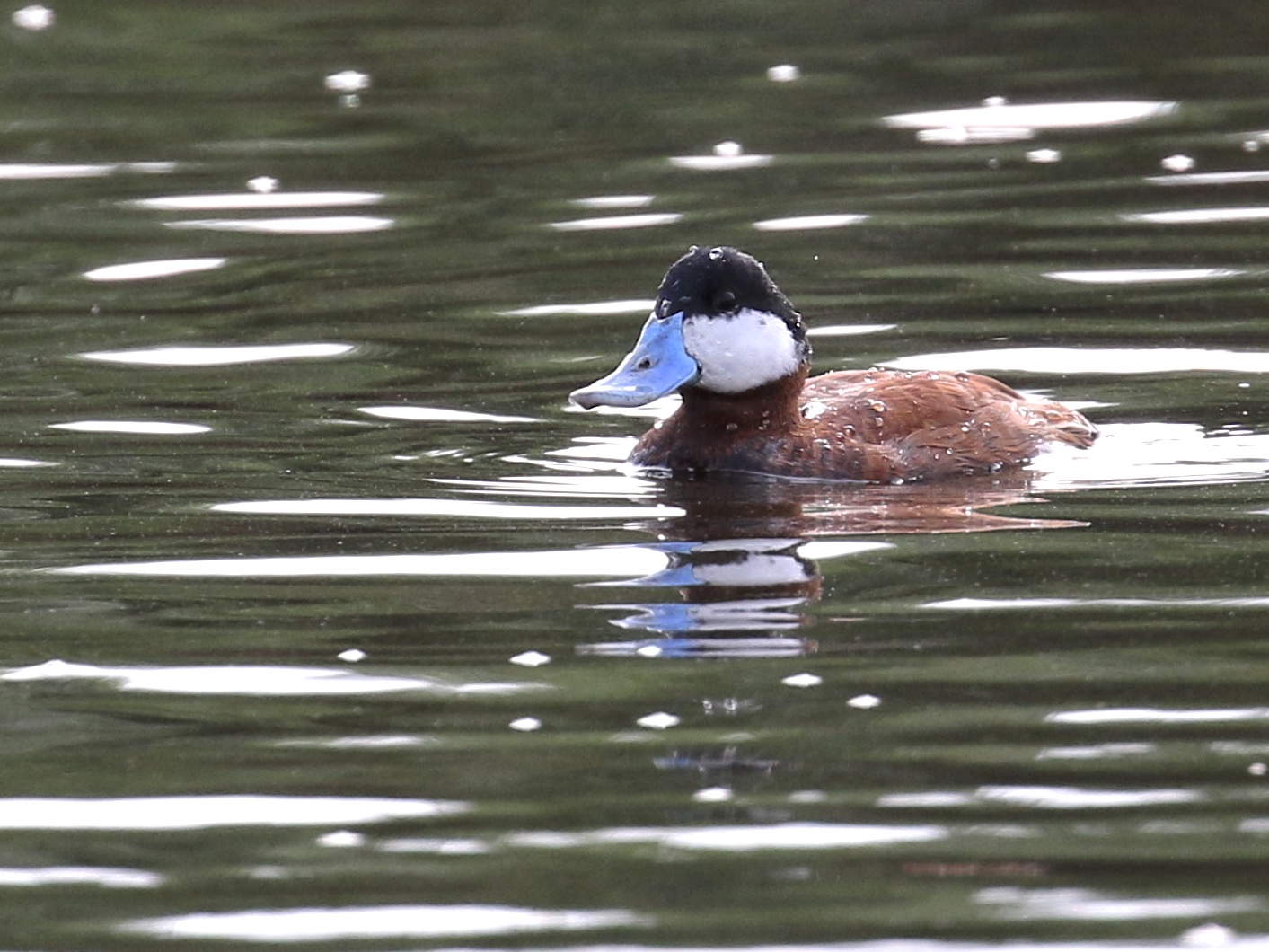
~I got a great look at a number of Ruddy Ducks at Piermont Pier, 01/28/17.~
First thing this morning I headed to Piermont Pier to see if could get any good ducks. It was a nice stop and I had 7 species of waterfowl:
Canada Goose (3)
Mallard (5)
Canvasback (27)
Bufflehead (5)
Common Goldeneye (2)
Common Merganser (1)
Ruddy Duck (43)
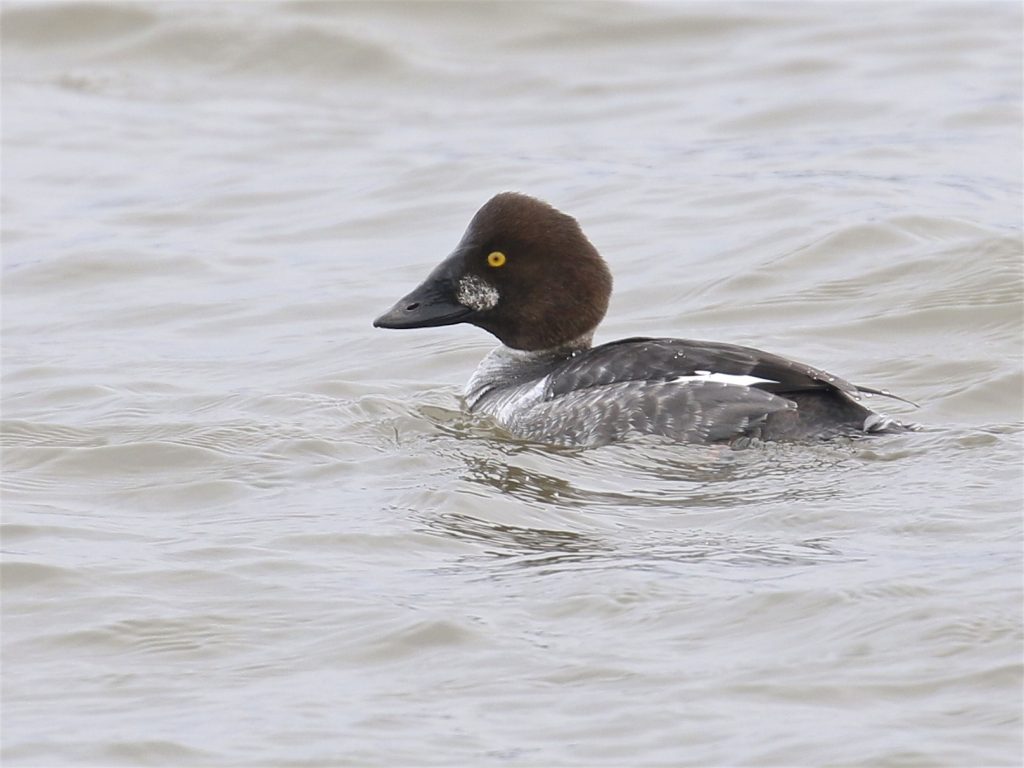
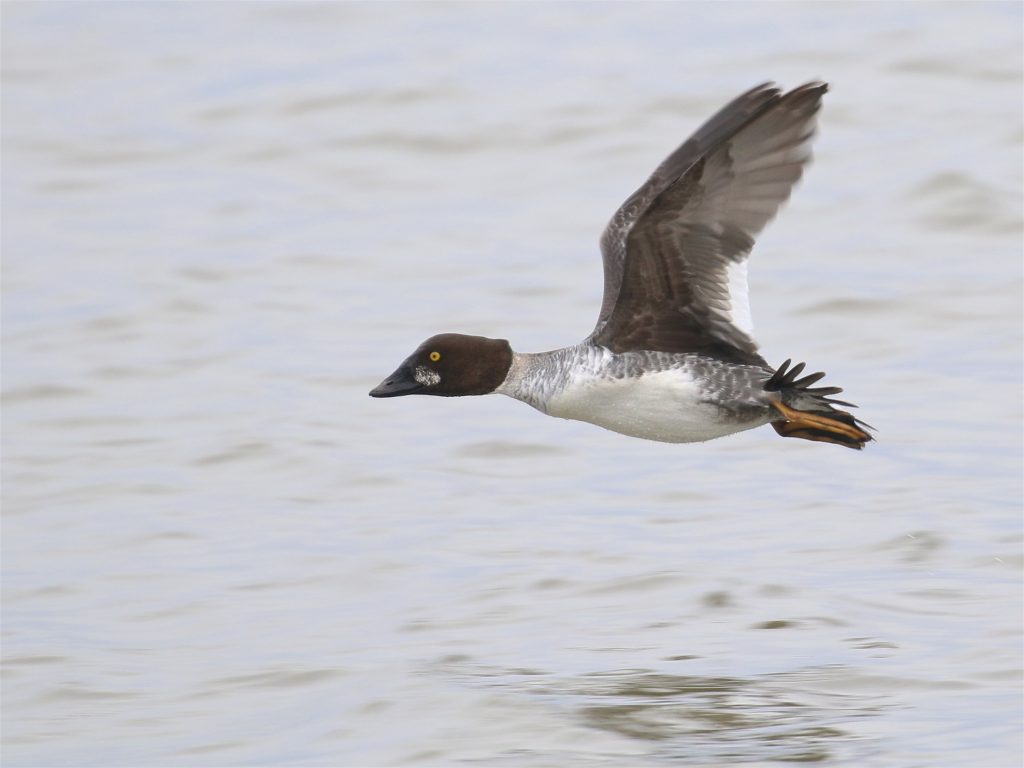
The Common Goldeneyes stole the show for me; I got great looks at one bird that spent some time close to the pier. The Canvasbacks were nice to get, but were very distant and a scope was needed to see them well.
~This is probably my closest look at a Common Goldeneye. I have this as a first winter male, Piermont Pier 01/28/17.~~COGO in flight at Piermont Pier, 01/28/17.~
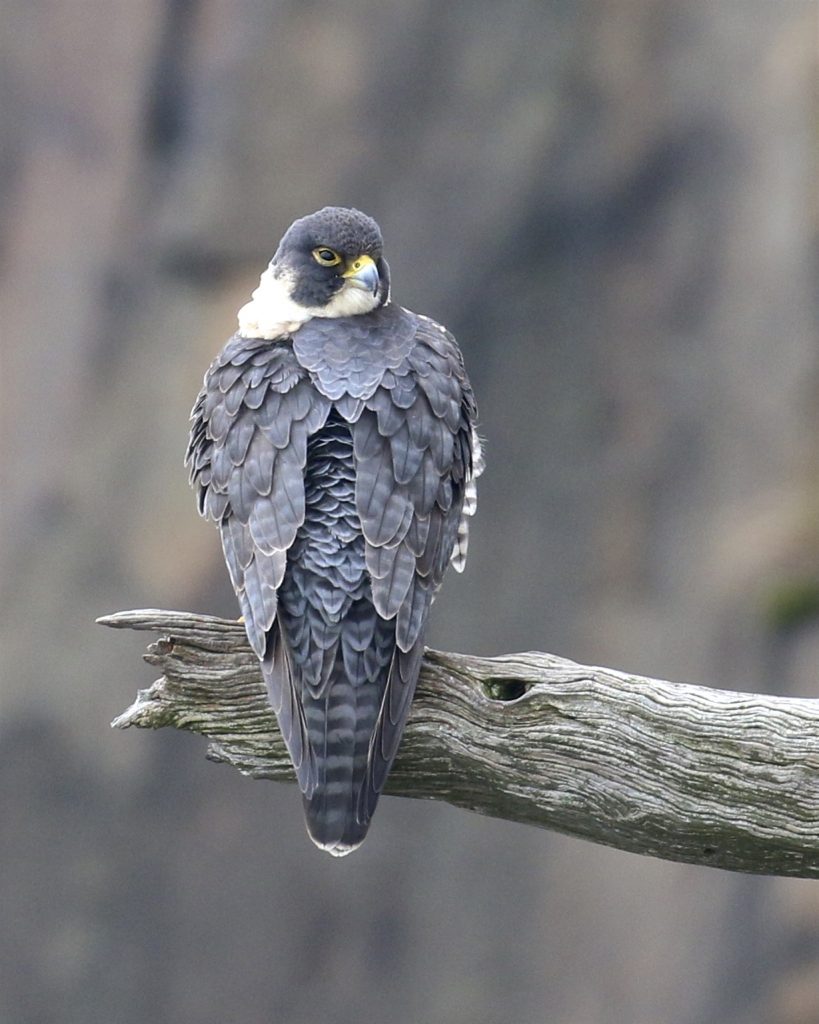
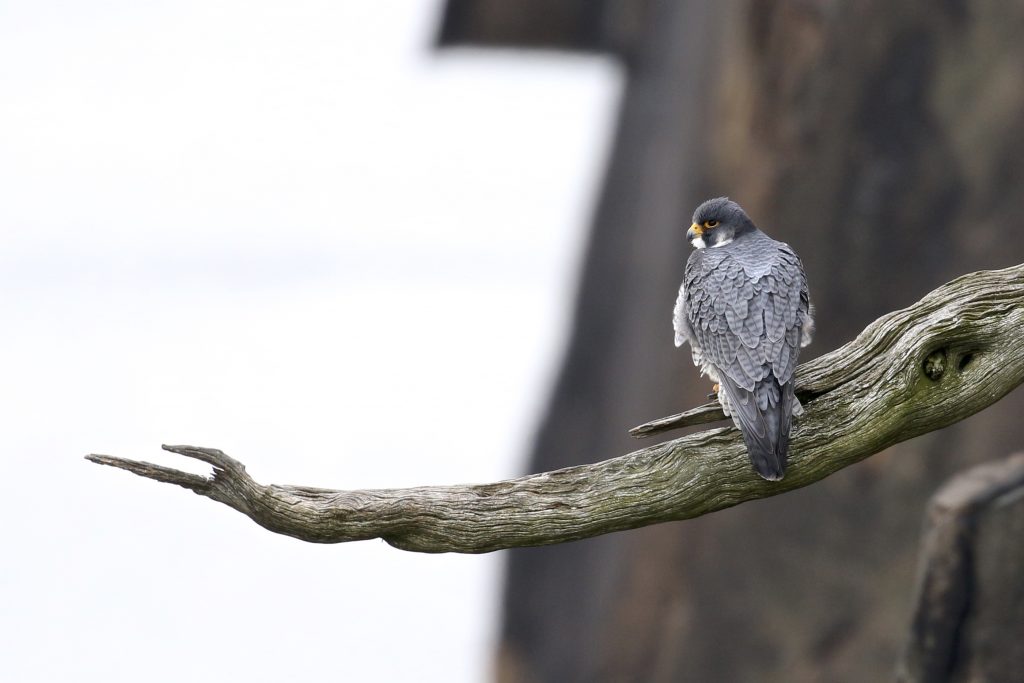
I left Piermont Pier and headed to State Line Lookout to join the hordes of birders/photographers/sheep that were present to try for the Gyrfalcon that has been reported recently there. It was quite a scene and I estimate that in the time I tried for the bird (4 hours), over 125 birders/photogs were there for the bird as well. Millions of photographs were taken of the local Peregrine Falcons (that might not be an exaggeration). The falcons did not fly much, but did spend much time on the closest perches. Other good birds included several Bald Eagles, Common Ravens, and a Cooper’s Hawk which was chased from the far side of the river to the Lookout by the local male Peregrine Falcon. As for the Gyrfalcon, it was of course a no-show. Hopefully it sticks and I’ll try for it another day.
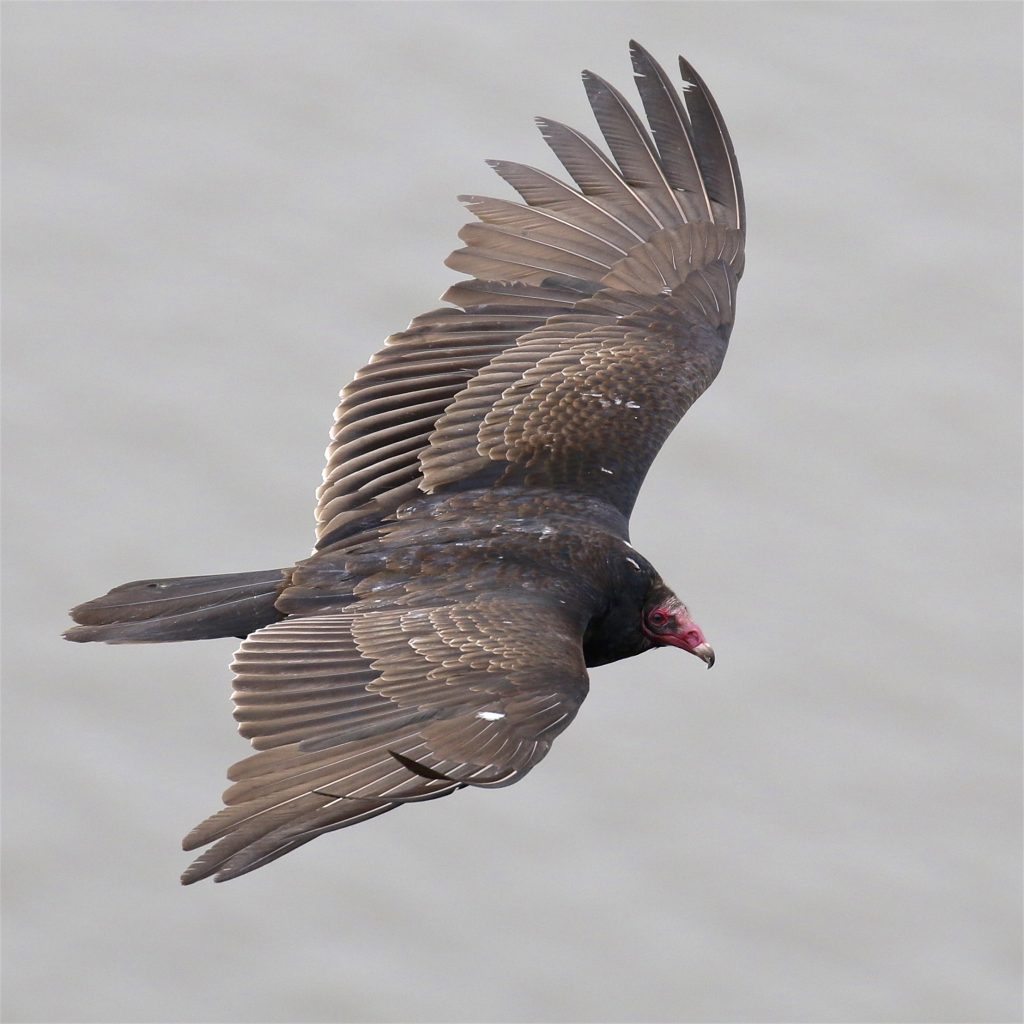
~This bird is a beast, does she look mean or what? Local female Peregrine Falcon at State Line Lookout, 01/28/17. There is no doubt that the local PEFAs were extremely well-photographed today.~~The resident male Peregrine Falcon – State Line Lookout, 01/28/17.~~Top-down look at a Turkey Vulture; not a look I get very often. State Line Lookout 01/28/17.~
~A juvenile LEAST BITTERN hunting at DeKorte Park, 8/6/16. I can’t get enough of this bird! ~
Birding in Orange County has been a little bit slow all week, so Kyle, Linda, Maria, and I piled into my Volkswagen Golf and headed south to Richard W. DeKorte Park in Lyndhurst, New Jersey. We all seemed to be in the same mood, ready spend the morning at a spot that has no shortage of birds and also offers up great photo opportunities. We were not disappointed and had 41 species for the outing. LEAST BITTERNS were high on the priority list – we were hoping to get Kyle his lifer, which we achieved through a fly-by very early on. We saw several LEBI while were there, and we spent some quality time viewing and photographing one young bird that was in nice light and wasn’t too far away.
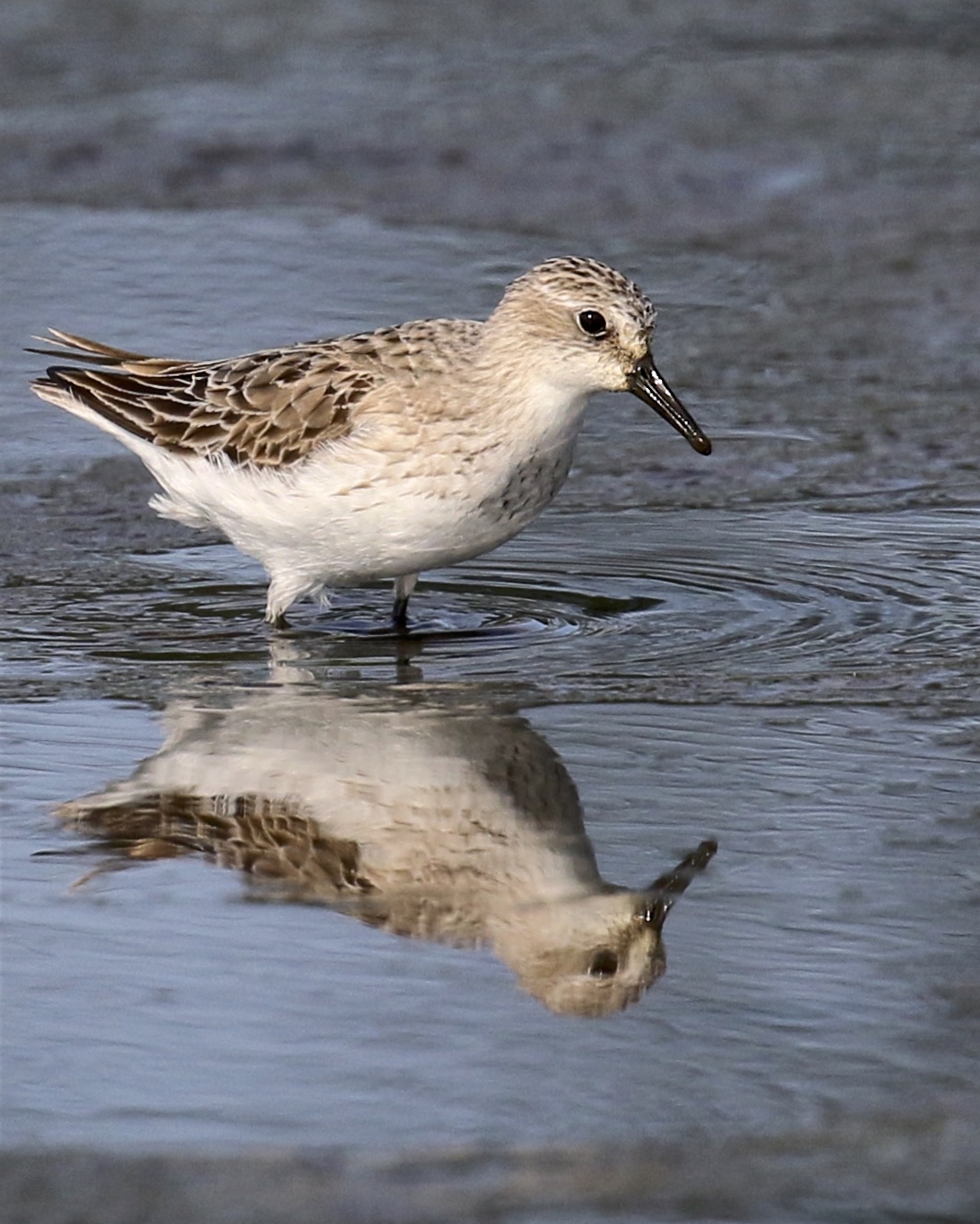
~These Semipalmated Sandpipers are sharp looking to me. Look how white this bird is in spite of foraging in the mud all day long! DeKorte Park, 8/6/16.~
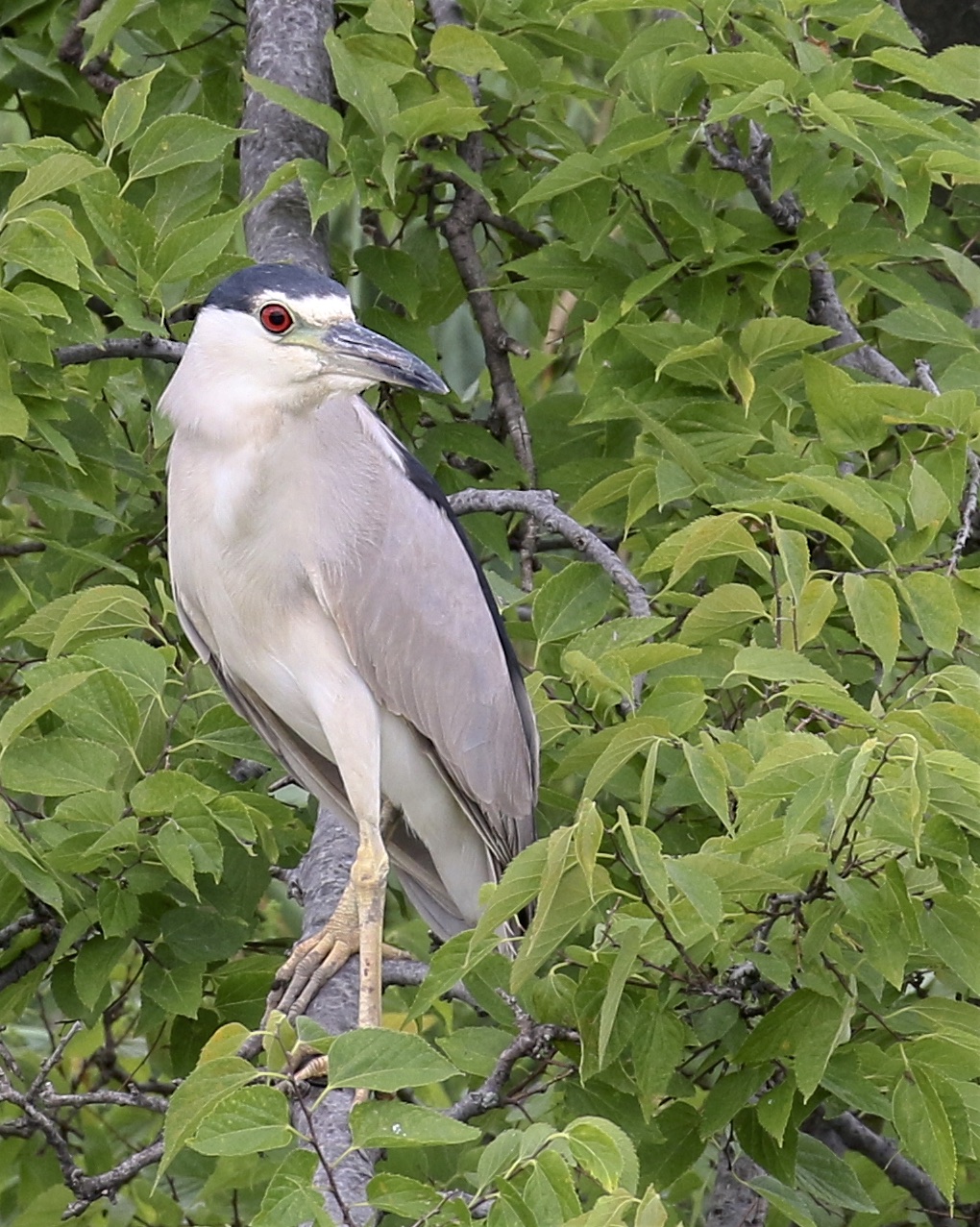
Other highlights included a nice look at a couple of male Ruddy Ducks in breeding plumage, and a young, large, (probably a female) Peregrine Falcon that absolutely ripped onto the scene and took what appeared to be a Forster’s Tern. Those PEFAs are killing machines and are fascinating to watch in action. For shorebirds, we had what I suspect are the expected species – Least Sandpipers, Semipalmated Sandpipers, Spotted Sandpipers, Short-billed Dowitchers, Greater Yellowlegs, and Lesser Yellowlegs. Other good birds included three Black-crowned Night-herons, a couple of Osprey, two Great Black-backed Gulls, and several Snowy Egrets. It was an excellent morning of birding in great company!
~Beautiful Bird. A male Ruddy Duck at DeKorte Park, 8/6/16.~~An acrobatic Forster’s Tern hunting at DeKorte Park, 8/6/16.~~One of my favorites! I’ve been wanting to get some photos of these guys in OC, but it hasn’t panned out just yet. Black-crowned Night-heron at DeKorte Park, 8/6/16.~~A young Forster’s Tern cruising overhead at DeKorte Park, 8/6/16. I’m not sure if other folks find this plumage as attractive as I do, but I think this is a good looking bird.
~Wow! RUFF at DeKorte Park in Lyndhurst NJ, 8/21/16.~
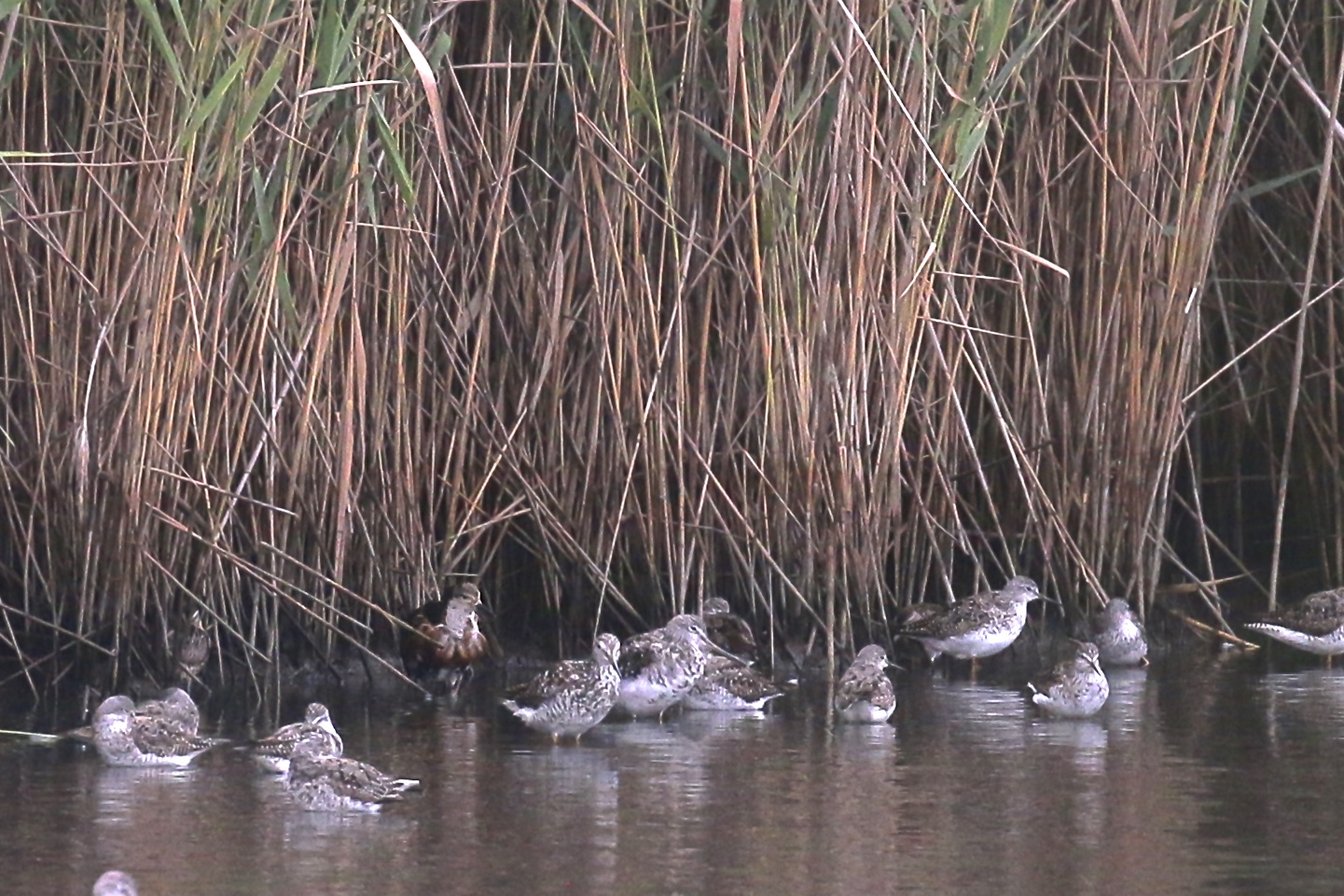
QUICK POST: I’m going to try to keep this short because it’s late and I’m tired. It’s remarkable to me how much luck plays a part in birding. After work today, thanks to some prodding from Maria Loukeris, I ran for the RUFF that has been reported in recent days out at DeKorte Park in Lyndhurst, New Jersey. I searched for the bird for over 2 1/2 hours from the Transco Trail, along with several other birders and then I decided to head home. On my way back to my car, I ran into Chris Takacs on the boardwalk; Chris had originally located the bird over a week ago. While we were talking, a group of yellowlegs flew over and Chris commented that it looked like the Ruff might have been in with them. Moments later, he received a text – he was right, the Ruff had just come in! We headed back out to the Transco Trail and sure enough the bird was still present! What an incredible bird, and I was so lucky to get it! I got great scope views and tried to take some photos and video – none came out very well, but I did get to document it. The Ruff is life bird #368 for me. Huge thanks to Maria for letting me know the bird had been relocated today, and also to Chris Takacs for all his help out there.