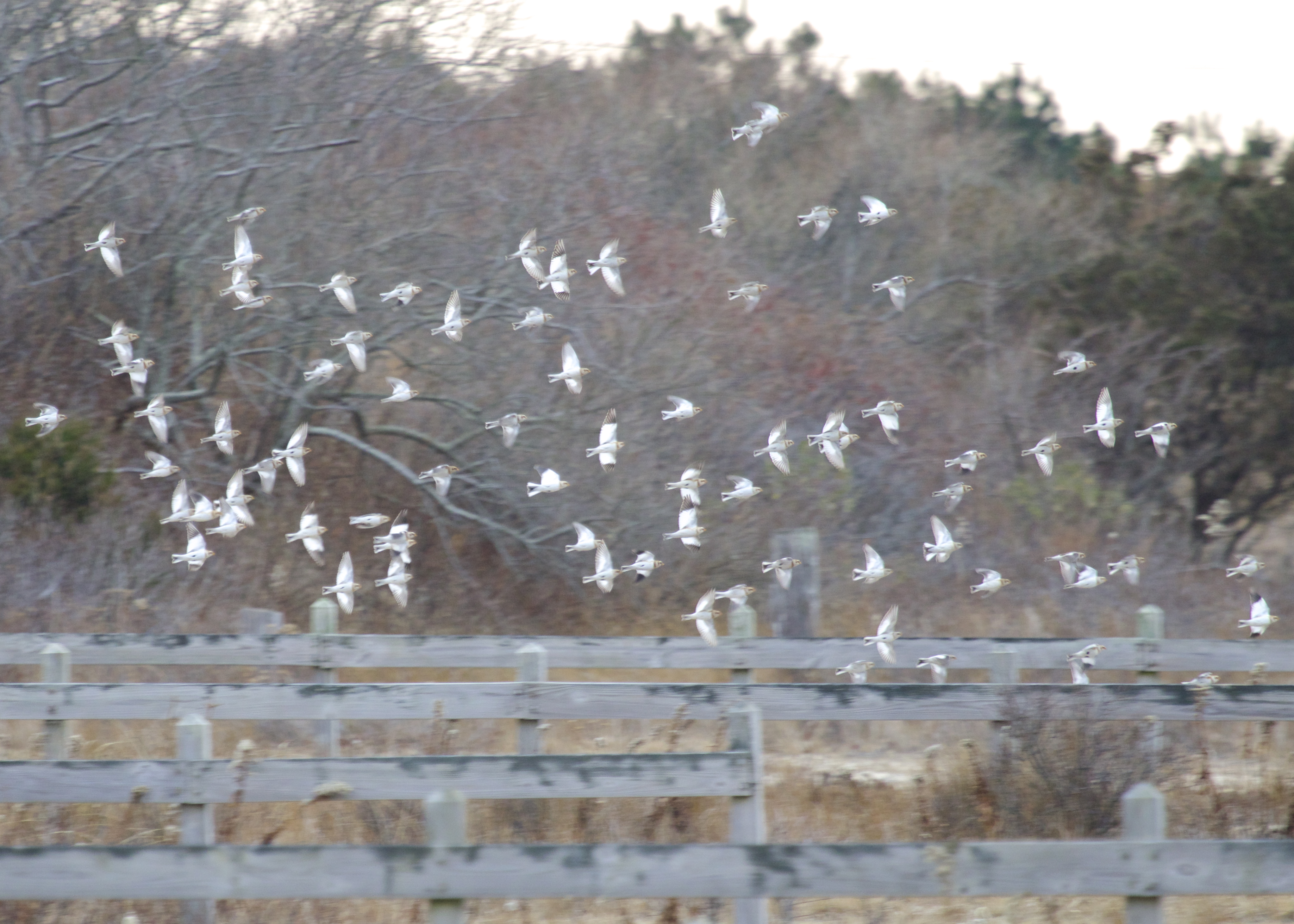
Today’s early rain gave way to beautiful sunny skies in the evening, so I made my way out to Skinner Lane after work. The flock of Horned Larks continues at Skinner Lane with 2 Snow Buntings among them. Unfortunately the Snow Buntings never got close enough for photos, but I did get some Horned Larks that were not too far away. I hope these birds stick around because I would love to get some really close shots.
After work today, I drove over to the Clay Avenue Wetlands, located in Lyndhurst NJ. I had received a rare bird alert email from eBird, indicating that an American Avocet had been seen at the wetlands. The bird was easily located and what a beautiful bird it is! Unfortunately the bird was pretty heavily backlit and there are not many spots to view the birds from, which made taking photos difficult. I am not really thrilled with the above photo for various reasons, but I had to post this awesome bird. I hope to get back in the morning when the sun will be at my back. Stay tuned for more photos.
I went out on a photo mission to Glenmere Lake first thing this morning. I was on the lake in my kayak before the sun was up, with the goal of trying to get some Pied-billed Grebe photos. Last year I got some grebe photos out at the Basha Kill, but this year I never saw a Pied-billed Grebe while I was kayaking there. I have stopped by Glenmere Lake without the kayak several times recently and noticed a decent number of grebes present. I was thinking it would be pretty easy to get some good photos by just paddling out to the birds. Boy, was I wrong. The grebes were VERY aware of my presence and kept their distance and dove under when I got too close. I was thinking that the reason I was able to shoot the Pied-billed Grebe out at the Basha Kill was because the channels out there are so narrow, so I think they might get a little more comfortable with kayak/boat traffic passing close by. I finally floated very slowly towards one grebe, the light was very pleasing, and I was able to shoot about 12 photos. Here is my best effort:
A Pied-billed Grebe caught in the first rays of sun for the day. Glenmere Lake, 10/13/13.
I only had a little bit of time to be out this morning, but on my way in I found this Ruddy Duck, who was much more cooperative than any of the grebes, and the light was pretty nice too.
This shot is not a crisp as some others, but I can’t resist the water dripping off the bill. Ruddy Duck at Glenmere Lake, 10/13/13.Ruddy Duck on a red lake. Glenmere Lake, 10/13/13.A Double-crested Cormorant takes off. Glenmere Lake, 10/13/13.
One my main goals for the morning was to shoot this Pectoral Sandpiper. Morningside Park, 9/29/13.
Every once in a while I just need to go do some birding in a location that is likely to provide plenty of photo opportunities. Morningside Park is perfect for this, as long as you are birding by kayak. I arrived at the park right after sunrise to take advantage of the beautiful early morning light; for me, you cannot beat early morning light for beautiful photos. There was a misty fog on the surface of the lake that I also find appealing but difficult to translate into photos. I was pleased with the results, there were plenty of birds to shoot and the fall colors were reflecting off the water wonderfully.
A pair of Ring-billed Gulls in the early morning mist. Morningside Park, 9/29/13.Great Blue Heron at Morningside Park, 9/29/13.This Common Yellowthroat could not have been more cooperative, Morningside Park, 9/29/13. I am loving the background on this shot.Least Sandpiper at Morningside Park, 9/29/13.Here’s one more of the Pectoral Sandpiper, Morningside Park, 9/29/13.I don’t love the light on this Green Heron, but I love all the colors reflecting in the water. Morningside Park, 9/29/13.
This Belted Kingfisher was very cooperative, perching and fishing in the pond right in front of the viewing platform. Wallkill River NWR, 9/18/13.
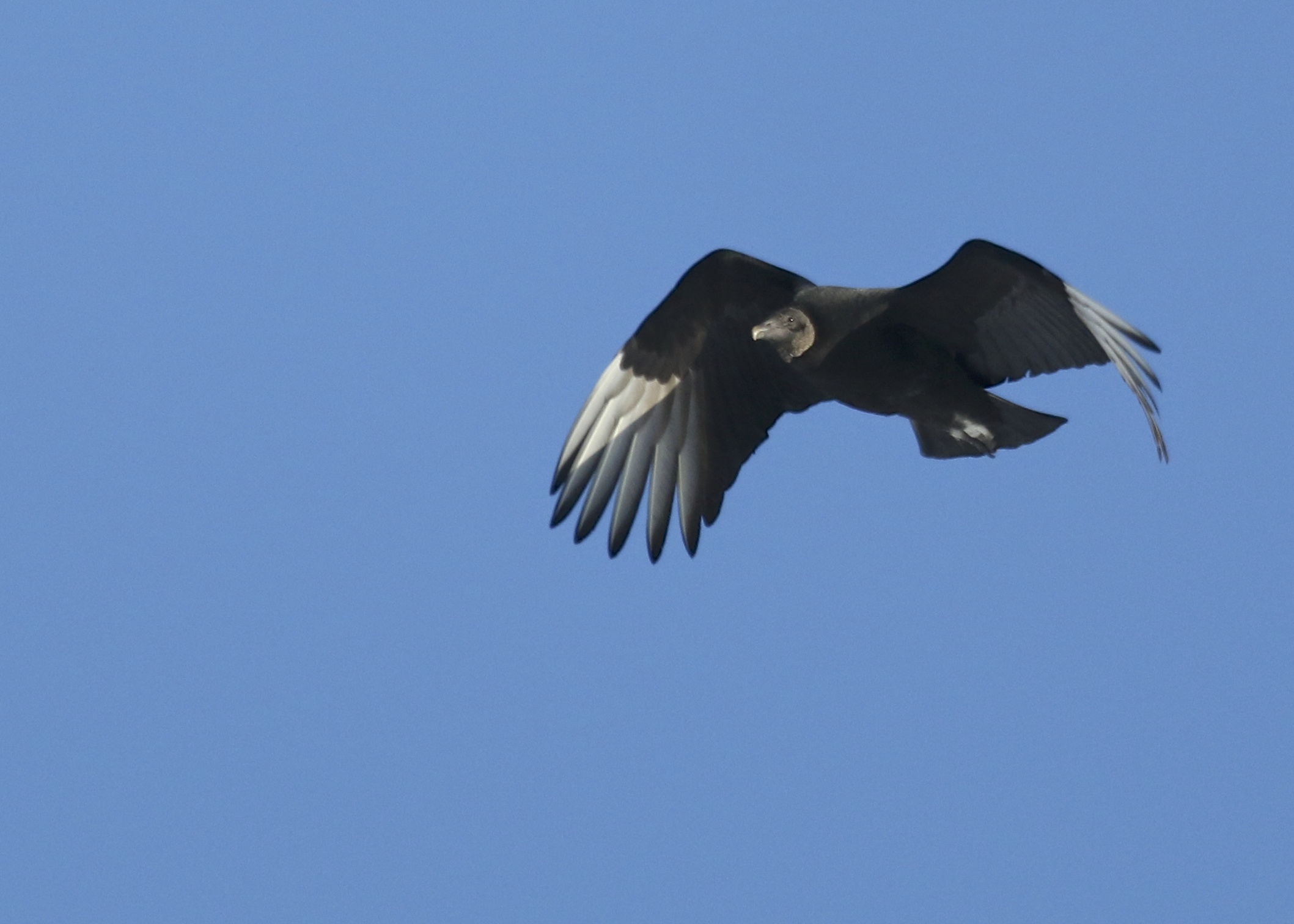
Both yesterday and today I left work and spent an hour or so at Mt. Peter Hawk Watch. Yesterday I caught the tail end of a great day – over 1400 migrating raptors passed over. While I was there we had a large kettle of fly over, comprised of over 160 Broad-winged Hawks and one immature Bald Eagle. It was really so cool to see. Today, although over 500 raptors were counted migrating over the watch, I did not fair too well. By the time I got there, things had pretty much dried up. I got a decent look at an immature Bald Eagle that did not migrate, but headed north instead. I also took a shot of one of the local Turkey Vultures, which seem to be the only birds flying low this year:
A bedraggled Turkey Vulture passes over the platform at Mt. Peter Hawk Watch, 9/19/13.
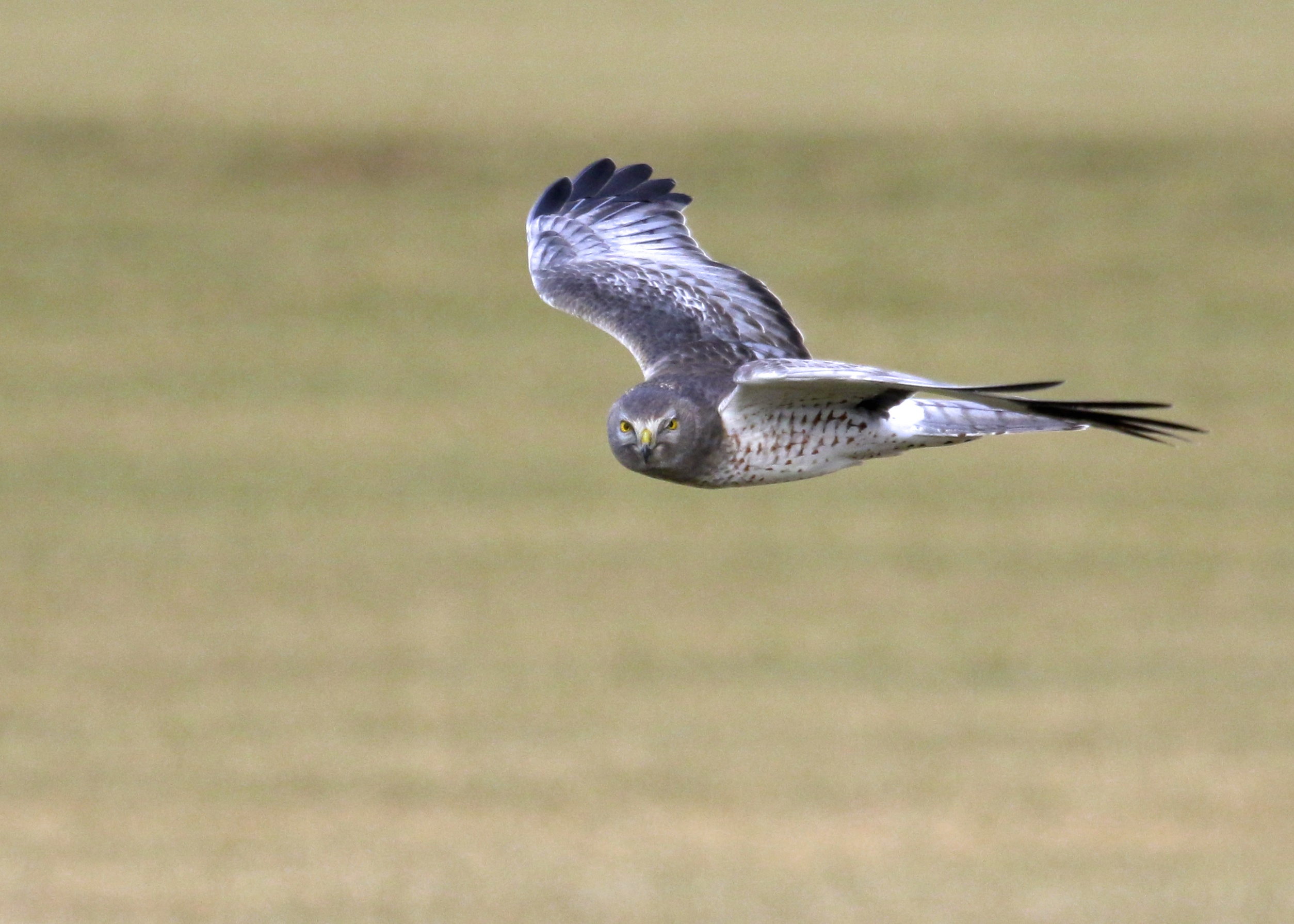
On both days, after the watch, I headed over to Wallkill River National Wildlife Refuge. I mostly birded from the viewing platform both days, though I did walk west on the trail yesterday for a stretch. There were a good number of shorebirds present, including Greater Yellowlegs, Lesser Yellowlegs, Pectoral Sandpipers, and a Solitary Sandpiper. Other favorites included Great Egrets, a Great Blue Heron, many Green Herons, a Northern Shoveler and a couple of Northern Harriers. But, the highlight for me was getting some good photo ops with this Belted Kingfisher:
It was great fun trying to shoot this bird, Belted Kingfisher out at Wallkill River NWR 9/18/13.A hovering Belted Kingfisher at Wallkill River NWR, 9/18/13.
Maybe it’s because I haven’t seen one in a little while, but I was not sure what bird this was for a while, until I got some help from a fellow birder who joined me on the platform. Solitary Sandpiper at Wallkill River NWR, 9/19/13.
This Osprey flew right over the platform with a fish in its grasp. Mt. Peter Hawk Watch 9/14/13.
Today was my first day counting out at Mt. Peter Hawk Watch. It was a good day for me, we had enough hawks to keep it interesting, but not too many to make it difficult for me as the counter. The birds were flying high, but we had 200 migrating hawks today. Here is my report from hawkcount.org:
Mount Peter
Warwick, New York, USA
Daily Raptor Counts: Sep 14, 2013
——————————————————————-
Observation start time: 08:00:00
Observation end time: 16:00:00
Total observation time: 8 hours
Official Counter: Matt Zeitler
Observers: Ajit I. Antony, Beverly Robertson, Bill O’Keefe,
Judith C. Cinquina, Rob Stone, Scot Marchal
Visitors:
Penny Whitlick, Enid Hayflick, Mike Ipp., Jan Hesbon, Diane Brown
Weather:
Cool and cloudy for most of the day with a steady NW wind that was strong
at times. Temperatures ranged from 11 to 16 degrees Celsius.
Raptor Observations:
Raptors were flying high today even in the first hour of the watch. (3)
Adult Bald Eagles migrated and we had one adult Bald Eagle that headed
north. Also migrating were (1) Red-shouldered Hawk (unknown) and (3)
American Kestrels (2 unknown, 1 female).
Non-raptor Observations:
Bird Species identified: Tree Swallow (17), Canada Goose (34), Cedar
Waxwing (36), Common Raven (4), Chimney Swift (11), House Wren,
Black-capped Chickadee, American Crow (2), Blackburnian Warbler, Blackpoll
Warbler, Black-throated Green Warbler, American Redstart, Red-eyed Vireo,
and Magnolia Warbler. Non-raptor highlight was two Common Ravens flying
very close to one another and one of them doing a barrel roll.
After the hawk watch, I headed back to the Pine Island Turf Nursery to try for a better shot of the American Golden-Plovers:
American Golden-Plover out at the Pine Island Turf Nursery, 9/14/13.
Osprey in flight over Winding Hills Park, 8/11/13.
Last Sunday, Tricia and I went for a paddle in the kayaks to Winding Hills Park in Montgomery NY. We like to go there for a relaxing paddle; it is very beautiful and the sunsets can be amazing. For birding, it is usually not that great – there is usually at least one Great Blue Heron Present and we have had Spotted Sandpipers there from time to time. Eastern Wood Peewees can be heard and sometimes seen, and Tufted Titmice and a number of other song birds can usually be counted on. On this day, as soon as I got out of the car the first thing I noticed was an Osprey fishing on the lake. I had never seen one there before and I am thinking that this bird was making a stopover during its migration. I took a bunch of photos while the light was good and then afterwards, Tricia and I just relaxed, floating around the lake in our kayaks and enjoying the sunset.
*Click on photos to enlarge*
OSPREY, WINDING HILLS PARK – 8/11/13
This was the Osprey’s favorite perch, it kept returning to it……then it would take off again in search of a meal.This Osprey did not catch a single fish while we were there, but none of the people fishing from the shore caught anything either, so maybe it wasn’t the bird’s fault.
In this shot the Osprey is flying away from me, but I still like it – the water exploding off the bird and the talon all balled up.I’ve cropped all these images pretty heavily. While the bird was not very far away, as I looked at the photos I really wanted to convey what an up-close and intimate experience it was watching this bird .
I love this shot – the reflections are nice and I like having three different species in the shot. Front to back, Baird’s Sandpiper, Lesser Yellowlegs, Least Sandpiper. Morningside Park, 8/17/13.
I took my kayak out to have a paddle out at Morningside Park this morning. John Haas reported a Baird’s Sandpiper there yesterday in his blog, and I was hoping it would still be around. It was a really great morning of birding for a few reasons. First of all, I got to see some really great shorebirds:
Semipalmated Plover 2
Killdeer 8
Lesser Yellowlegs 1
Spotted Sandpiper 1
Semipalmated Sandpiper 1
Least Sandpiper 16
BAIRD’S SANDPIPER 1 *Life bird for me*
The second reason it was such a terrific morning of birding is how close you can get to the birds there. By moving slowly and smoothly in the kayak, you can get REALLY close to these birds. In fact, it kind of messed with me at first – I never get this close so my sense of size and scale was out of sync. I got fantastic looks at all the above species, and this also was a big help with getting some photos.
The third reason is that after I was there for about 40 minutes, John showed up in his kayak. It is always enjoyable to bird with John and I learned a great deal by both talking with him and by watching him as he systematically went through all the islands to make sure he did not miss a bird. His thoroughness and his dedication are inspiring to me.
All these shots are from Morningside Park on 8/17/13.
Lesser Yellowlegs out at Skinner Lane 8/9/13. I was lost in the shorebird weeds for a while – I thought these birds looked too puffed out to be Lesser Yellowlegs but I had no clue what else they could be. I exchanged a couple of emails with John Haas which helped to get me back on course. I find that sometimes you can lose the thread and you need some help (or just some time) to get re-calibrated.
With the rain storms that rolled through the area Thursday night and into Friday, I was hopeful that there would be some shorebird movement. I made the rounds in the Black Dirt Region both Friday evening and Saturday morning. As I have previously documented on this blog, I struggle to identify shorebirds. I want to take this opportunity to thank both Rob Stone and John Haas who have both been extremely generous in helping me learn.
Skinner Lane
This was the best spot for shorebirds that I visited. I stopped by Friday evening after getting a tip from Rob Stone that Ken McDermott had a Baird’s Sandpiper there. I also stopped by a couple of times Saturday. I never saw (or could identify!) the Baird’s Sandpiper but there was a nice collection of shorebirds there:
Greater Yellowlegs
Lesser Yellowlegs
Least Sandpiper
Pectoral Sandpiper
Killdeer
Two Pectoral Sandpipers and a Greater Yellowlegs out at Skinner Lane 8/10/13.
Turtle Bay
I took a brief spin around Turtle Bay road on Saturday morning. Conditions looked perfect for shorebirds but yielded only Killdeer (about 25 or so).
Pine Island Turf Nursery
I went over to the turf farm on Friday evening after another alert from Rob Stone – He had a White-rumped Sandpiper, and Ken McDermott had another Baird’s Sandpiper there. It was just around sunset when I got there and I could see that there were many birds present, but it was too dark to get a good look, so I left. When I went back on Saturday morning, all the birds had moved on with the exception of half a dozen or so Killdeer and one Solitary Sandpiper.
Scenic Farms Golf Course
Late Saturday morning I had 13 Least Sandpipers here. I was entertaining the thought that there might have been a Baird’s Sandpiper among them. I let Rob Stone know what I was up to and he was kind enough to stop by and check it out for me. He let me down easy, ha ha. Actually it was another valuable learning experience for me – which is what this is all about after all.
Wallkill River National Wildlife Refuge
I feel like I haven’t gotten a good shot of an Indigo Bunting in a while. Wallkill NWR 8/10/13.
This is the spot that I thought I might really find something good, or at least some higher numbers of birds, but it was basically a bust. I walked the loop both Friday night and Saturday morning and had only Greater Yellowlegs, Lesser Yellowlegs, Solitary Sandpipers, and Killdeer. I didn’t have very many, less than a handful of each. On Friday night I had two additional smaller shorebirds that I saw fly in but then lost them and never relocated them again to identify them.
The birding in general at the reserve was pretty good – I had over 30 species on both visits. I also had some good photo opportunities, particularly with this pair of Belted Kingfishers, which is a bird I have never had any luck photographing before Friday night.
These two seemed to be having a good time. A pair of Belted Kingfishers at Wallkill River NWR 8/9/13.The chase is on! Belted Kingfisher at Wallkill River NWR 8/10/13.At attention. Belted Kingfisher at Wallkill River NWR 8/9/13.It’s not the greatest shot of a Ruby-throated Humming bird, but I have not gotten many this summer. Wallkill River NWR 8/10/13.
Friday night I got caught in a massive rain storm – I took this shot right after it passed.