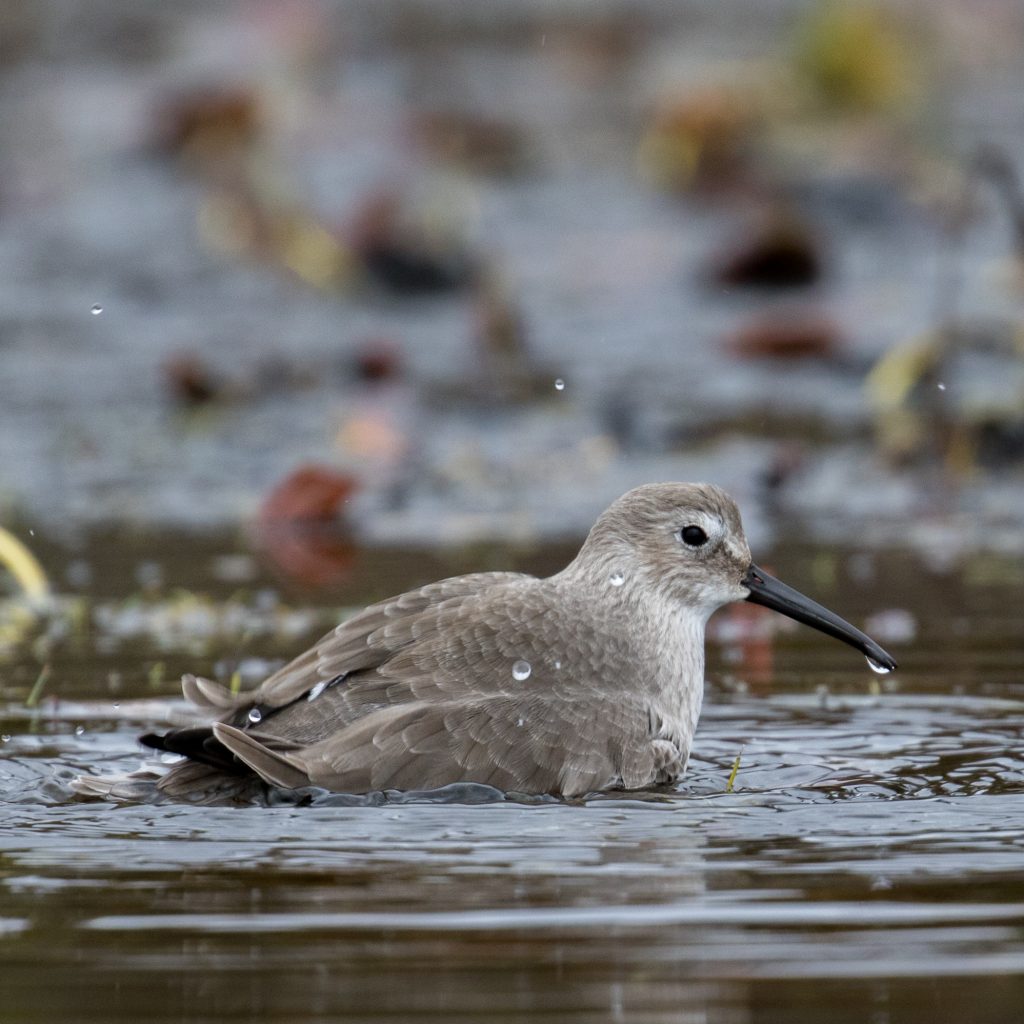
QUICK POST: Family obligations pretty much kept me out of commission this weekend birding-wise, so I have nothing to post from the weekend. However, I’ve been wanting to post this bathing Dunlin since I photographed it a couple of weeks ago out at Glenmere Lake. I’ve always liked bird images with water, particularly with splashing, spraying, or flowing water. I’ve tried to photograph bathing birds before, but usually the results are just not that great. I found these shots interesting and I hope you enjoy this glimpse of Dunlin behavior.
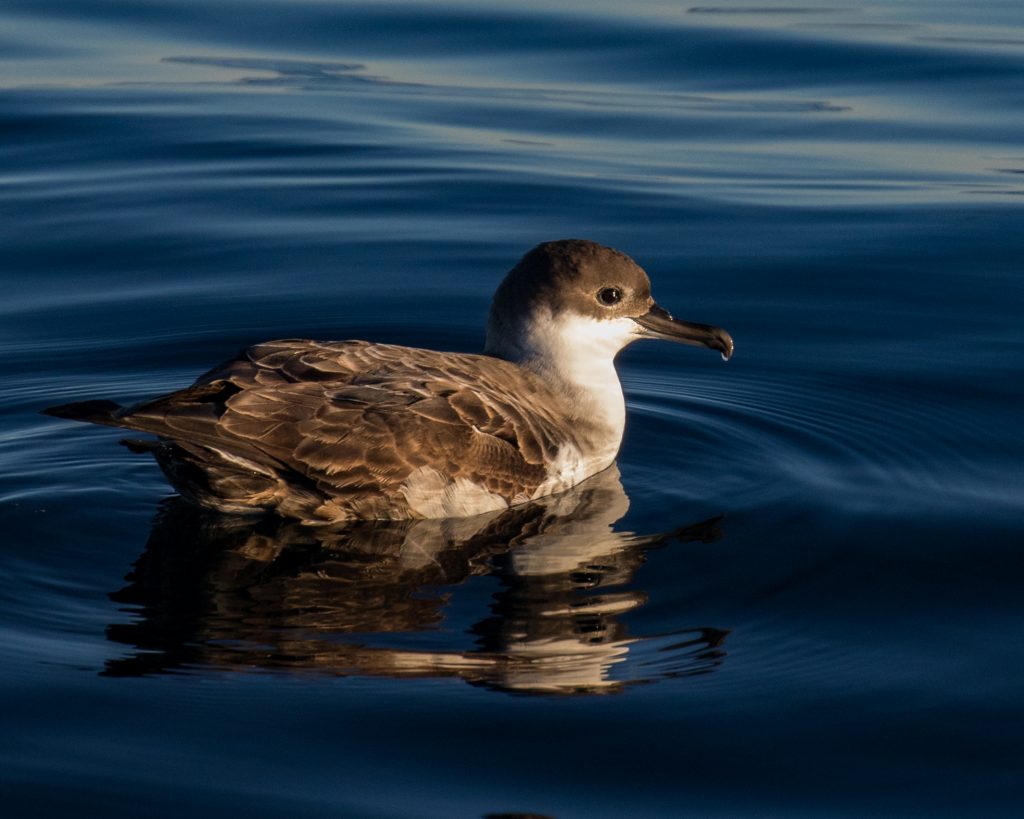
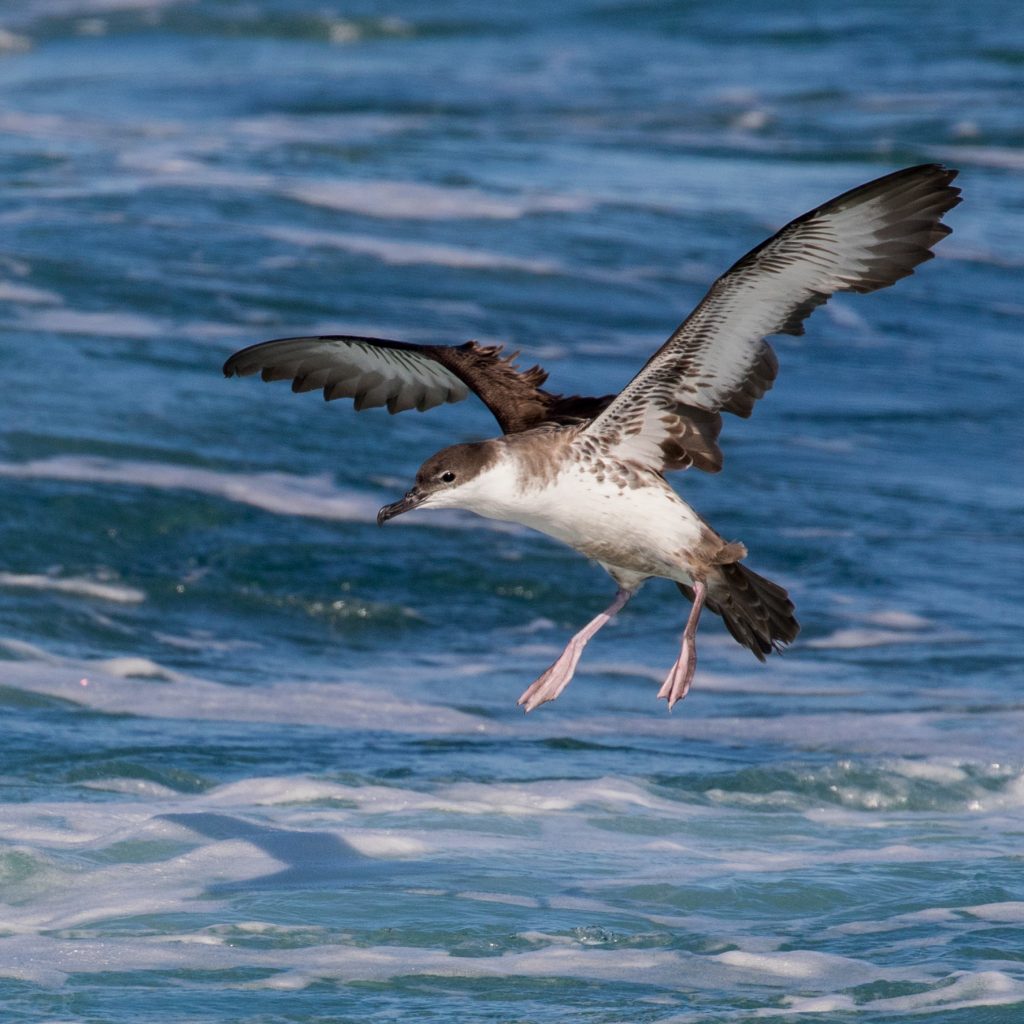
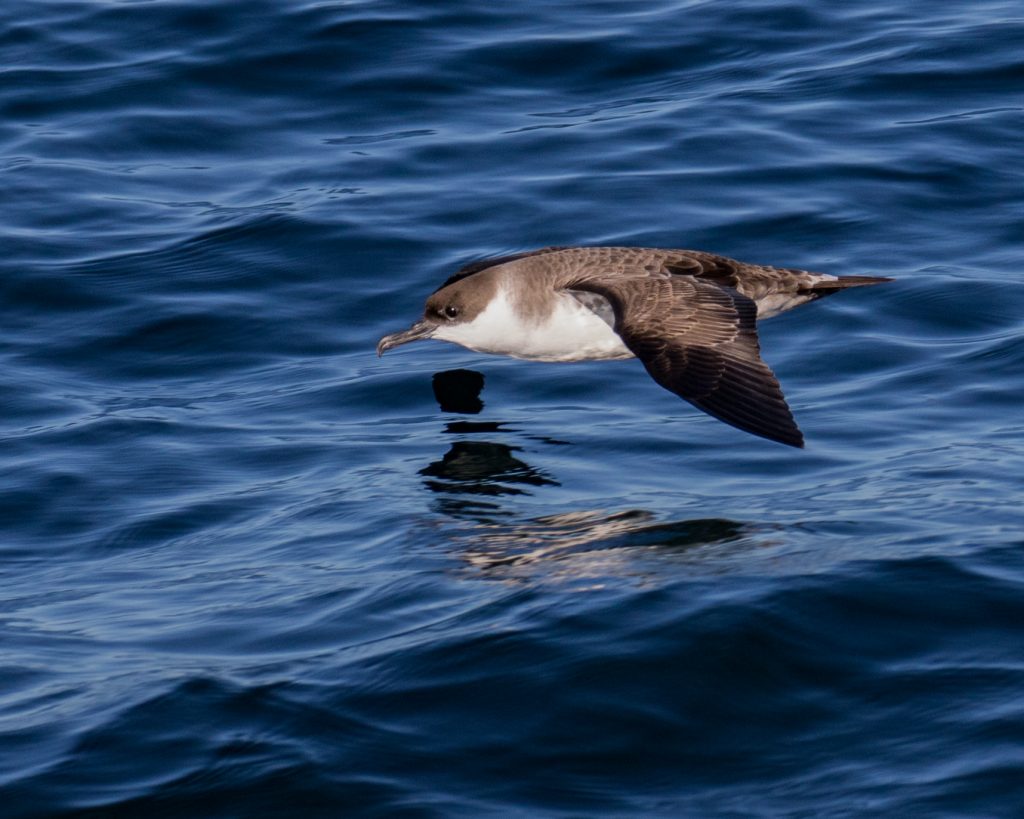
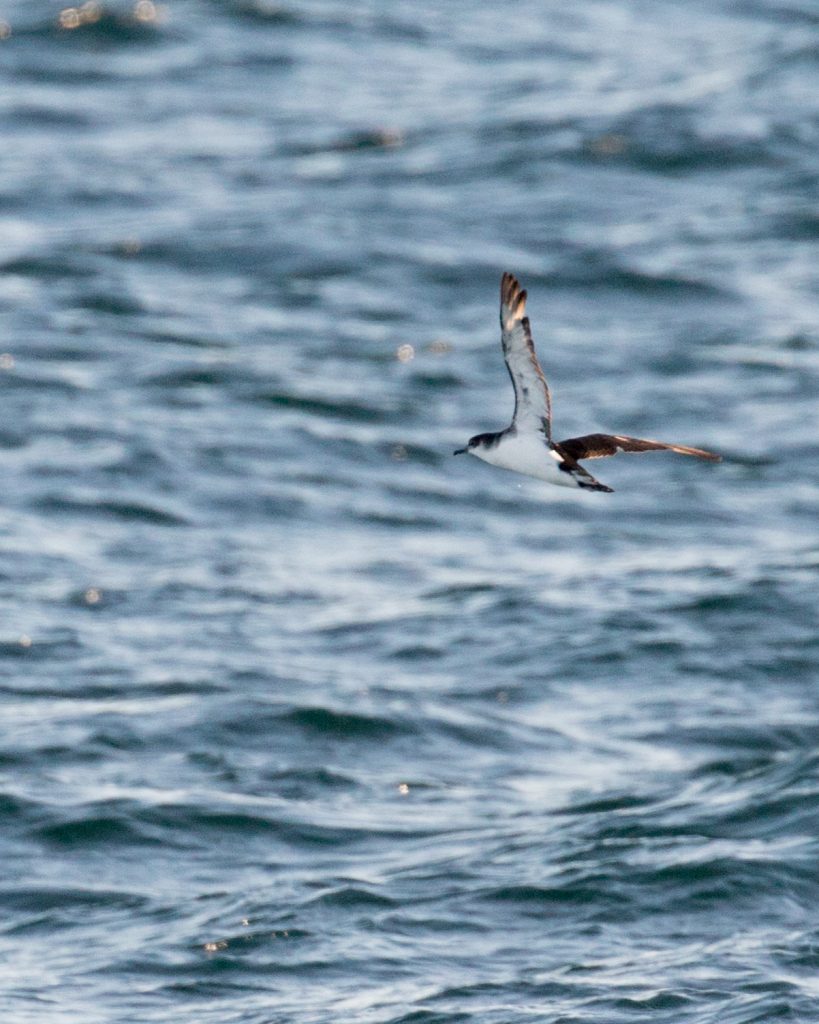
~Great Shearwater at the end of a long day on the water, See Life Paulagics Brooklyn Trip 11/04/18.~
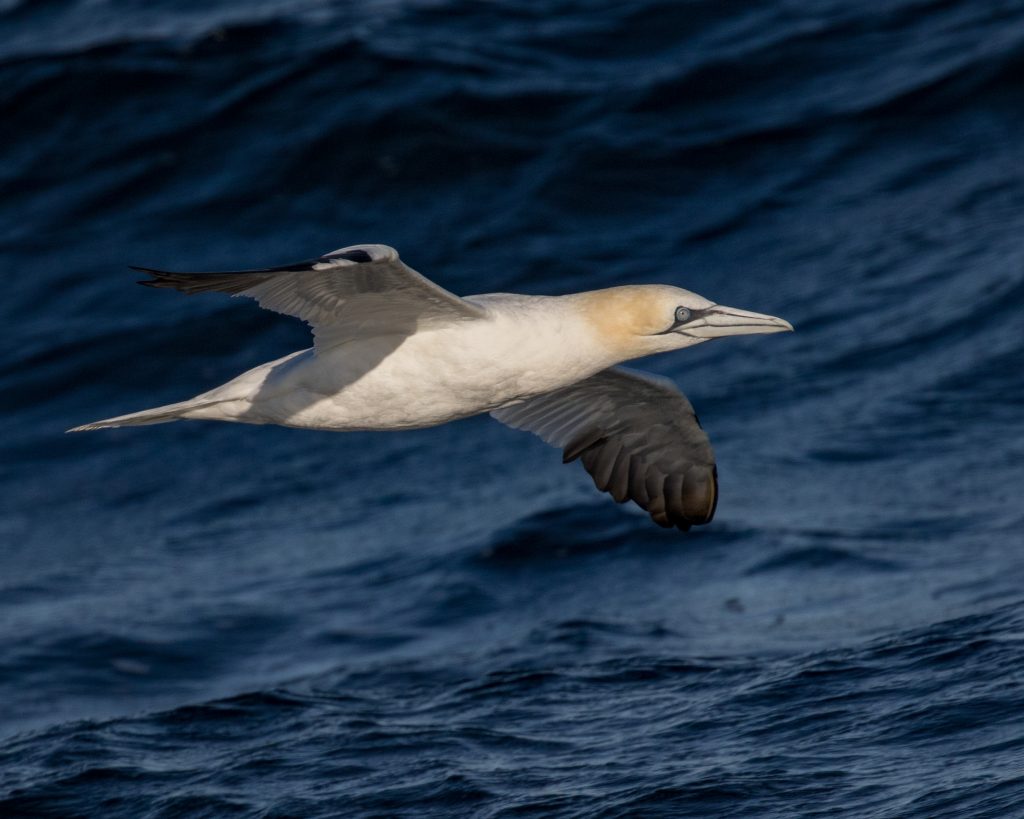
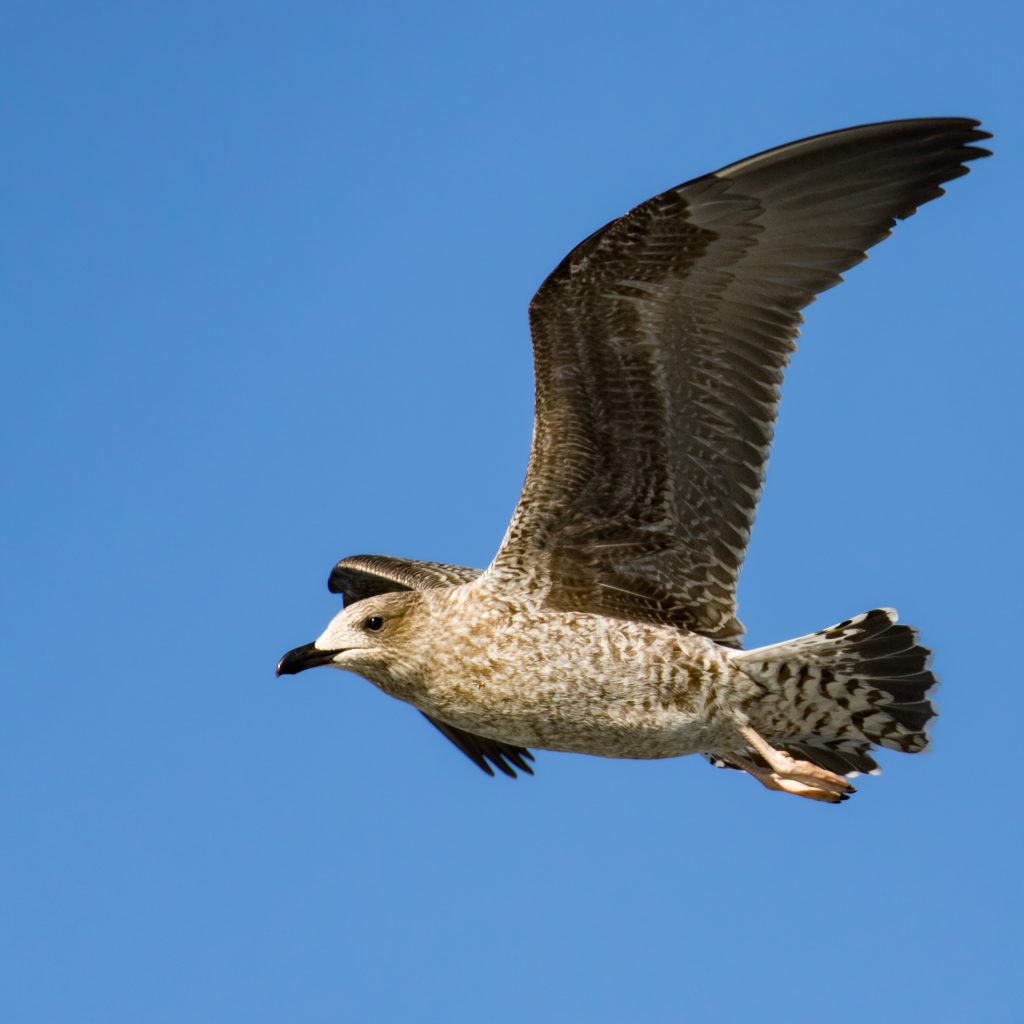
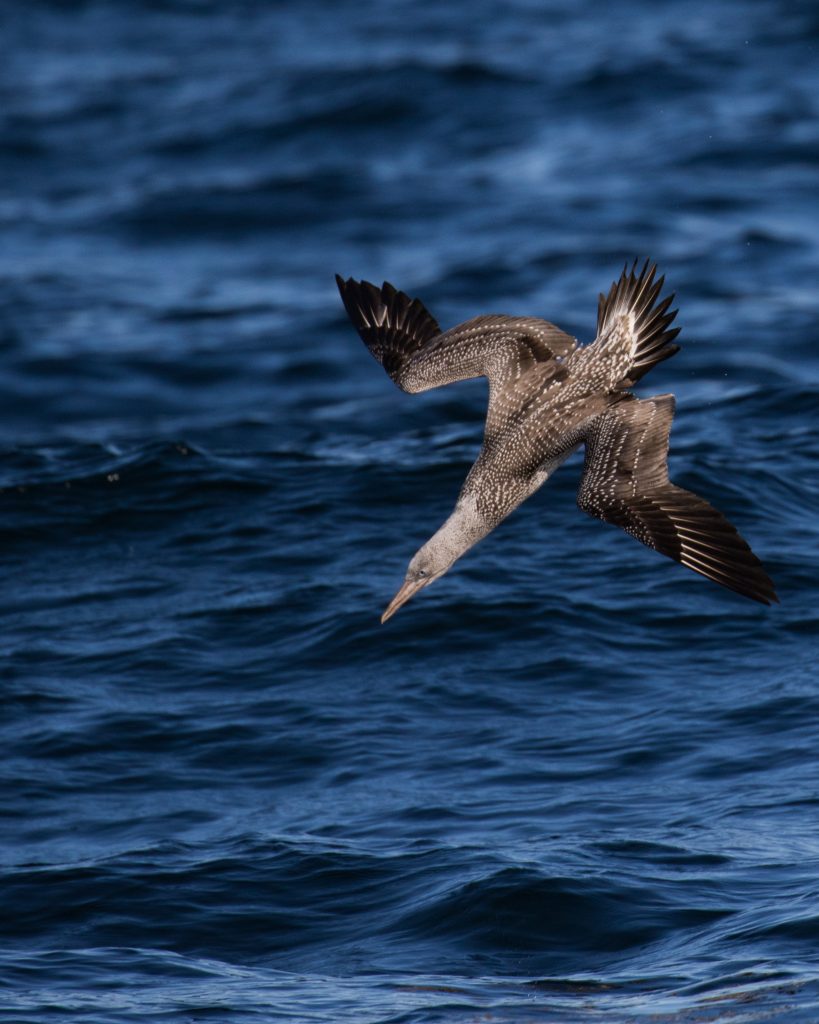
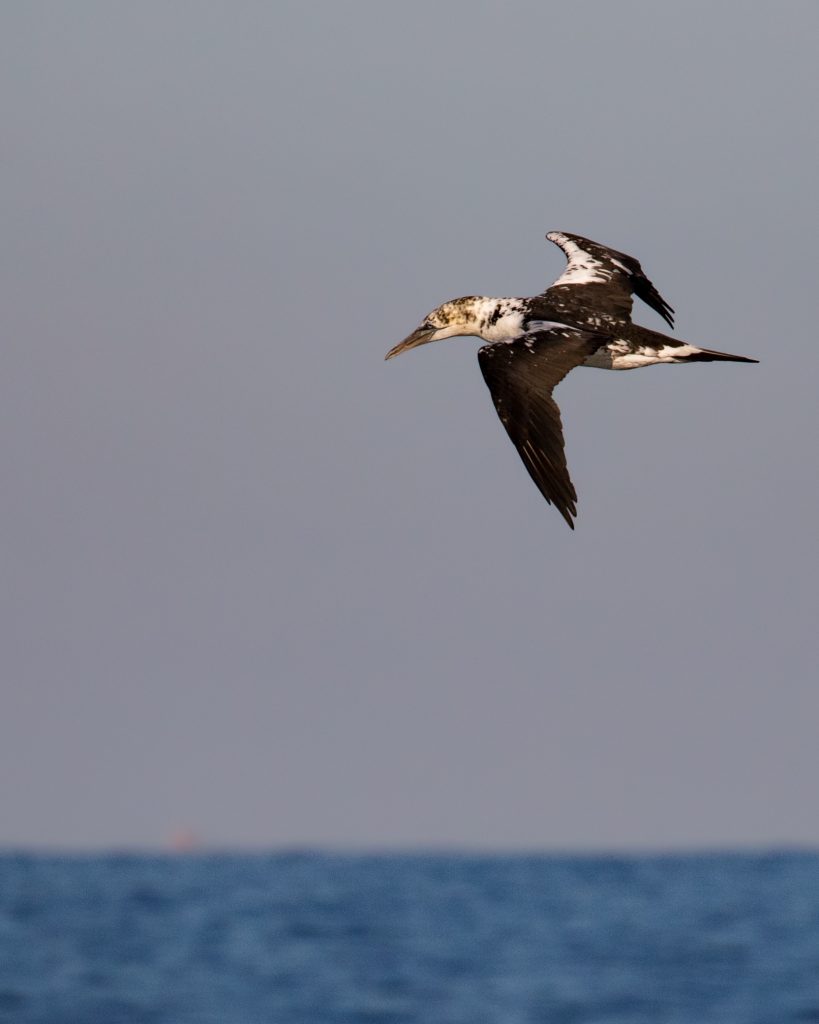
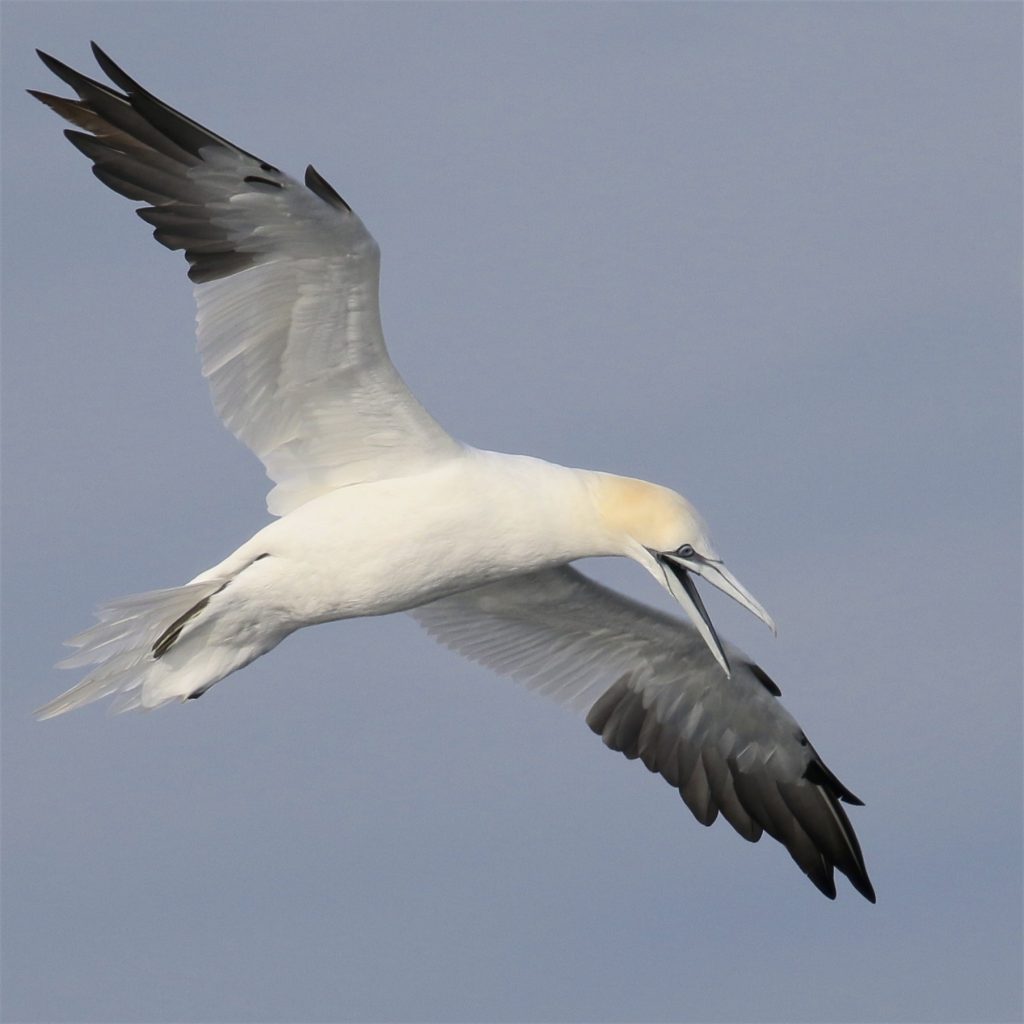
I would venture to say that See Life Paulagics‘ November 4th trip out of Brooklyn was not among their most productive in terms of seeing target birds. Unfortunately, it just comes with the territory. In spite of doing all the right things to find and attract birds, some days are just going to be better than others. Of the target species listed for the trip (Red Phalarope, Manx, Cory’s and Great Shearwaters, Northern Fulmar, Pomarine Jaeger, and Great Skua), we only saw Manx and Great Shearwaters. We did have all the expected gulls, scoters, and many Northern Gannets in every type of plumage you can imagine (they put on a real show, see below). Other good birds included: Black-legged Kittiwake (3-4), Lesser Black-backed Gull (3), Parasitic Jaeger (3), Bonaparte’s Gull (35+), and what I believe they eventually identified as Wilson’s Storm-Petrel (1 or 2). The Wilson’s Storm-Petrel was apparently a good find; they should have left the area by this time of year.
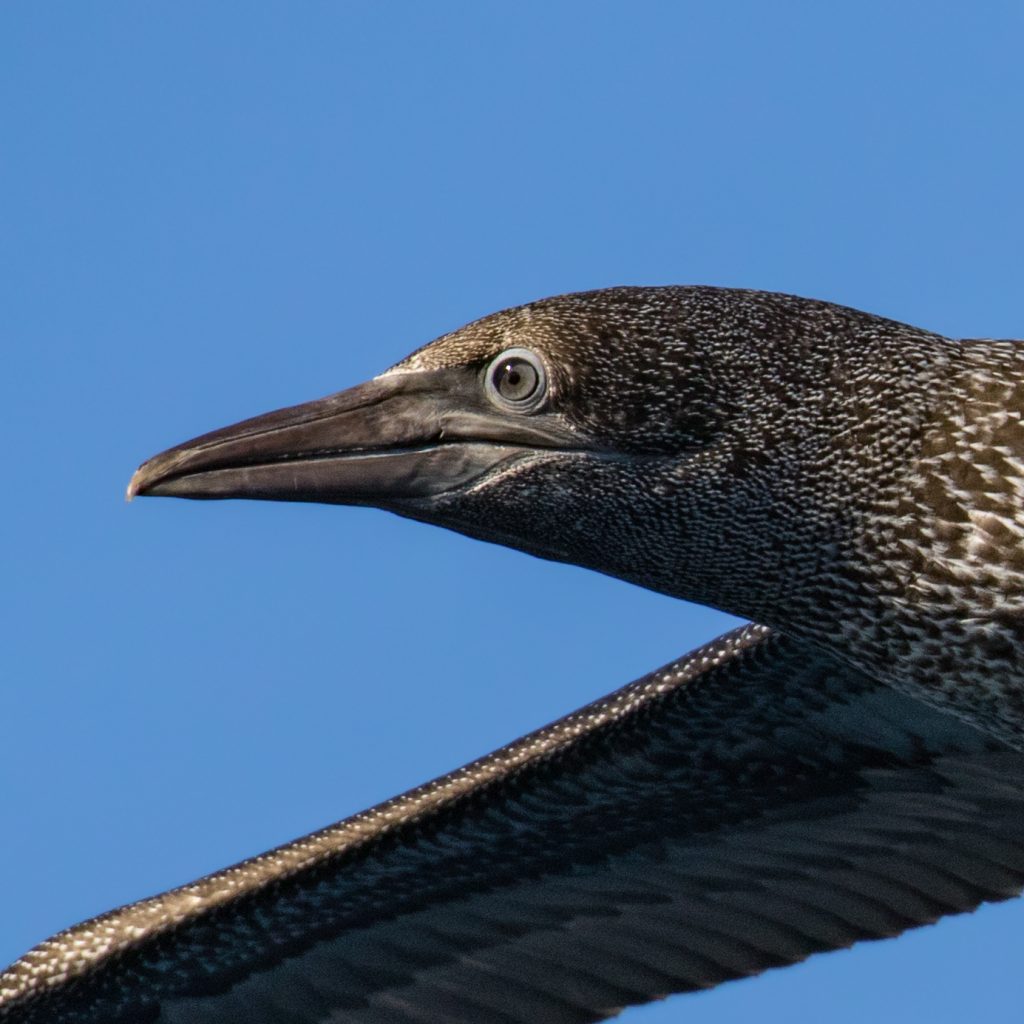
~Northern Gannet up close and personal. These trips provide a great look at this bird – it’s really a treat. See Life Paulagics Brooklyn Trip, 11/04/18.~
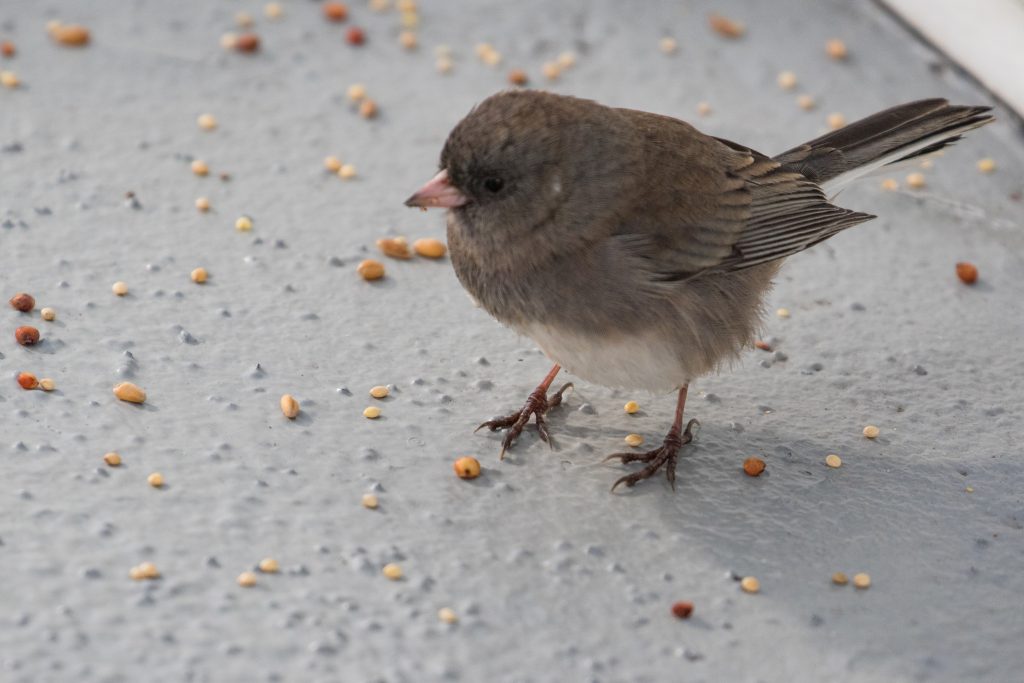
One of the more interesting things about the trip was the unbelievably large number of passerines we saw out there. By my count, we had at least 13 species of songbirds: Dark-eyed Junco, Purple Finch, Marsh Wren, Winter Wren, Brown-headed Cowbird, Red-winged Blackbird, Red-breasted Nuthatch, American Goldfinch, American Robin, Golden-crowned Kinglet, Yellow-rumped Warbler, White-throated Sparrow, and Pine Siskin! Add to that two bats! Apparently Saturday’s strong west winds blew many birds off course. The Paulagics crew came prepared for it, however. They brought two potted plants, some loose brush cuttings, plenty of bird seed, and water dishes. Some of the songbirds landed on the boat for a rest and to hopefully refuel. Unfortunately, others seemed too intimidated by all the humans on-board and would not land, or if they did it was only briefly. The Dark-eyed Junco made itself at home on the boat. When it landed, it was in dire straits. But after getting some water and food it was up and about, always under foot so you had to be very careful not to step on it. A Brown-headed Cowbird joined it; they both stayed for the duration, only flying once we were on land again. For me, it was sad to see these passerines out of their element and in potential peril, but it was also sweet to be able to help a few of them.
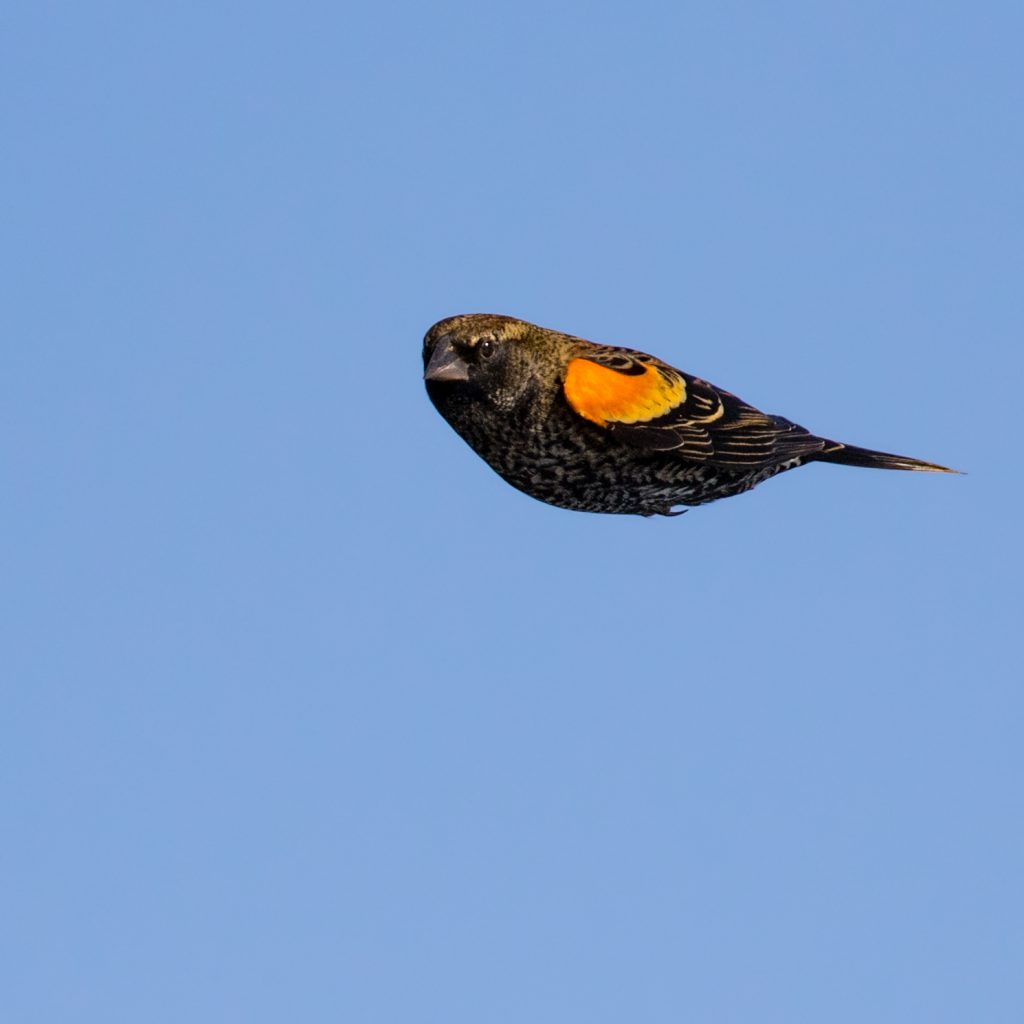
~Crazy shot of a Red-winged Blackbird out at sea. See Life Paulagics Brooklyn Trip, 11/04/18.~
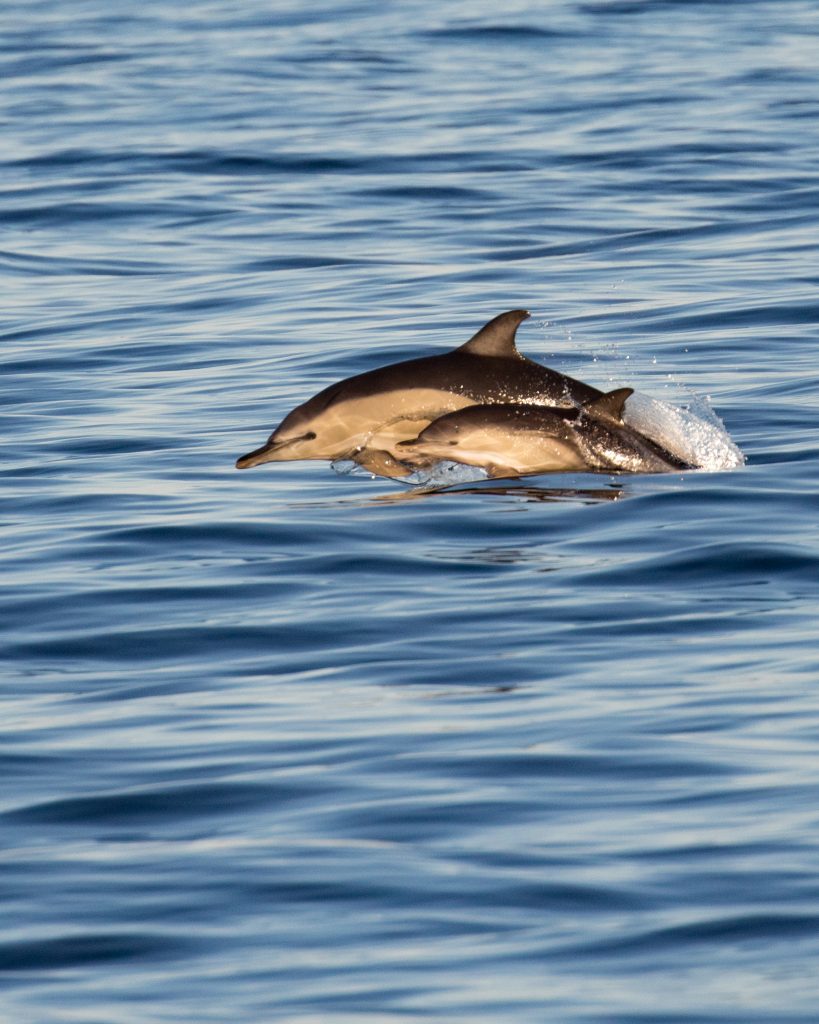
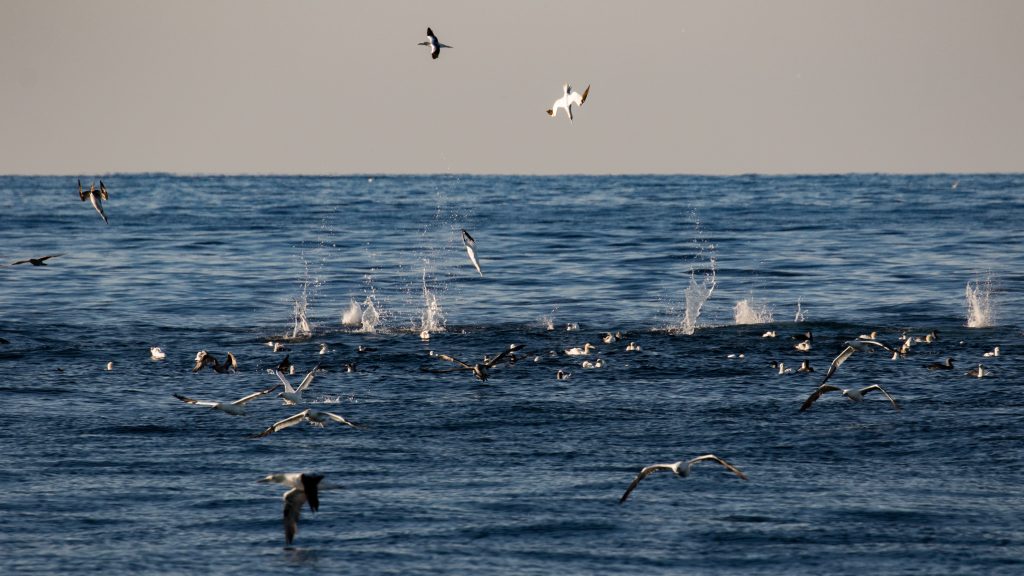
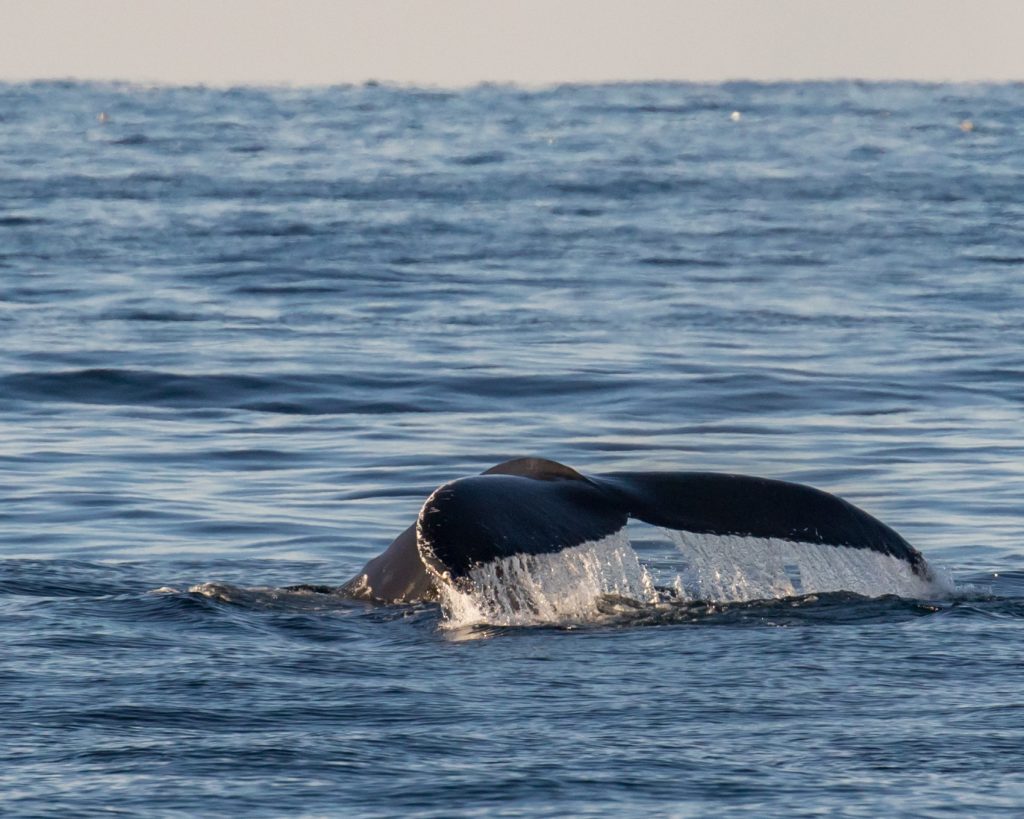
Later in the afternoon, we came across a large group of Northern Gannets actively feeding. It was pretty incredible to watch them diving repeatedly into one relatively small area. Then, the first whale appeared and then the Common Dolphins became apparent. In all there were two Humpback Whales and who-knows-how-many Common Dolphins. The dolphins were curious and spent much time swimming alongside the boat. It was a pretty incredible show to watch, but one that I found difficult to photograph. Part of my problem is that I didn’t know where to look – there was so much going on all around the boat. I tried to document it for a bit, but then stopped and just enjoyed the show. In my opinion, between the gannets and the cetaceans, this show saved the pelagic. As expected, the trip offered plenty of photo ops, so enjoy the pics.
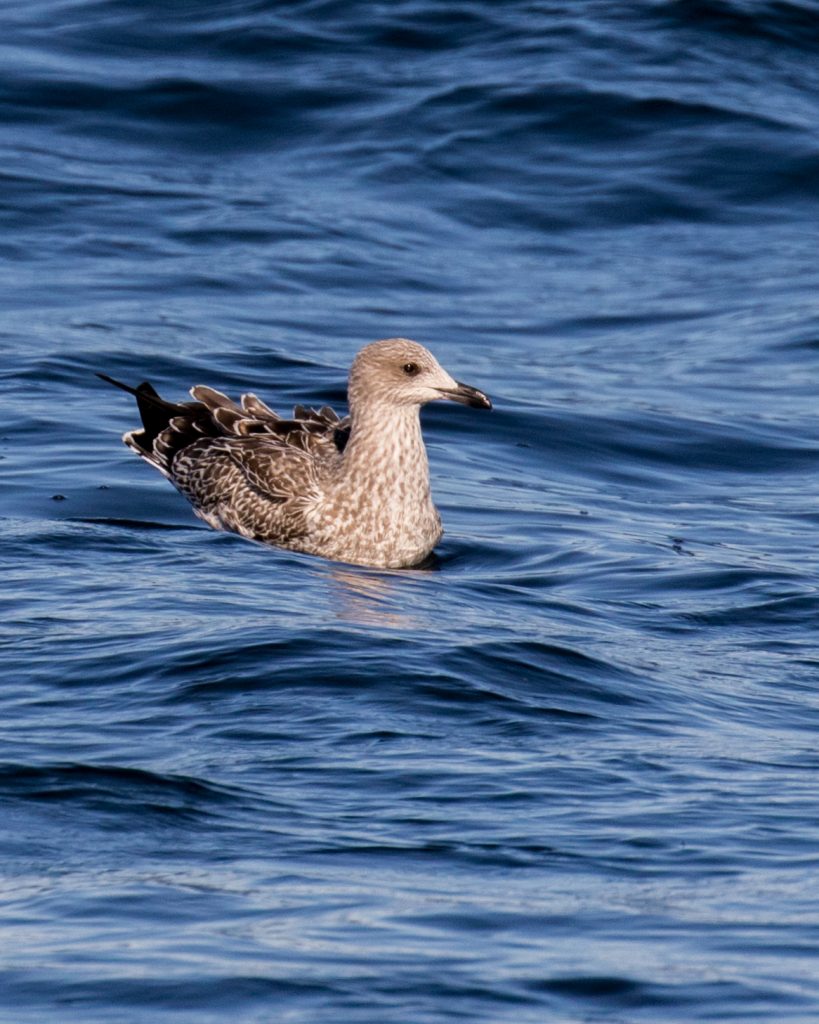
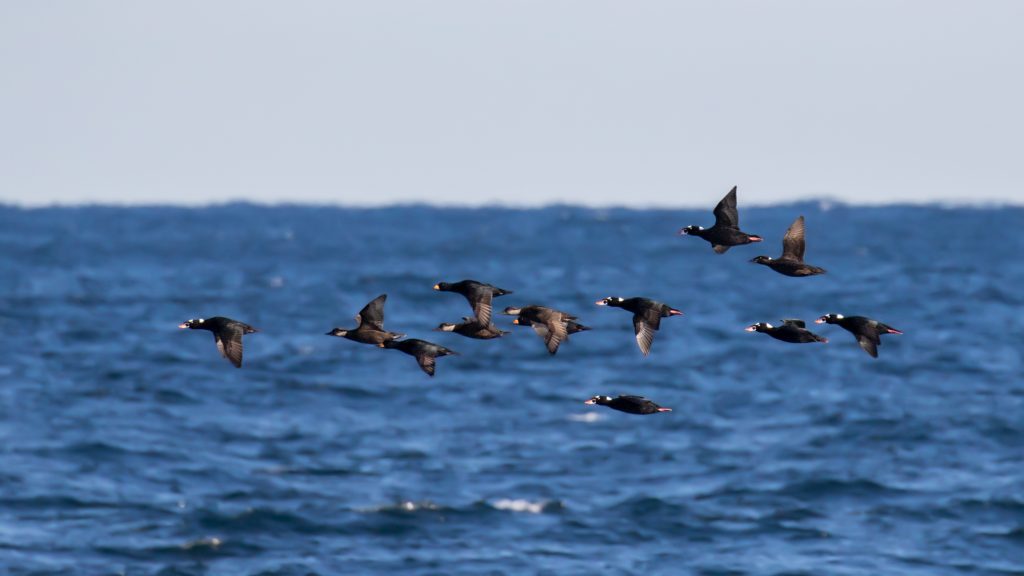
~Great Shearwaters were, in my opinion, the best bird/photo op combination of the trip. Nice looking bird and we had a good number of them around the boat at any given time. See Life Paulagics Brooklyn Trip, 11/04/18.~ ~What a treat to watch these dudes. NOGA in flight low over the water, See Life Paulagics Brooklyn Trip, 11/04/18.~ ~I was having a hard time with this bird. We had at least a couple first winter Lesser Black-backed Gulls during the day. Once I lost it in the flock of gulls following the boat, it was hard for me to pick it out again without help. See Life Paulagics Brooklyn Trip, 11/04/18.~ ~Common Dolphins! Looks like and adult and a young dolphin to me. This photo has a strange quality to me – I’m not sure why, but it almost seems like the dolphins were pasted there. See Life Paulagics Brooklyn Trip, 11/04/18.~ ~Northern Gannet going down for a bite to eat. See Life Paulagics Brooklyn Trip, 11/04//18.~~Now this bird will fly very close to the water, navigating flawlessly. Great Shearwater during See Life Paulagics’ Brooklyn Trip, 11/04/18.~~Northern Gannets! This was awesome to watch! See Life Paulagics Brooklyn Trip, 11/04/18.~~NOGA contemplating a dive. See Life Paulagics Brooklyn Trip, 11/04/18.~ ~Lesser Black-backed Gull on the water. See Life Paulagics Brooklyn Trip, 11/04/18.~ ~A mix of Surf and Black Scoters in flight. See Life Paulagics Brooklyn Trip, 11/04/18.~~This was one smart junco, he/she knew a good thing – plenty of food and water AND a free trip back to land! Hard to beat that. See Life Paulagics Brooklyn Trip, 11/04/18.~ ~I really didn’t get any good whale shots, but I had to include at least one. See Life Paulagics Brooklyn Trip, 11/04/18.~ ~LIFER! I was happy to get at least a documentary shot of this bird – MANX SHEARWATER during See Life Paulagics Brooklyn Trip, 11/04/18.~
~Eastern Cattle Egret in Taiwan, breeding plumage. Photo by Bill Fiero.~
It’s going to take me a couple of days to go through and edit my photos from yesterday’s pelagic trip to the Huson Canyon, out of Brooklyn, NY. The trip proved to be interesting in ways I don’t think most of you would imagine, so stay tuned, I should post in the next few days. Meanwhile, with perfect timing, Bill Fiero has contributed yet another excellent post. I personally can’t get over how beautiful the Eastern Cattle Egret in breeding plumage is – great shot Bill and thanks for the post. -Matt
A Word About Cattle Egrets – By Bill Fiero
Cattle Egrets have undergone an extremely rapid and wide ranging expansion in the last century or so; originally found in tropical and subtropical Africa and Asia, at the end of the 19th century it was found in Souther Africa, and now occurs virtually worldwide, first being observed in North America in 1941.
The Eastern and Western populations have been recently split by some taxonomic systems as ‘Western” (Bubulcus ibis) and ‘Eastern’ (Bubulcus coromandus). They are very similar in appearance, but different enough to be considered separate species.
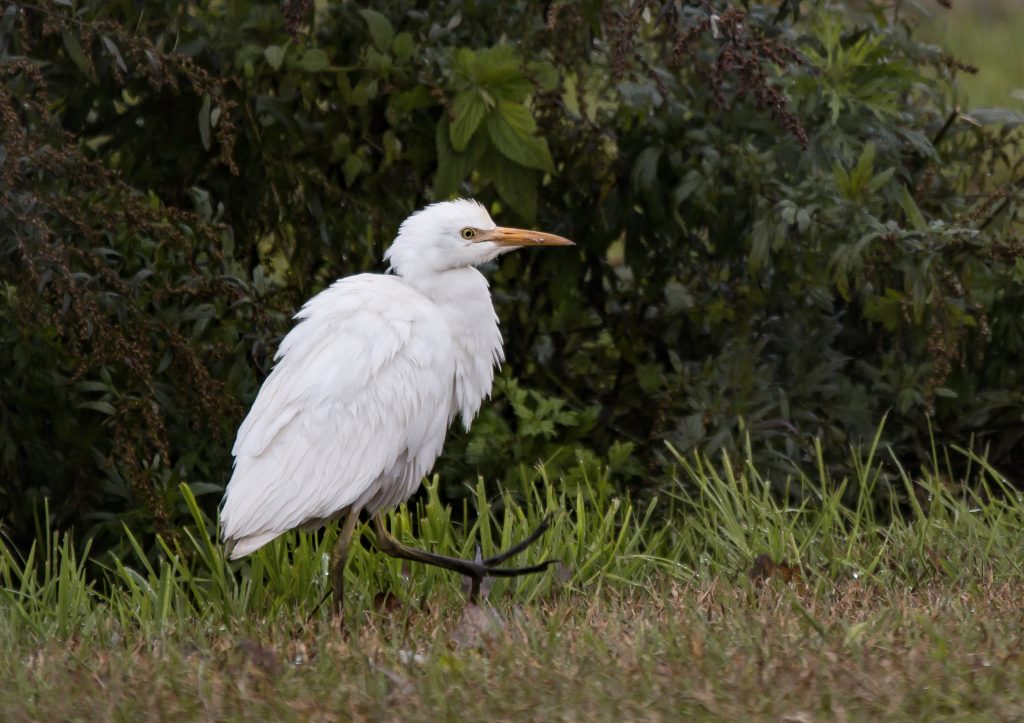
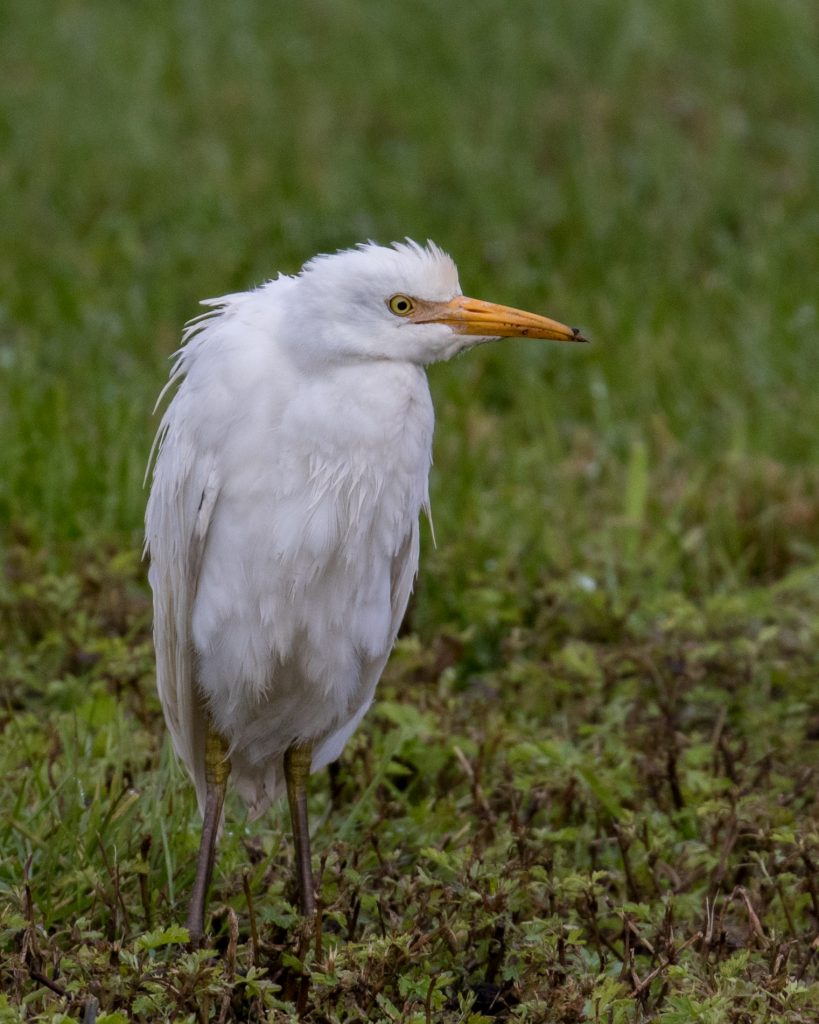
Here are pictures of both; the now famous ‘Western’ Cattle Egret found by Matt at the Liberty Loop, and the ‘Eastern’ species that I took in Sri Lanka; both are shown in non-breeding plumage. At the top of the page is a shot of the Eastern species in breeding plumage.
~Eastern Cattle Egret in Sri Lanka, non-breeding plumage. Photo by Bill Fiero. ~~Western Cattle Egret at the Liberty Loop, non-breeding plumage. Photo by Bill Fiero.~
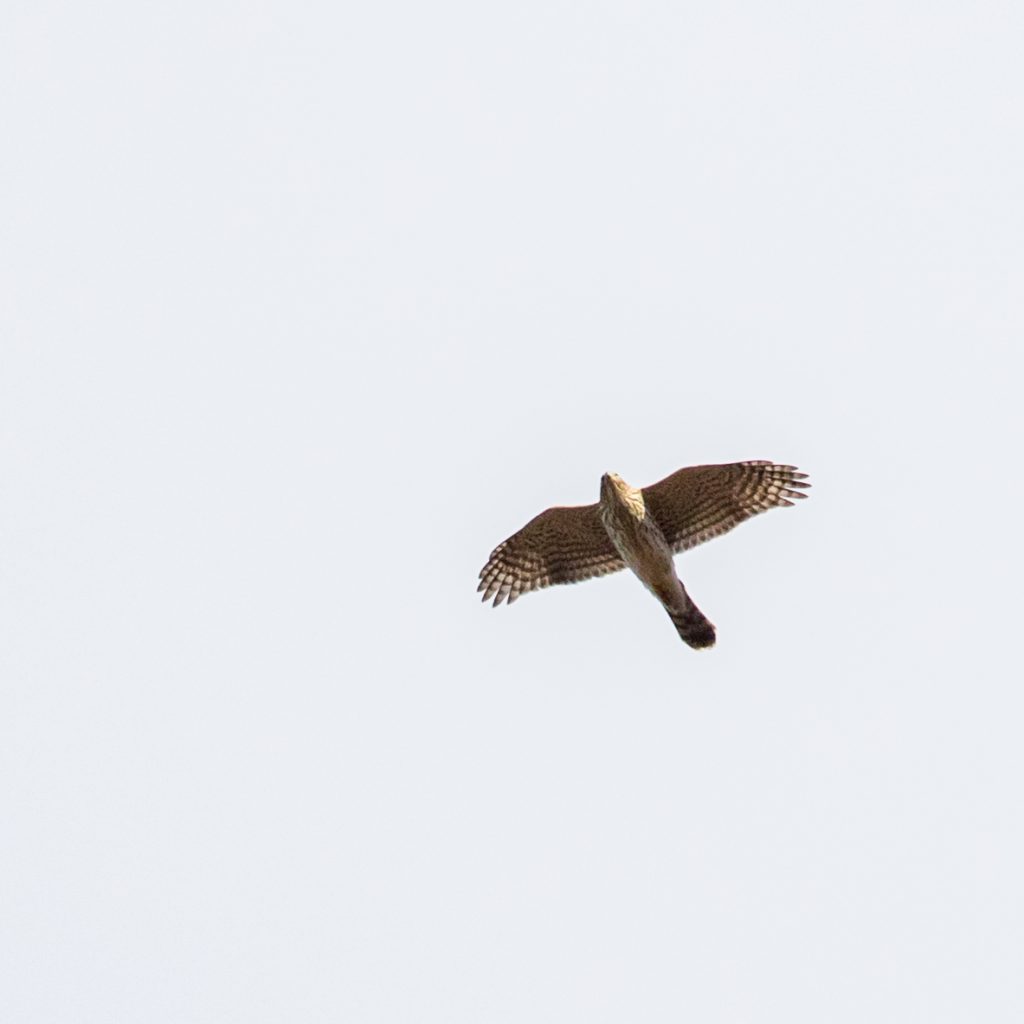
~I was trying to turn this bird into a Northern Goshawk in the field. Examining pics at home, I’m sticking with a healthy looking Cooper’s Hawk. Mount Peter Hawkwatch, 11/03/18.~
It’s hard to believe that today was my last day as counter for the 2018 hawkwatch season at Mount Peter Hawkwatch. I was scheduled to count next Saturday, but I will be out of town so Rick Hansen is covering for me. The morning rain caused a 2 hour delay to the start, and when I got up on the mountain it quickly became clear that it was going to be a cold and windy day. I had most of my 38 migrating raptors in the first 2 hours, and then things slowed down after that. Raptor highlights included 2 migrating Bald Eagles, one adult and one immature, as well as a nice adult Red-shouldered Hawk. The real highlight of the day, however, came when Bobby Linguanti and some of his family stopped up for a visit. Today is a year since Carol (Bobby’s wife, hawk counter extraordinaire, and all around awesome person) passed away, and they were making the rounds to some of Carol’s favorite spots. It was a sweet and sad visit. As usual, I’ve included my Hawkcount.org report at the bottom of this post.
~Red-shouldered Hawk passing over the platform, Mount Peter Hawkwatch 11/03/18.~
PELAGIC TEASER: Tomorrow I’m heading out on an 18 hour pelagic trip with See Life Paulagics, out of Brooklyn, NY. Hopefully it will be a good one, our target species include: Red Phalarope, Manx, Cory’s and Great Shearwaters, Northern Fulmar, Pomarine Jaeger, and the holy grail for this time of year Great Skua.
~Northern Gannet taken during a winter pelagic trip I took back in January of 2017.~
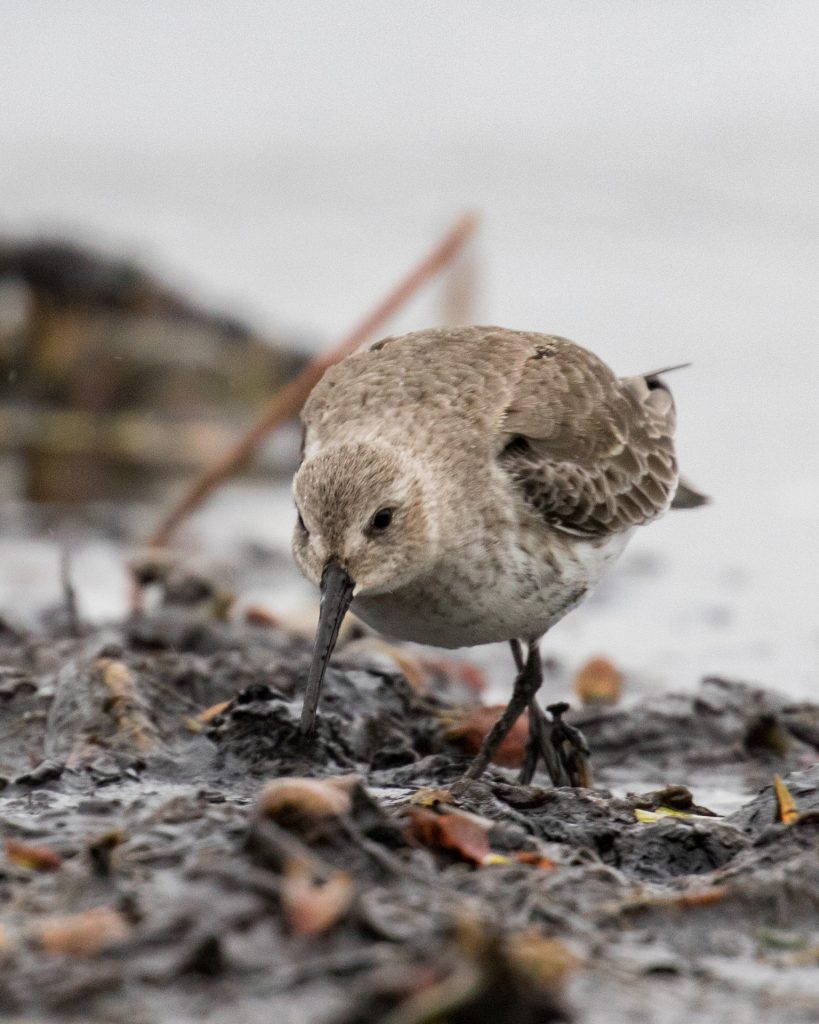
~Dunlin with who-knows-what in its bill. Glenmere Lake, 10/28/18.~
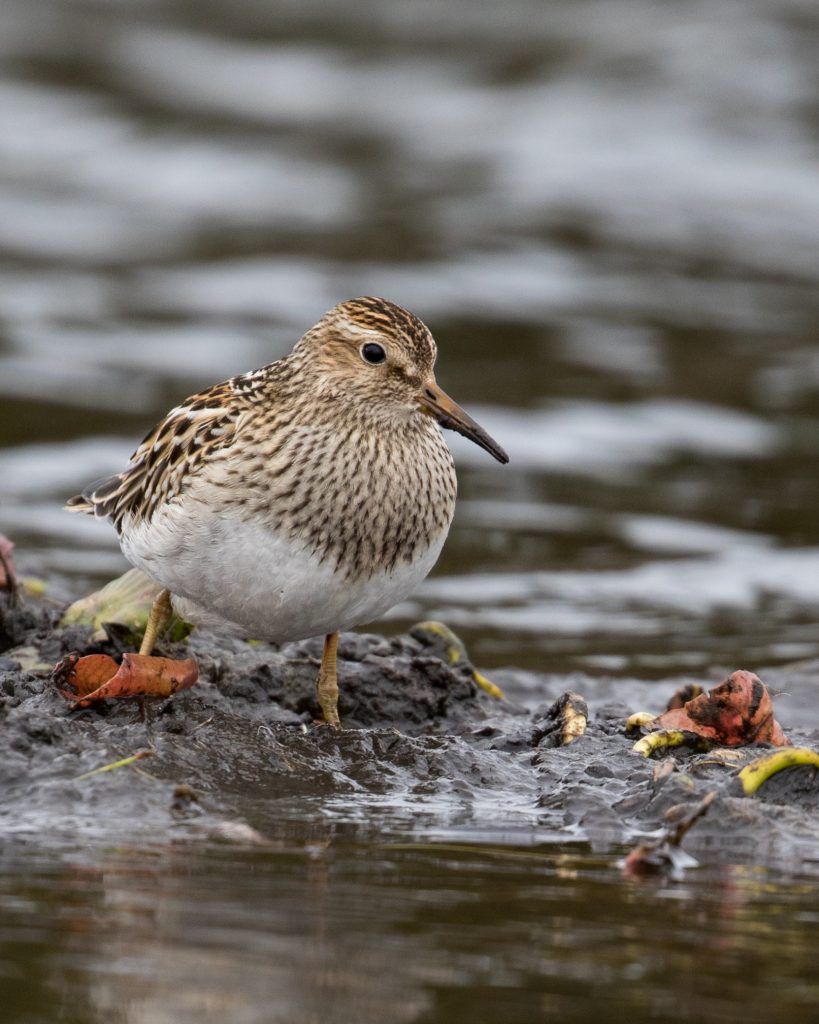
I went to Glenmere Lake again today, and it was awesome! I had 7 species of shorebirds: Dunlin (15+), WHITE-RUMPED SANDPIPER (at least 3), Semipalmated Sandpiper (9), Lesser Yellowlegs (1), Greater Yellowlegs (1), Killdeer (2), and Pectoral Sandpiper (3). The water was much calmer, and the sun actually was peeking out from time to time. I had rare occurrence of getting home and liking my photos more than I had anticipated, so that’s always a good thing.
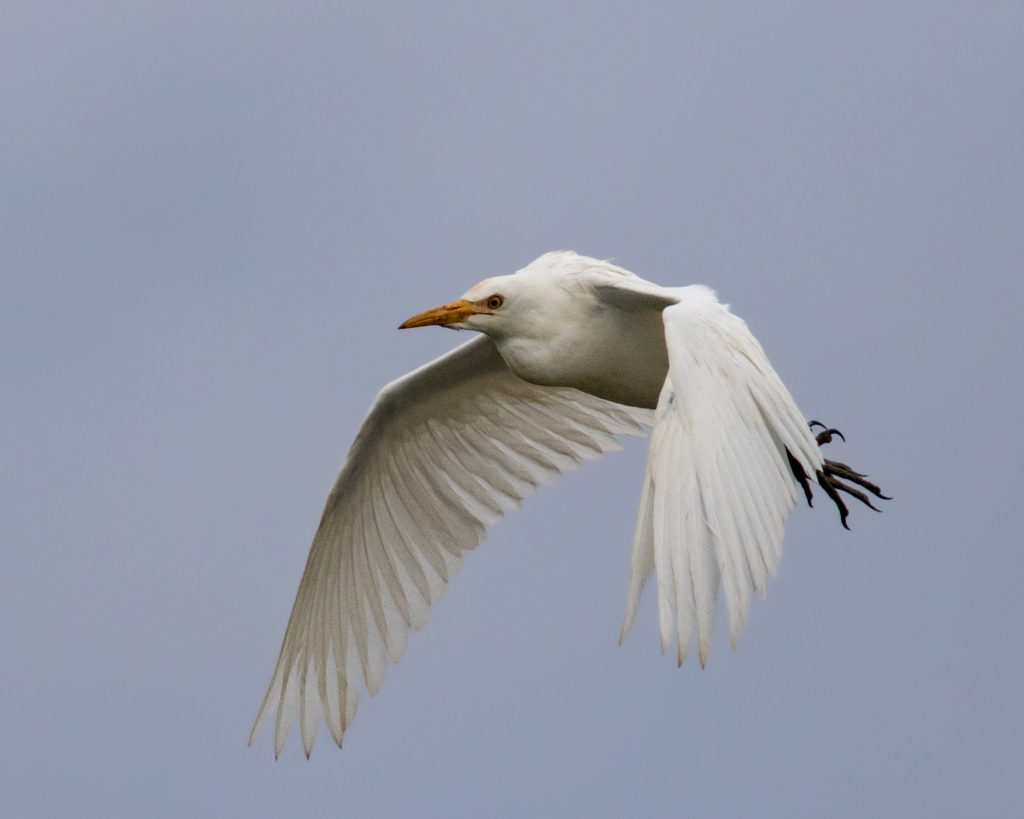
The other excitement of the day was when I found a CATTLE EGRET in the parking area of the Liberty Loop. I pulled in and was eating my breakfast. It wasn’t until I got out of my car that I noticed the CAEA just 30 feet or so from my car! John Haas ran for the bird, and apparently the bird stuck around because I got word from several birders that they got it later in the day. Scroll down to the bottom of this post for CAEA photos.
~Dunlin, Glenmere Lake 10/28/18.~~WHITE-RUMPED SANDPIPER coming at you. Glenmere Lake, 10/28/18.~~Dunlin at Glenmere Lake, 10/28/18.~ ~Dunlin at Glenmere Lake, 10/28/18.~ ~Dunlin at Glenmere Lake, 10/28/18.~ ~Lesser Yellowlegs making its move. Glenmere 10/28/18.~~I never seemed to get a good look at any of the Pecs – this was the best shot I got of one. Glenmere Lake, 10/28/18.~ ~WHITE-RUMPED SANDPIPER, Glenmere Lake, 10/28/18.~~Bathing Dunlin, Glenmere Lake 10/28/18.~ ~CATTLE EGRET at the Liberty Loop, 10/28/18.~ ~A photographer pulled up, took some pics from by his car, and then walked out and flushed the bird. Sheesh. CAEG in flight, Liberty Loop 10/28/18.~ ~Cattle Egret minding its own business. Liberty Loop, 10/28/18.~
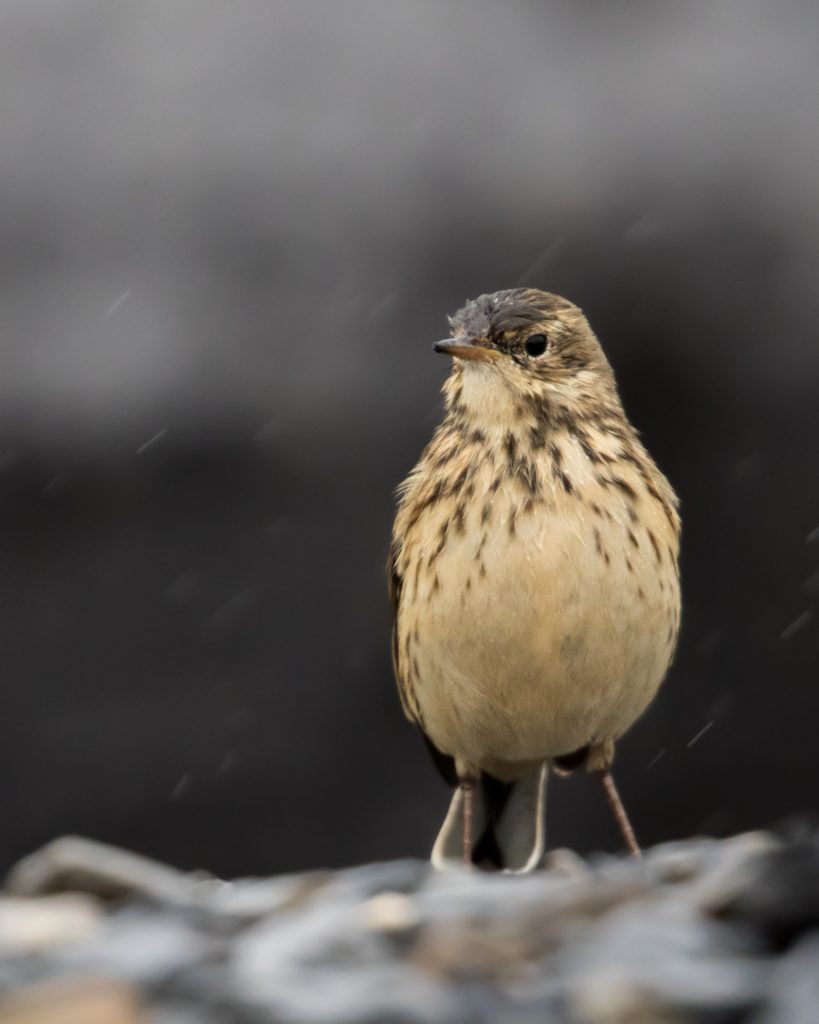
~American Pipit in the rain, black dirt, 10/27/18.~
The rainy, windy weather put the kibosh on hawkwatch at Mount Peter today, so instead I ran around Orange County hoping that once again bad weather would equal good birding. I checked Greenwood Lake and Wickham Lake early and came up empty, so I decided to shift gears and head to the black dirt. By the way, birding today was tough. It wasn’t raining all that hard, but it was pretty steady and the wind was strong and relentless. You absolutely HAD to bird with your back to the wind, otherwise your binoculars or scope would be instantly drenched. Or the inside of your car. Anyways, in the black dirt, the bird of the day was the American Pipit. I had many today, in several locations. In one flock, I was lucky enough to locate a couple of LAPLAND LONGSPURS, always a favorite of mine. I thought there might be some shorebirds around, but other than a single SANDERLING at Skinner Lane, I had no shorebirds in the black dirt (they’d come later, see below).
~Always a cool bird to see – one of two LAPLAND LONGSPURS in the black dirt, 10/27/18.~
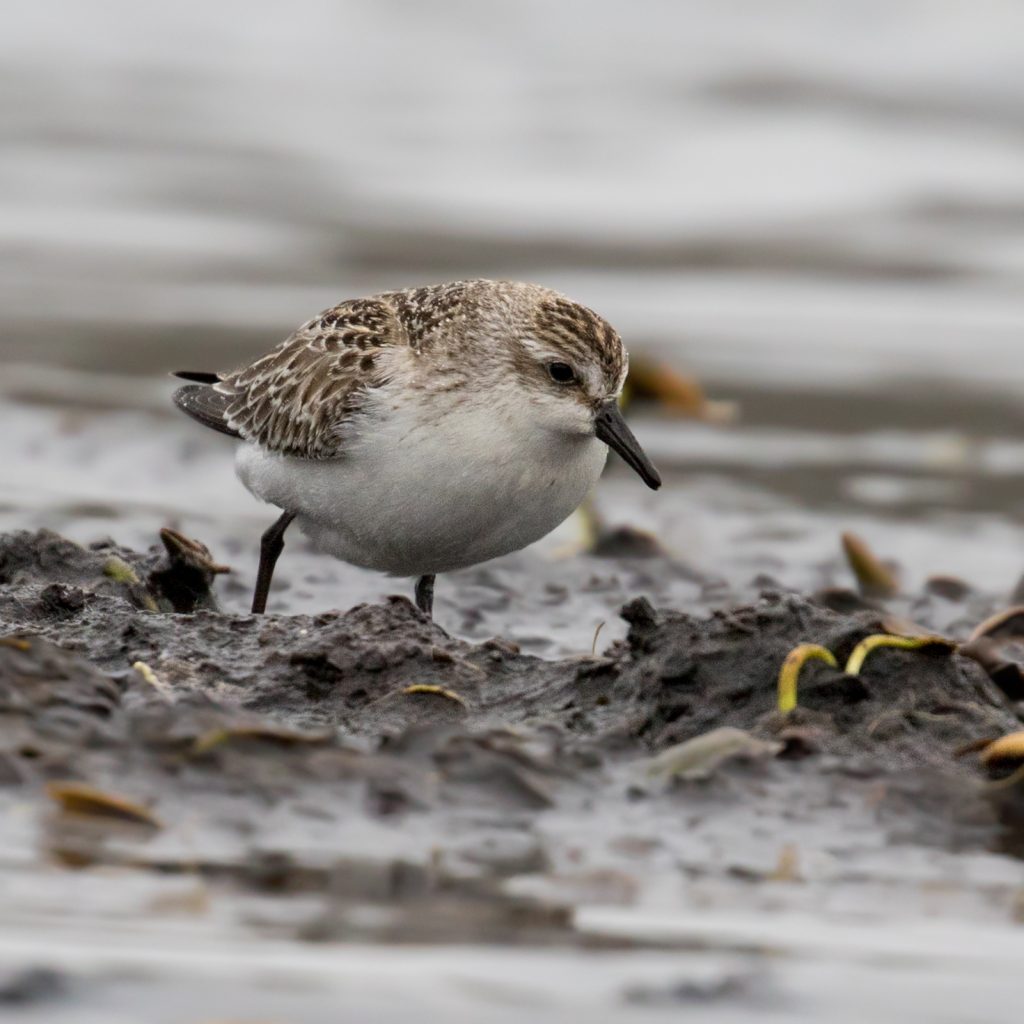
In the afternoon I head to Glenmere Lake. Not for ducks, but for shorebirds. Kathy Ashman had let me know that she had been observing shorebirds on the vegetation in the southwest corner of the lake. You can walk out the blue trail about a half a mile or so and there is a lookout onto the lake. Which is what I did this afternoon, and I had a nice collection of shorebirds: 14 DUNLIN, 3 Semipalmated Sandpipers, 1 Least Sandpiper, and 1 WHITE-RUMPED SANDPIPER. I got pretty excited and went back to my car, unloaded my kayak, and headed out to get a better look. It was not the easiest paddle; it was with the wind on the way out and I was practically riding the waves but it was into the wind (and waves) on the way back, making it a bit of a chore. But, it was worth it! It was really cool to see these shorebirds up close and to get some photos. Oh, and of course there was bunch of American Pipits moving amounts the vegetation as well. I was exhausted and wet by the time I was done, but I felt I’d made the best of a blustery, wet day in Orange County.
~Dunlin at Glenmere Lake, 10/27/18.~ ~Semipalmated Sandpiper at Glenmere Lake, 10/27/18.~ ~One more Dunlin shot – Glenmere Lake, 10/27/18.~ ~It’s always nice to see a White-crowned Sparrow. Skinner Lane, 10/27/18.~ ~Lapland Longspur in the rain, 10/27/18.~
~A Beautiful Red-Shouldered Hawk passes through, Mount Peter Hawkwatch, 10/20/18.~
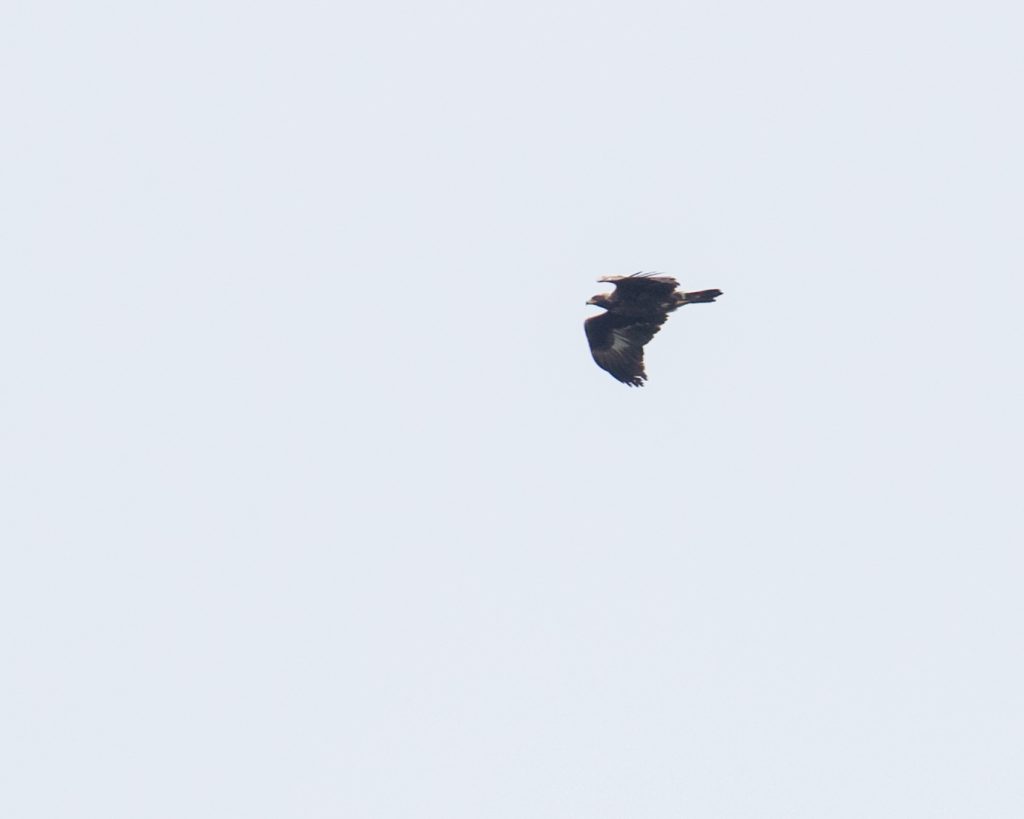
Yesterday was an excellent day at Mount Pete. The flight was steady and and on the low side, with most birds being able to be seen naked-eye. The highlight of the day, however, came pretty early, during the first hour of the watch. I spotted an eagle just over the treetops to the north of the platform. I got the bird in the scope, in perfect light, and sure enough it was a GOLDEN EAGLE! I was flipping out, and of course that early I was up there all alone. I made an adjustment to my scope, and when I tried to relocate the bird, it was gone! It presumably had dropped below the tree line; I looked for was seemed like ages right and left to see if I could catch the bird passing through, but I had no luck. I was disappointed – I was really thinking I’d get better looks at this bird! Nearly ten minutes passed, and I picked up another eagle rising up north of the watch – sure enough it was the Golden, and it eventually passed relatively high up and west of the platform, allowing for documentary pics and the extended look that I was hoping for:
~Wow! GOLDEN EAGLE at Mount Peter Hawkwatch, 10/20/18.~
The rest of the day was less exciting, but still good. The flight was relatively low and consisted mostly Sharp-shinned Hawks but also had good variety – of the expected species we missed only Broad-winged Hawk and Northern Goshawk. As usual, I’m including my Hawkcount.org report at the bottom of this post. Today (Sunday) could be a good day for hawk watching, so if you are so inclined, head out to your local hawkwatch.
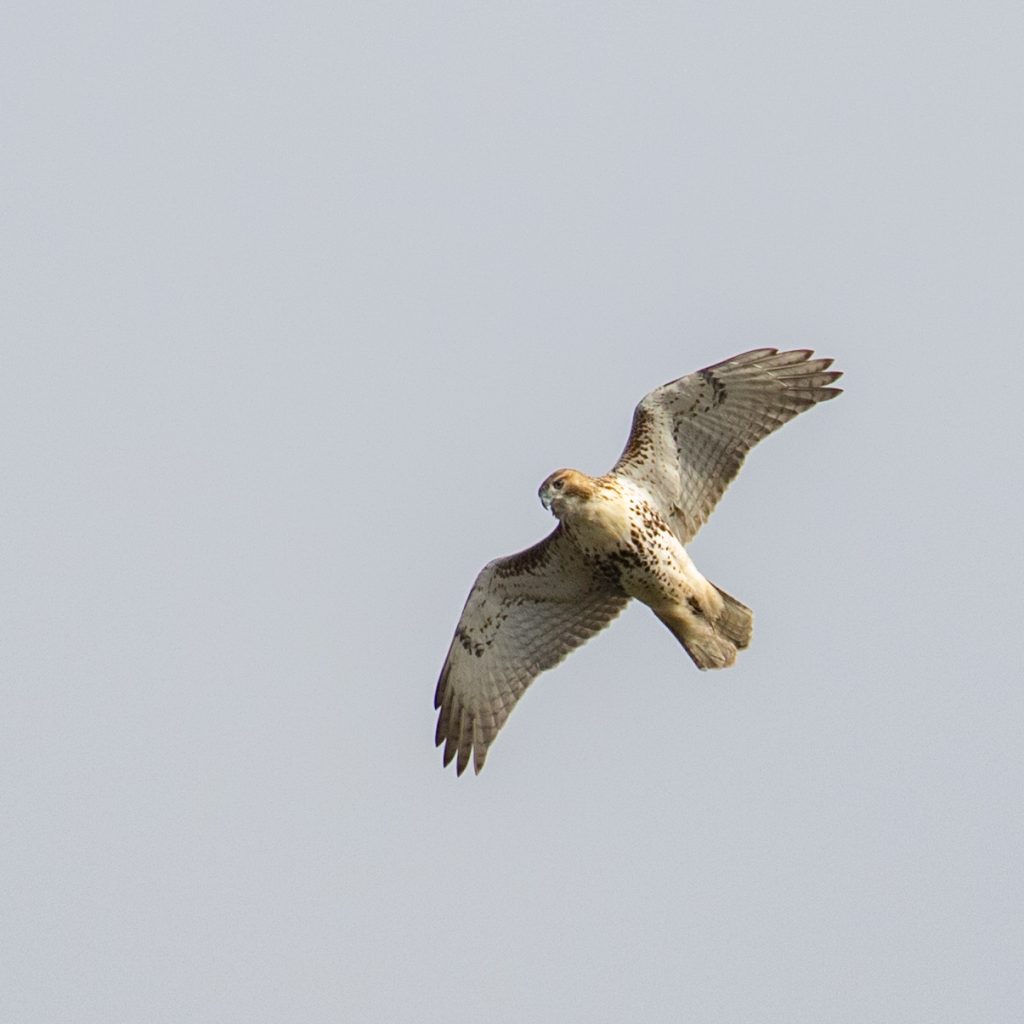
~A local Red-tailed Hawk hunts for a meal, Mount Peter Hawkwatch, 10/20/18.~~One more docu-shot of the Golden Eagle, 10/20/18.~ ~Local Tail. Mt. Pete, 10/20/18.~
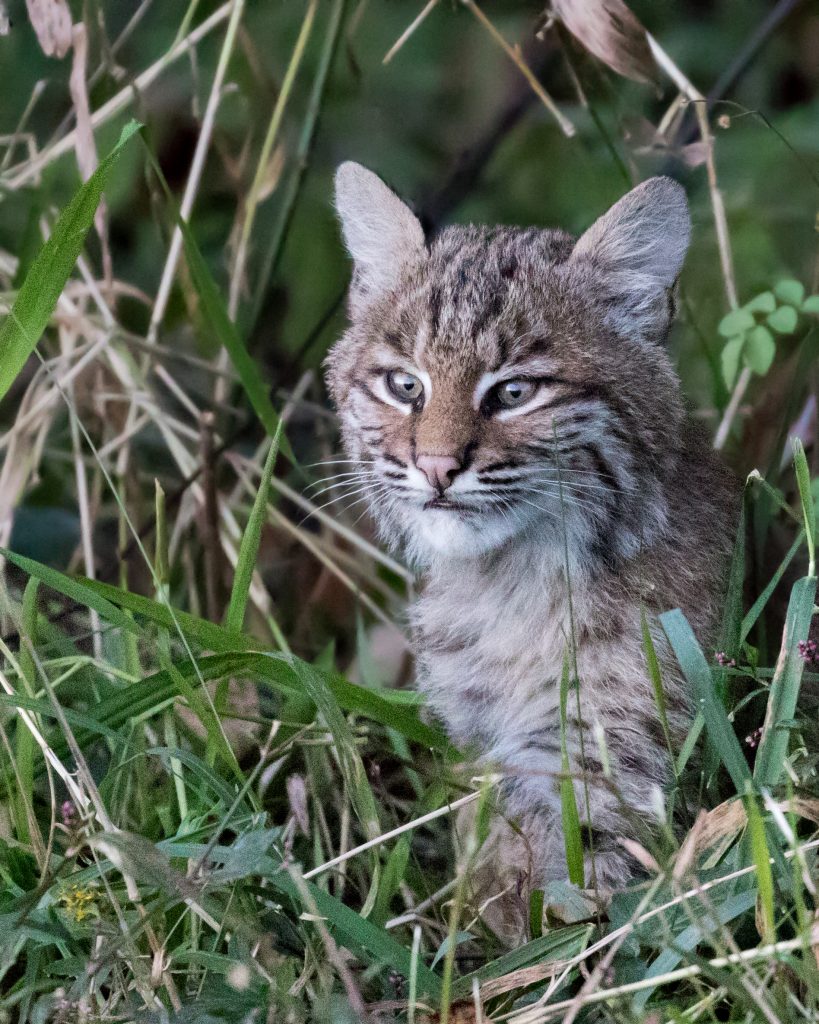
Moments like these are like actual small miracles in my life. I will look back at them and draw on them for the rest of my days. Bobcat kitten, New York State, October 2018.
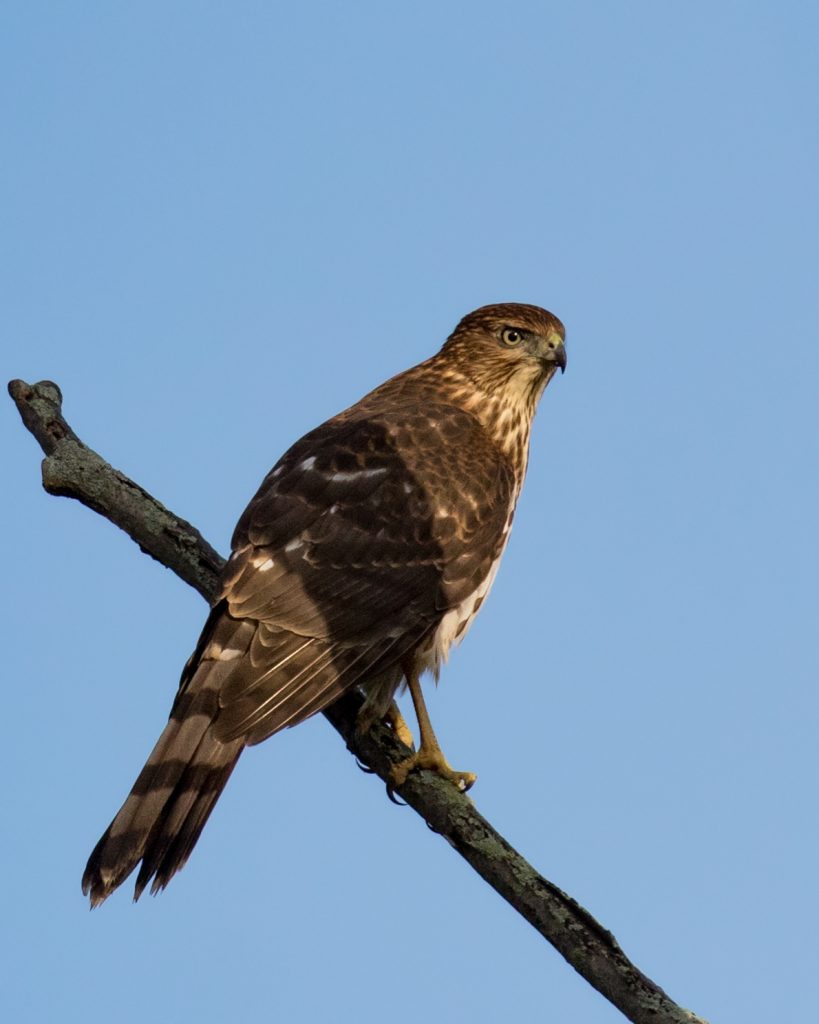
~A young Cooper’s Hawk at Wallkill River National Wildlife Refuge, 10/14/18.~
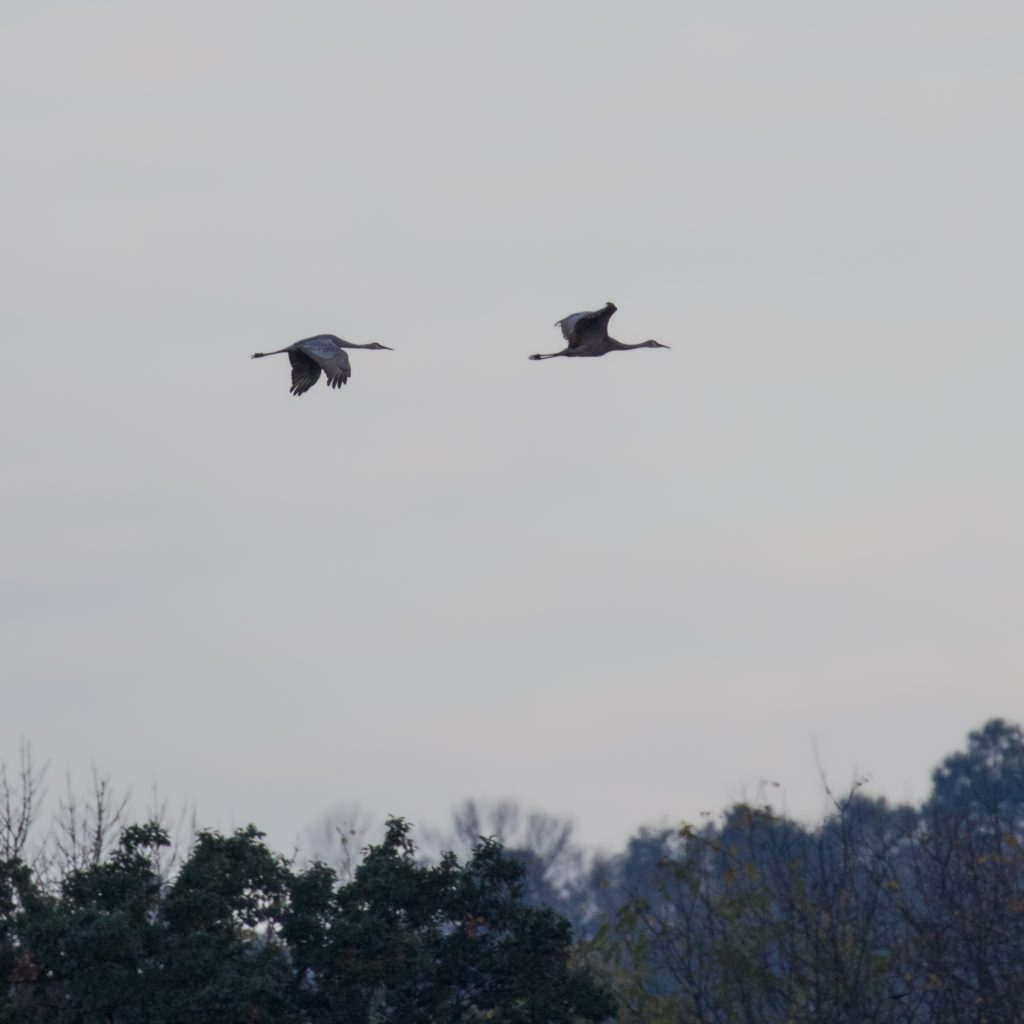
I headed out early this morning to bird Liberty Marsh at Wallkill River National Wildlife Refuge. I’d had a good full day yesterday, so I was going out without much in the way of expectations. When I arrived at the refuge and got out of my car, I scanned the marsh and picked up two birds flying along the west side of the loop, just over the trees – SANDHILL CRANES! I took that as a good sign for the morning. Shortly after my arrival, I ran into birding bud Linda Scrima and we walked parts of both Liberty Lane and the Liberty Loop.
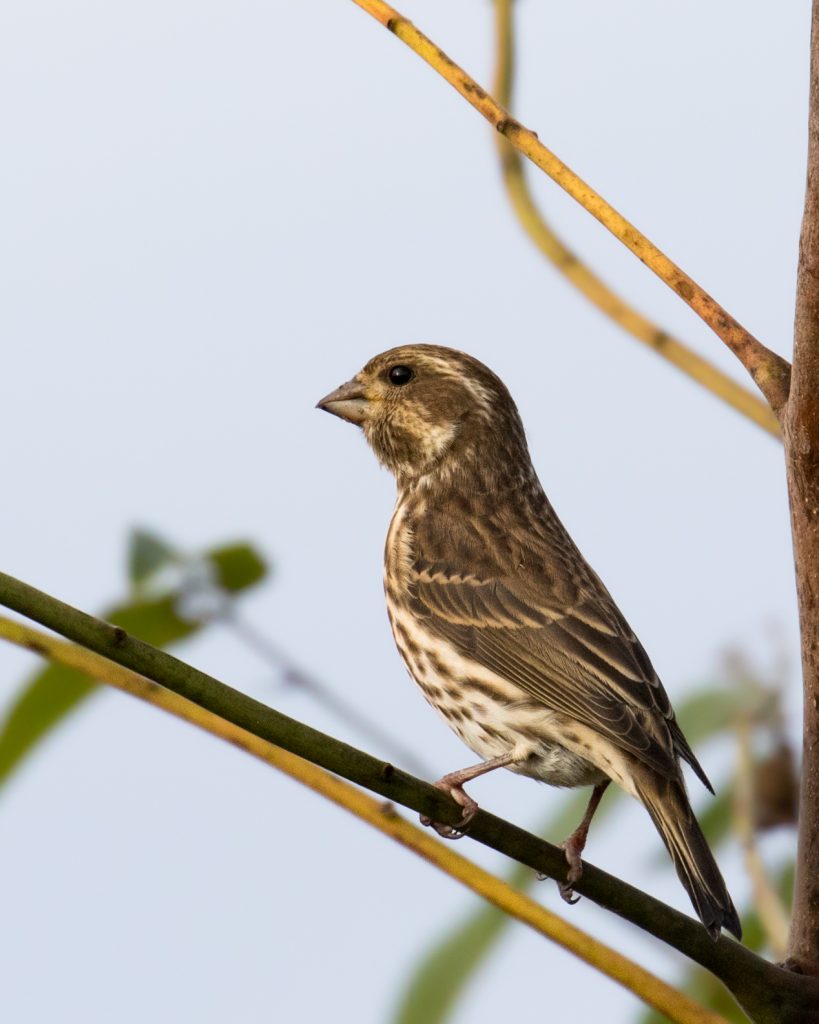
~A cooperative female Purple Finch, Liberty Lane at Wallkill River NWR, 10/14/18.~
Swamp Sparrow was bird of the day for sure. We had many as we walked out Liberty Lane, as well as a good number of Song Sparrows, a single White-crowned Sparrow, and a couple of White-throated Sparrows. Our best bird on Liberty Lane was Purple Finch – we had at least three with one female that was confiding enough for some decent photos. I also had a young Cooper’s Hawk fly right over my head and perch in a tree not too far off the trail.
~It’s hard to miss the Swamp Sparrows out at Wallkill River NWR right now.~
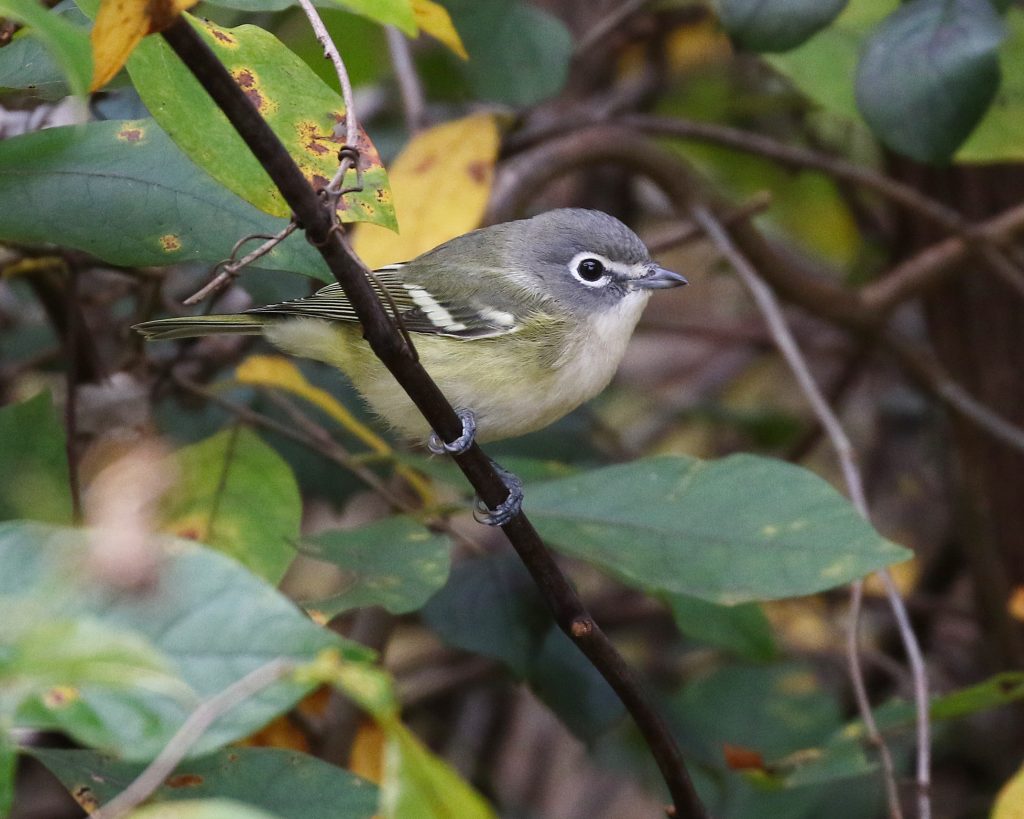
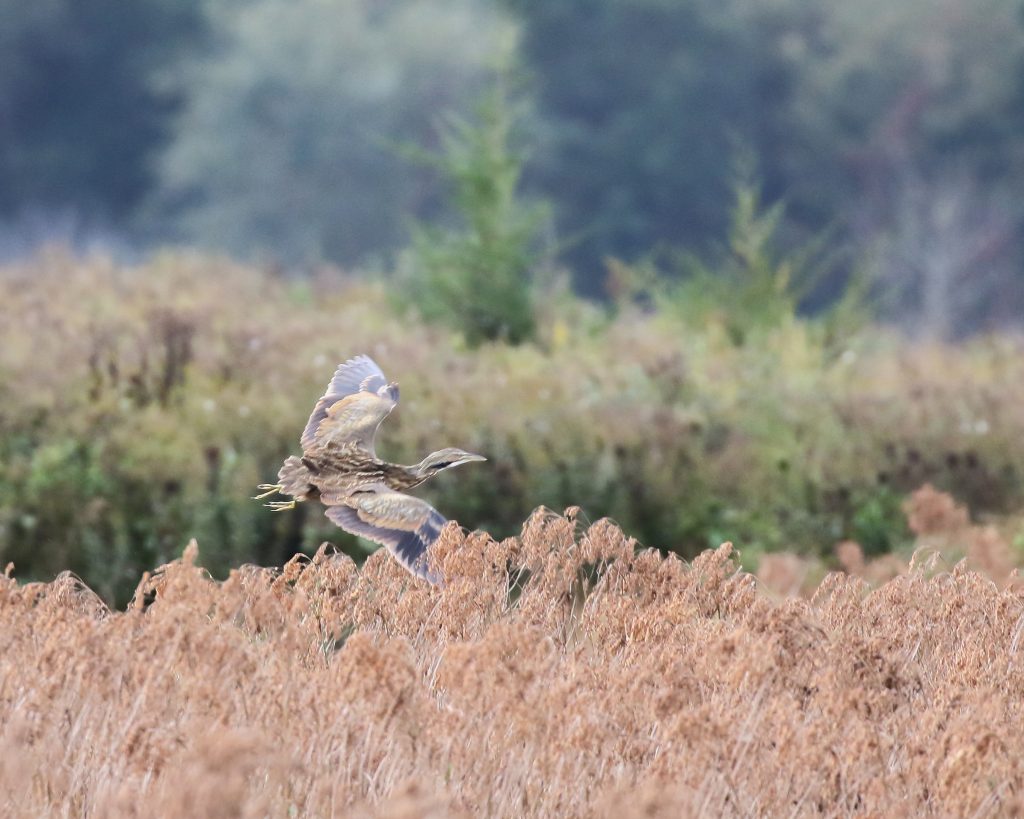
We then walked part of the west side of the Liberty Loop. We got about 100 yards down the trail when Linda picked up a bird that landed in the marsh just off the trail. I caught it just as it landed – its flight was a bit awkward and we agreed it was likely a marsh bird of some sort. We were scanning the area where we thought the bird flew in when the bird took flight again, heading deeper into the marsh – it was an AMERICAN BITTERN! I was not prepared and my camera setting were no good, so I ended up with a bunch of blurry pics. Linda did better than I did, and I’ve included one of her shots at the bottom of this post. On the west side of the loop we ran into a birdy area which produced my first Dark-eyed Juncos of the season, 2 Blue-headed Vireos and a couple of Ruby-crowned Kinglets as well. We finished up with a total of 36 species for the morning.
~Photo by Linda Scrima – Blue-headed Vireo at Wallkill River NWR, 10/14/18.~ ~I will never tire of seeing these two birds. I hope they just stay in OC forever. SANDHILL CRANES in flight, Wallkill River NWR 10/14/18.~
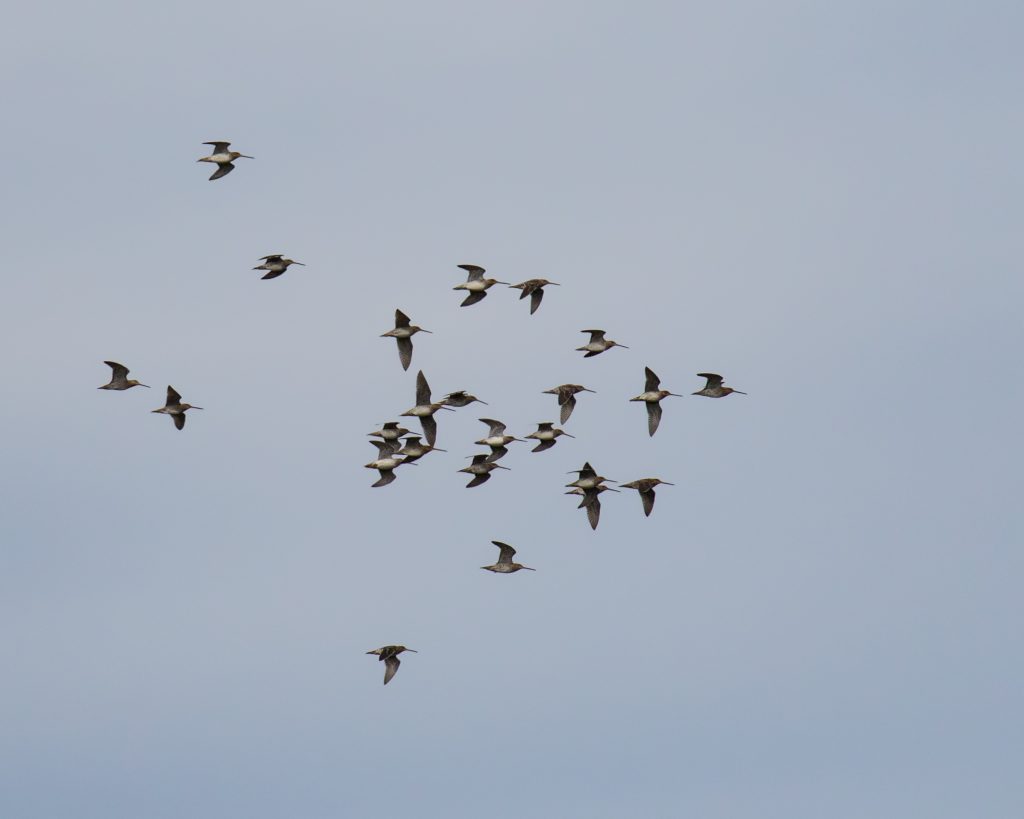
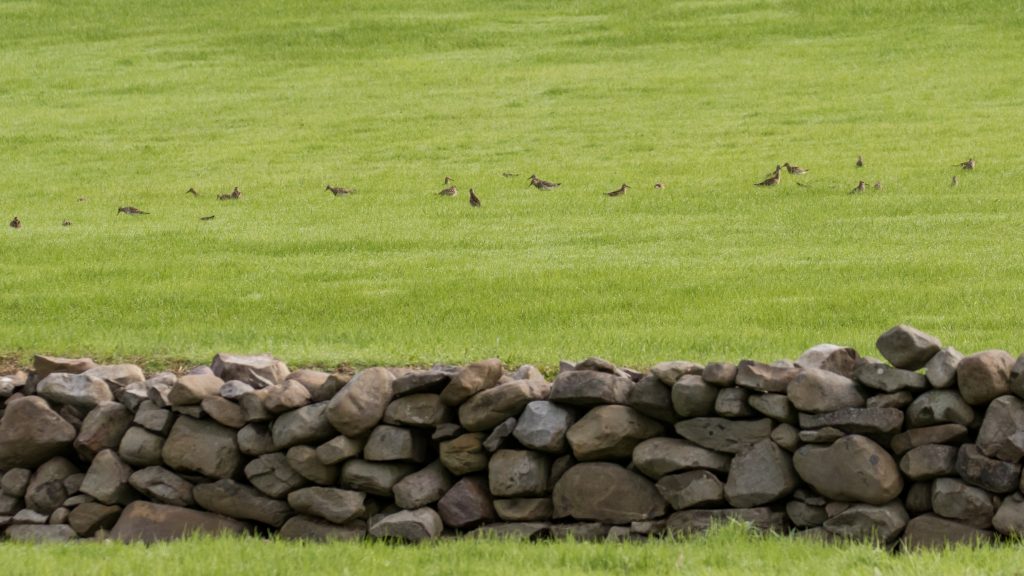
Afterwards, I headed to the Camel Farm to see if I could dig up any more shorebirds. I had the feeling yesterday that there were more birds out there than I was able to see and/or identify. It’s a tough spot to bird these days. It’s a good distance to be looking (as always), and right now everything is overgrown and the shorebirds just disappear when they land. Additionally, depending where you are viewing, there is not much room to pull off the road and the traffic on that road is relentless. So, it makes for a less than ideal birding situation, but that’s where the shorebirds seemed to be this weekend. I was easily able to get good looks of several Lesser and Greater Yellowlegs, as well as a handful of Killdeer. I had a group of shorebirds in flight that I was unable to see once they landed (*they may have been Pectoral Sandpipers, see below). I also had a flock of longer billed shorebirds in flight. I was able to get photos of these birds and I have them as Wilson’s Snipe, 24 of them:
~Wilson’s Snipe in flight over the Camel Farm, 10/14/18.~
I repositioned to try and locate the unidentified group of birds I’d seen, but I was just not able to find them in the area where I thought they went down. Then, I heard a shorebirdy call behind me – and sure enough there was a flock of PECTORAL SANDPIPERS flying behind me. They put down right on one of the Camel Farm neighbor’s front lawns, which I thought was pretty funny. I’d love to have Pectoral Sandpipers on my front lawn, ha ha!
~Pectoral Sandpipers on a front lawn at the Camel Farm, 10/14/18.~~Photo by Linda Scrima. It was awesome to see this bird! I wish I’d done better with photos, but it happened very quickly. AMERICAN BITTERN at the Liberty Loop, 10/14/18.
~Cape May Warbler at Mount Peter Hawkwatch, 10/13/18.~
This morning’s rain delayed the start of hawkwatch, so I spent the morning in the black dirt looking for shorebirds. Although it was not raining all that hard, the weather was tough on my gear today. The humidity must have been through the roof, because frustratingly, every time I lifted my binoculars to my eyes they seemed to fog over. I had two sets out and I was alternating just to be able to see with any consistency. Even my scope developed some moisture between the filter and the lens, leaving a perfect circle of condensation which lasted for most of the day. Regardless, I ran around for shorebirds and here’s what I had:
~Lesser Yellowlegs at Missionland. This shot was from Friday evening, 10/12/18.~
The rain let up and I was up at Mount Peter for Hawkwatch at 11:45. It was a really good day to be on the mountain, with cool temperatures and a steady northwest wind. Birds were flying and I had a decent number of birds (total of 83 migrants), with very good variety (11 species). Linda Scrima, Rob Stone, and Bob Klenk all visited and helped me out. Sharp-shinned Hawks were the number one migrant, and highlights for me included a couple of Merlins, a Peregrine Falcon, and a couple of Northern Harriers ( a bird we see frequently in our area, but to me it’s awesome to see them flying high over the hawkwatch in migration). Non-raptors had some good highlights too, with a couple of CAPE MAY WARBLERS, and two skeins of BRANT flying over. See my full report at the bottom of this post.
~BRANT! I was super pumped to have a couple skeins fly over the watch today, Mt. Peter Hawkwatch 10/13/18.~
After hawkwatch, I stopped at Glenmere Lake, where the Mearns Bird Club was holding a big sit. They spent the whole day, sunrise to sunset, at the lake counting birds. I joined Kathy Ashman and Karen Miller, who had a long but good day of birding along with 12 other members of the club. They finished the day with 47 species, which I thought was pretty good.
I headed home, tired but happy with a full day of birding behind me.
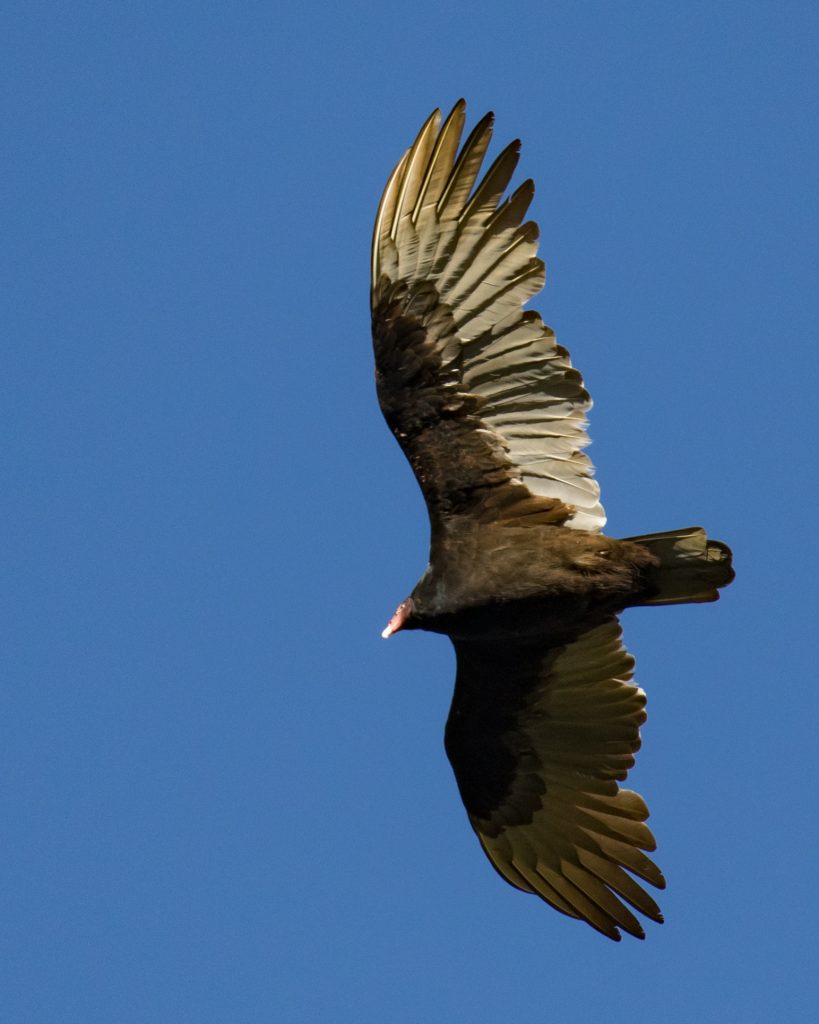
~Ahhhh… the obligatory Turkey Vulture photo returns. Mt. Peter Hawkwatch 10/13/18.~ ~One more Cape May Warbler shot, Mt Pete, 10/13/18.~